Spotlight on Civil Society
Featured Post
To the Arava Desert or bust
I think a tiyul should be a nice, long walk that ends with a cup of coffee, so how did I end up hiking a perilous, unmarked cliff-walk?
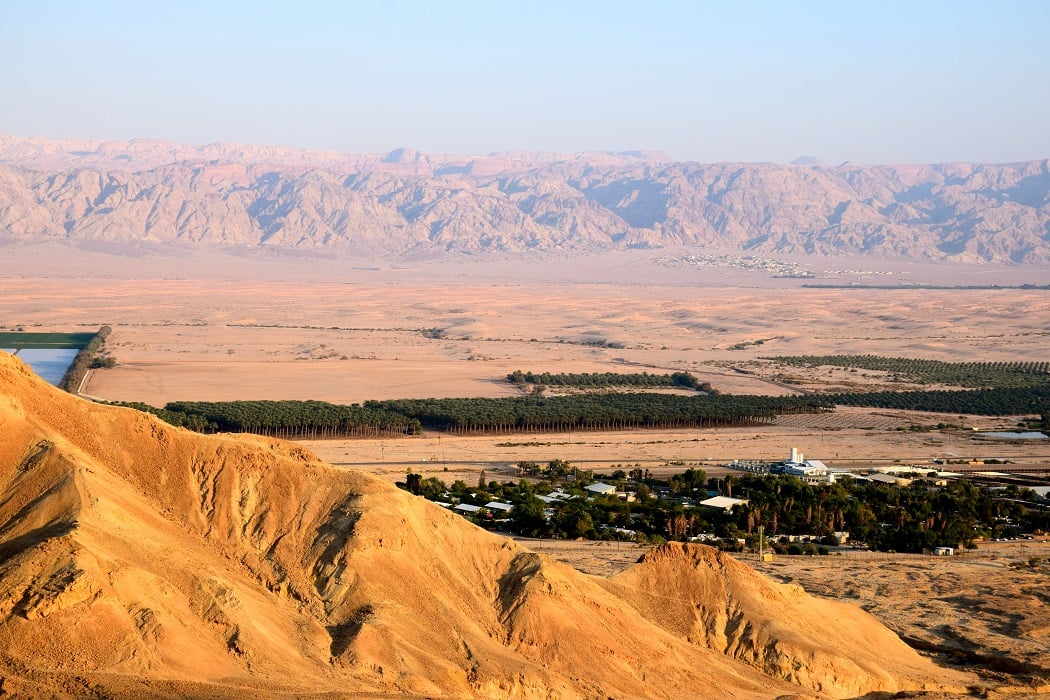
Overlooking Kibbutz Ketura. (Courtesy of the Arava Institute)
So, yes, over the years, I have learned that many Hebrew words can be defined differently, depending on whom you ask.
For example, I like my definition of a tiyul –– a nice, long walk on marked trails that ends with a cup of coffee. But for my sabra husband and his family, a tiyul means a daunting hike, never less than five hours long, with dangerous precipices, no barriers, and dangling ladders to use to climb up and down the cliffs. It’s the kind of tiyul that my kids love. And it’s the kind of tiyul that I think should be off-limits to anyone but rock-climbing professionals.
You can imagine then that I was not entirely looking forward to our trip to the Arava desert over Hanukah, with a planned tiyul on a particularly difficult part of Shvil Yisrael –– the Israel Trail.
What I was definitely looking forward to on this family trip, however, was a chance to see our niece Noa, who is studying at the Arava Institute for Environmental Studies. It is located at Kibbutz Ketura, which holds legendary status for those ‘wanna be’ Young Judaeans among us. Besides the Arava Institute, Ketura is also home to Israel’s first commercial solar field, one of the many reasons that this region is fast on its way to becoming a leader in renewable energy.
Noa is spending two semesters at Arava’s academic environmental study program, the only one of its kind in the Middle East, with Israeli, Palestinian, and Jordanian students, as well as students from other parts of the world. We were all skeptical about how this program advances joint environmental projects given the current political climate, and curious how it looks in practice. Yet within hours of arriving, we were able to get a sense of the community being built here when we were treated to homemade Hanukah sufganiyot that the students were making together, far removed both from the distractions of a big city and the local politics of their own communities.
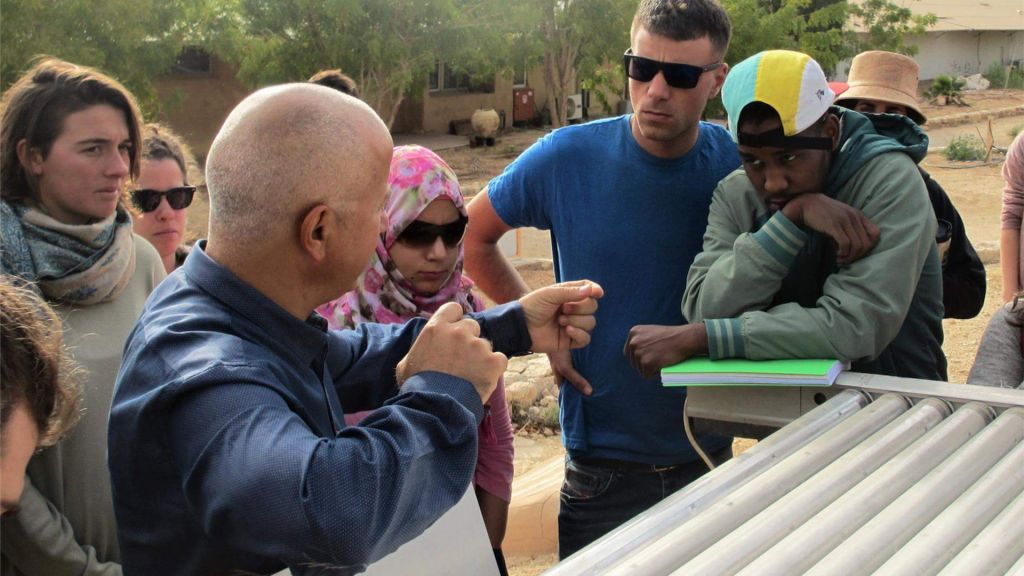
The premise of the Arava Institute is that, regardless of the ongoing political conflicts, sustainable development is both a shared problem and a shared opportunity. And you can get a sense of how important this is when you are at the Institute, located right near the border of Jordan and only a few miles from Egypt. Oblivious to politics and the need for passports, air pollution, untreated water sewage and other environmental hazards can flow freely across borders. But so can innovative solutions.
How does the Institute, through its various programs and research projects, work to advance new ideas in sustainable development? For example, the Institute’s annual environmental forum brings Israelis, Palestinians, and Jordanians together to promote shared environmental projects on topics such as solar power, sewage treatment and desalination facilities and more. The academic studies, including the environmental study program, touch on a broad range of research topics, addressing shared regional interests ranging from off grid living solutions to the use of ancient medicinal remedies.
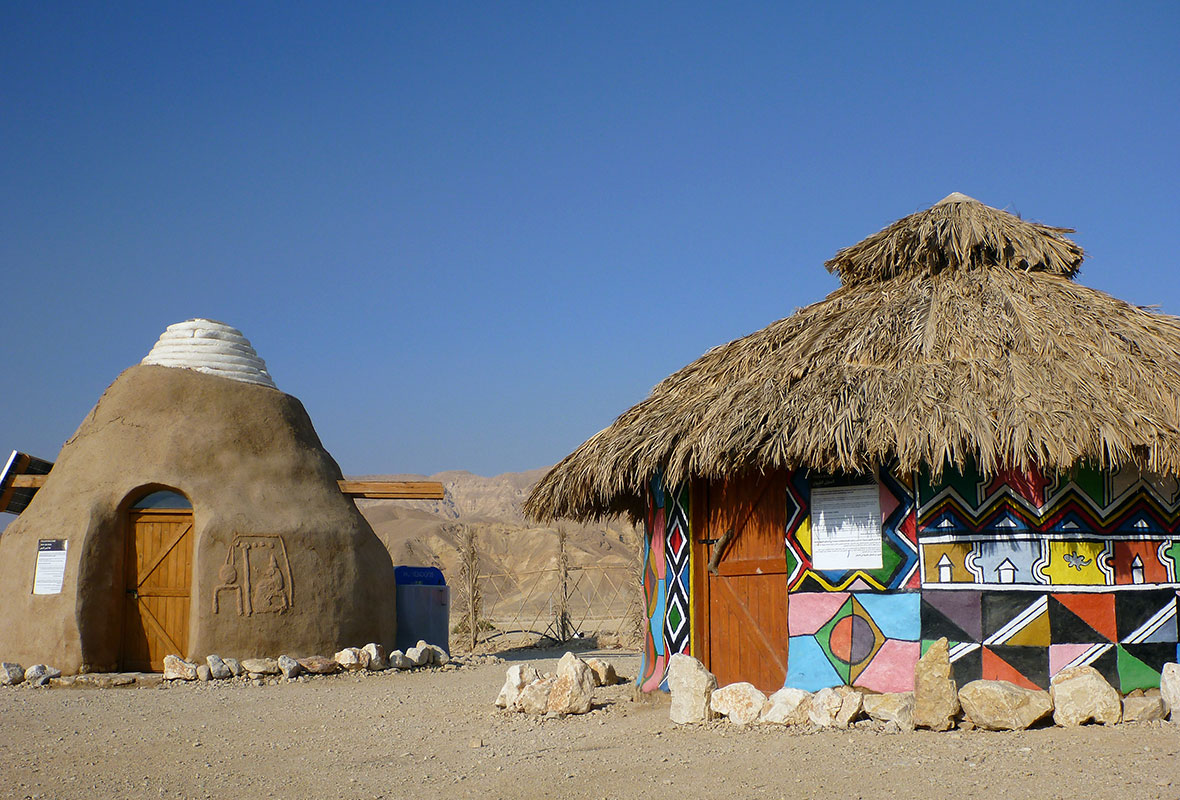
The Off-Grid Demonstration Village, created in partnership with Eilat-Eilot Renewable Energy Initiative and Kibbutz Lotan’s Center for Creative Ecology, offers possibilities for many neighboring communities of the Arava desert as well as areas much further away. Our tour guide was a student from Kenya who was finishing his studies and returning to his village to adapt some of the innovations. Our family got to see everything from a “power pot,” whose boiling water charges a cellphone, to a “biodigester” that can take waste and turn it into gas for cooking or heating.
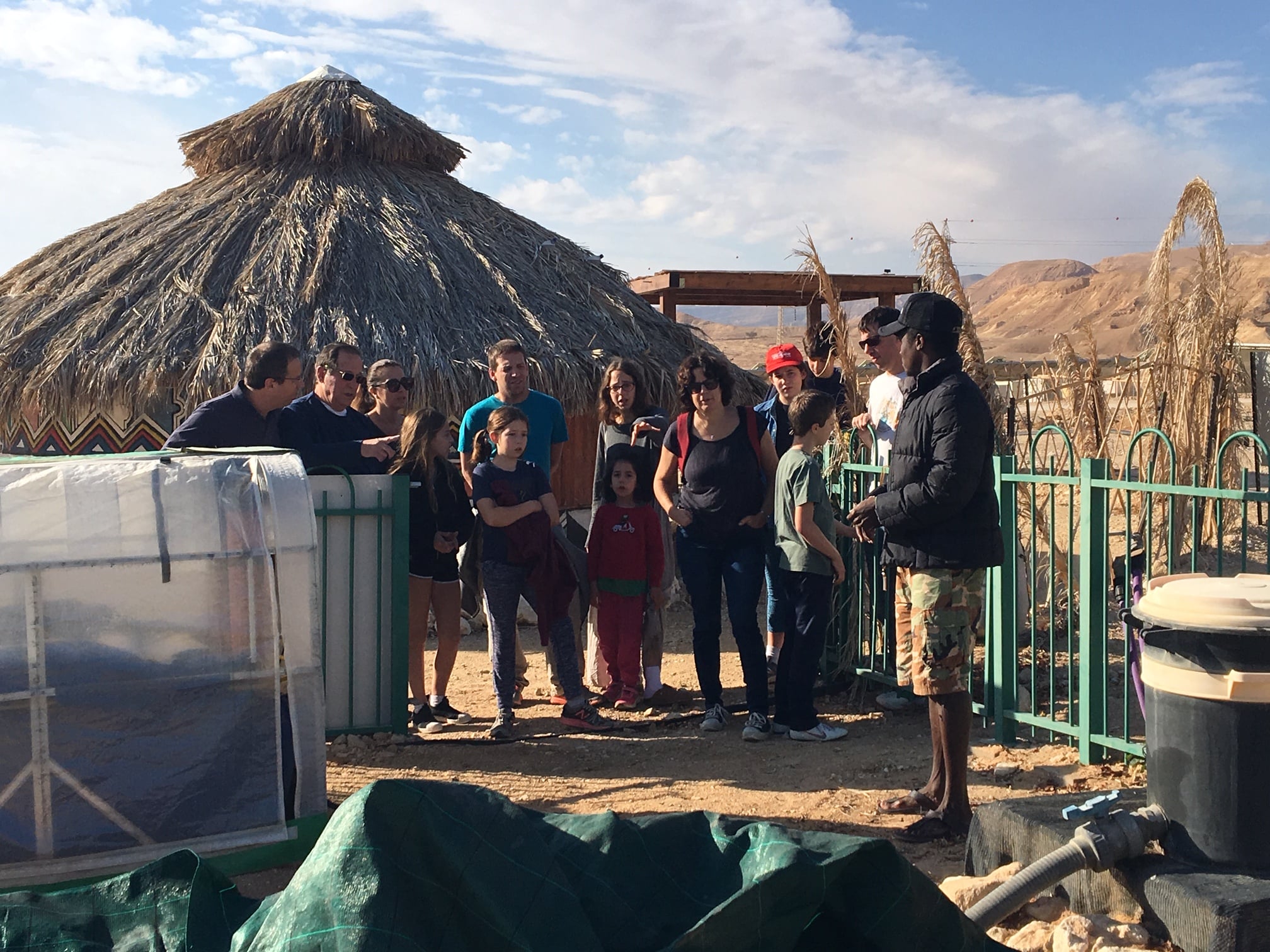
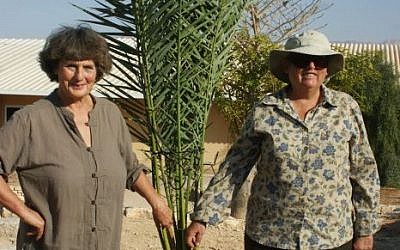
And after considering which daily household needs can be charged by solar energy, we walked only a few steps away to visit a male date tree that has become one of the most well-known bachelors in the region. Brought back to life at the Institute in collaboration with researchers at Hadassah Hospital from an ancient date palm seed discovered in an archeological dig at Masada in the 1960s, this “he” now needs a “she” for the production of fruit. Scientists from Morocco to Saudi Arabia are tracking its love life, and the potential of ancient plant-based remedies for modern medicine.
So amid all this talk about date trees sprouting from a 2,000-year-old seed and vacuum-tube solar ovens that can make cookies, I somehow let my guard down. I signed up for the family tiyul, led by my niece, to see the sunset. And yes, you guessed it. This seemingly innocent outing quickly morphed into a perilous walk on unprotected trails where any one of us could have, with one slip, tumbled down the side of a steep rocky slope.
Clutching my son for support, trying to keep my use of expletives in check, I reached a high point with a view of Kibbutz Ketura below. And then suddenly, even in the midst of my anxiety over how I was ever going to get back down the hill, I was able to feel a momentary sense of wonder at what has been created here in the desert.
Related Topics
Related Posts