Torah Judaism: A Sadness I Never Expected to Feel
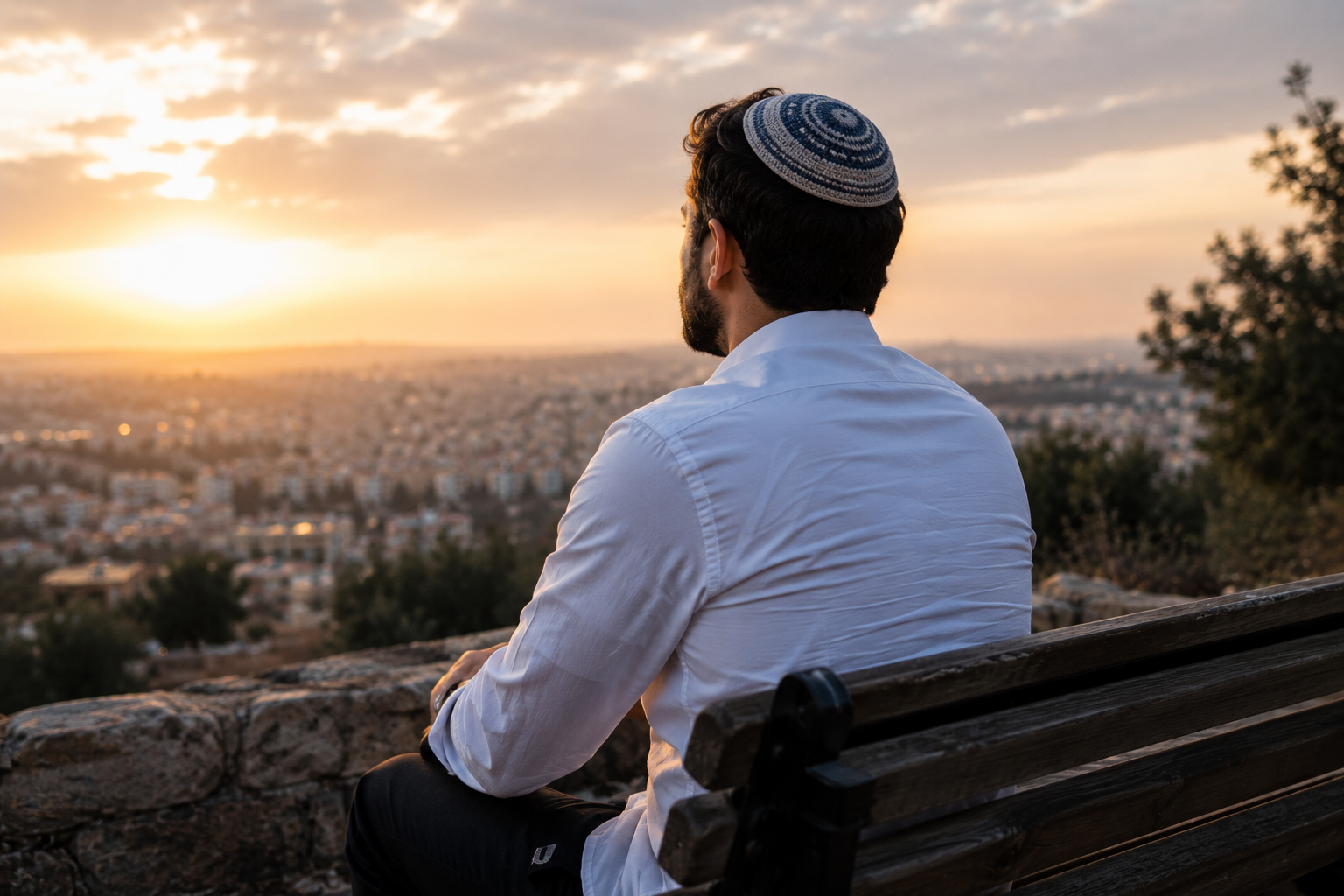
Today I watched images of protests, demonstrations, and roads blocked across Israel. What surprised me was my emotion. It was sadness. A deeper sadness than I expected to feel.
I grew up in two separate religious Jewish communities in London, first as a teenager and later again as an adult. Both spanned what today would be called Haredi and Dati Leumi in Israel and abroad Yeshivish and Modern Orthodox. Some were stricter in their interpretations and practices, others less so.
Yet I never felt that we belonged to different tribes. We were simply religious Jews.
There were differences in custom, practice, and rabbinic authority for things like Kashrut, but I genuinely saw them as variations within a shared commitment to Torah and mitzvot. When people asked me why I shaved while others did not, or why some had long peyot and others did not, I would explain that these were differences in tradition, interpretation, and the degree to which fences were built around Torah. The foundation itself felt shared. We learned the same Torah, spoke the same religious language, and revered many of the same Torah giants. I never thought to consider their political views.
For much of my life, I genuinely believed that Torah Judaism was a broad family. Diverse, sometimes argumentative, but ultimately one family. Today, living in Israel, I find that belief increasingly difficult to sustain.
I am not writing about politics, nor am I writing about who is right or wrong. Others are doing that, and they are free to do so. Of course I have my own views. I have a son who served in Special Forces, fought on October 7, and lost five members of his team. I have friends who were murdered and friends whose children were murdered. I too have felt more than a little anger. But today, what I feel is sadness and I want that feeling to be shared, because we need to feel the pain of loss if we are prepared to do anything about it (especially as we come towards the three weeks before Tisha Ba’Av).
I believed that we were one people who accepted that every Jew mattered equally. I believed that despite our disagreements, there was a common bond strong enough to hold us together. Today that belief feels fractured, at the point of beginning to shatter.
What saddens me most is that the fracture appears deeper in the next generation than in my own. Children are growing up seeing camps instead of community. They are learning who is “us” and who is “them” at an age when they should be learning that we all stand together.
When I was young and looked at religious Jews from different backgrounds, I saw role models. I saw people trying, in different ways, to serve G-d and live according to Torah. Today many children see something else. They see public conflict and accusations. They have different role models. They see people who increasingly define themselves by what they oppose rather than by what they share.
Heaven forbid, they see Chilul Hashem rather than a different perspective on the same beautiful Torah.
And I suspect that children on the other side look at families like mine and feel exactly the same.
That thought breaks my heart.
Today, I am not interested in debating the causes. There is a time for analysis and a time for solutions. Today, I simply find myself feeling sad.
Because something I believed deeply has been damaged. I believed in the idea of a Torah Judaism that contained many voices. I believed that disagreement did not require division. I believed that a family could argue fiercely and still remain a family.
Today I am no longer sure.
Perhaps my perception is wrong. Perhaps the bonds are stronger than they appear. Perhaps this can be repaired. I hope so, and I pray so.
But before repair comes honesty. And the honest emotion I feel today is sadness. Profound sadness. Not only for what is happening now, but for the loss of something I once believed was unquestionably true.