
Therapy, Nature, Meaning — Where Minds and Paths Meet
Trauma: When Survival Mode Won’t Switch Off
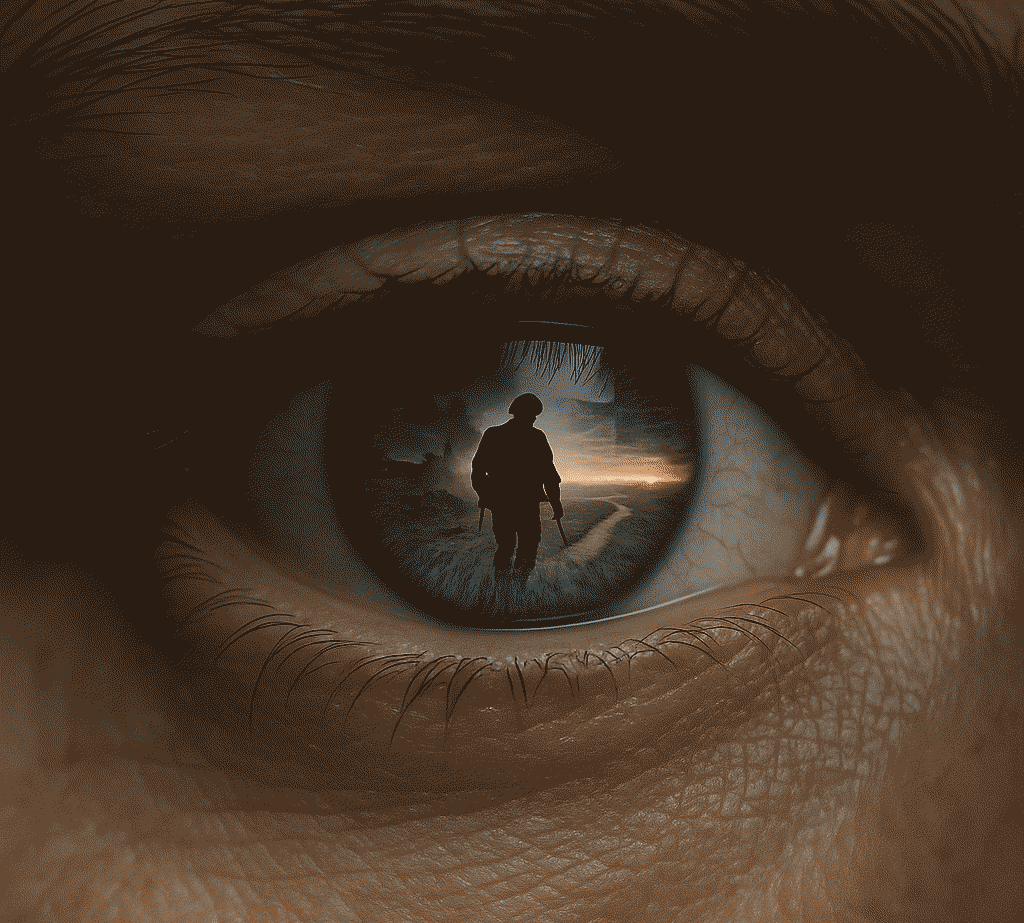
The battlefield still reflected at home. Image created with AI.
The topic of trauma in the context of mental health seems to be, for understandable reasons, one of the most popular terms used in recent years. We hear non-stop “we are all post traumatic” “we are a post traumatic nation”. Without a doubt everyone in or connected to Israel has been exposed to horrific sights, personal stories and event and without a doubt been affected by these terrible ordeals.
But I believe that there is importance in trying to define these terms.Furthermore, I think by examining trauma and the human response to traumatic events, we can learn about human behaviour and mental health in more general terms.
There are many definitions to what a traumatic event is. I will offer a relatively accepted definition, with a slight expansion. A traumatic event, in simple terms, is an experience that puts your life or body in real danger, or makes you believe it could happen, whether it happens to you, someone you witness, or someone close to you. It can come from directly going through it, seeing it happen, learning about it, or being repeatedly exposed to its details. In addition to physical threat, some events cause deep harm because they violate your core values or sense of right and wrong. This is known as moral injury, and it can occur when you, others, or leaders act in ways that feel deeply wrong to you, or when you are betrayed by people or systems you trusted. Although moral injury is not identical to a traumatic event, there are many similarities including the potential impact on our mental health.
Please note that I am clearly distinguishing between the traumatic event itself and its impact on us.. Now let’s look at the human response. One common way of describing the symptoms we may experience after a traumatic event — or a moral injury — is to call them “a normal response to an abnormal situation.” Imagine a soldier in a life‑threatening situation. Assuming he is “normal,” or what we might call “neurotypical,” he may become hypervigilant. His muscles tense; the sound of a single footstep makes him snap his head around and aim his weapon, scanning for where the threat might come from. Great instincts — and likely to keep him alive. This is entirely “normal” behaviour for the situation he is in.
Now imagine the same soldier coming home for the weekend. He’s sitting in the lounge, trying to enjoy his precious time at home — watching a comedy on TV with his spouse, snacking on gar’inim (sunflower seeds). His child gently taps his leg, asking him to come and say goodnight. The soldier reacts instantly — not to a child, but to what his body still reads as an imminent threat. He violently pulls his child away, shouting at them. [Just to be honest, I’m tearing up as I write this — it’s far from fiction.] His reaction is “normal,” although tragic in its consequences. He is still in the same hypervigilant mode he was in 24 hours earlier in Gaza. Sadly, these same responses that once kept him alive can now cause deep emotional pain to both himself and those around him.
What we see in this brief description is that certain responses, which were appropriate in traumatic conditions, can continue even after those abnormal conditions have ended. The soldier was no longer in Gaza, yet it takes time for his “survival mode” to fade. Usually — and this is well‑supported by research — over time, a person who has been in traumatic circumstances will gradually return to their earlier patterns of behaviour, more or less. We are never exactly the same as before. However, sometimes the behaviours that were once suited to the traumatic event do not diminish with time, and may even intensify. Hypervigilance, for example, can grow stronger and eventually develop into other difficulties, such as frequent anger outbursts or persistent trouble sleeping, to name just two possible extensions of that original state. When this happens, we begin to see how a traumatic experience can cause prolonged suffering.
This suffering can take many forms. One of them is Post‑Traumatic Stress Disorder (PTSD). PTSD is not the only possible condition resulting from exposure to traumatic events, but it can be particularly debilitating. It describes a specific cluster of behaviours — or symptoms, in medical terms — that appear after traumatic events. For most people, these symptoms lessen with time. But for someone living with the disabling effects of PTSD, the symptoms remain, intensify, or change into other forms, leading to continued distress.
There are many ways to think about mental health. The approach I use — called Acceptance and Commitment Therapy (ACT), which is part of the Cognitive Behaviour Therapy (CBT) family — doesn’t see mental health problems as a “broken brain” or an illness in the traditional sense. Instead, it sees them as understandable human reactions to certain situations. These reactions might have made sense at the time, but if they stick around too long, they can start causing real distress. This is especially clear when we look at how people respond to traumatic events — often it’s a “normal” response to an “abnormal” situation. Many emotional struggles can be understood through this compassionate point of view. This does not diminish in any way the fact that the suffering is very real.
It is important to remember that, statistically, the majority of people who experience even the most horrific traumatic events will not go on to develop PTSD. The human mind and body are, in many cases, remarkably resilient. While behaviours and symptoms are almost always present in the days, weeks, or even months after a traumatic event, for most people these reactions gradually fade, allowing them to return to a life that feels more balanced.
Some individuals even report experiencing what is known as post‑traumatic growth (PTG) — a process in which, alongside the pain and challenges, people discover new strengths, deeper connections, or a renewed sense of purpose. This may arise from the realisation that, as horrific as the event was, they have survived and can still live a meaningful life. This is not to romanticise trauma, but to acknowledge that growth and meaning can sometimes emerge from struggle. The subject of PTG, and how it relates to healing after trauma, will be explored in more depth in future blogs.
While trauma can have a deep impact, there is reason for optimism — many effective treatments can greatly improve the wellbeing of those who suffer, and timely interventions can reduce the likelihood of developing PTSD or similar difficulties.
Related Topics