
Owner of the world's largest Herzl collection
Treasure Trove: A Lesson for Today from an Ancient Roman Tile
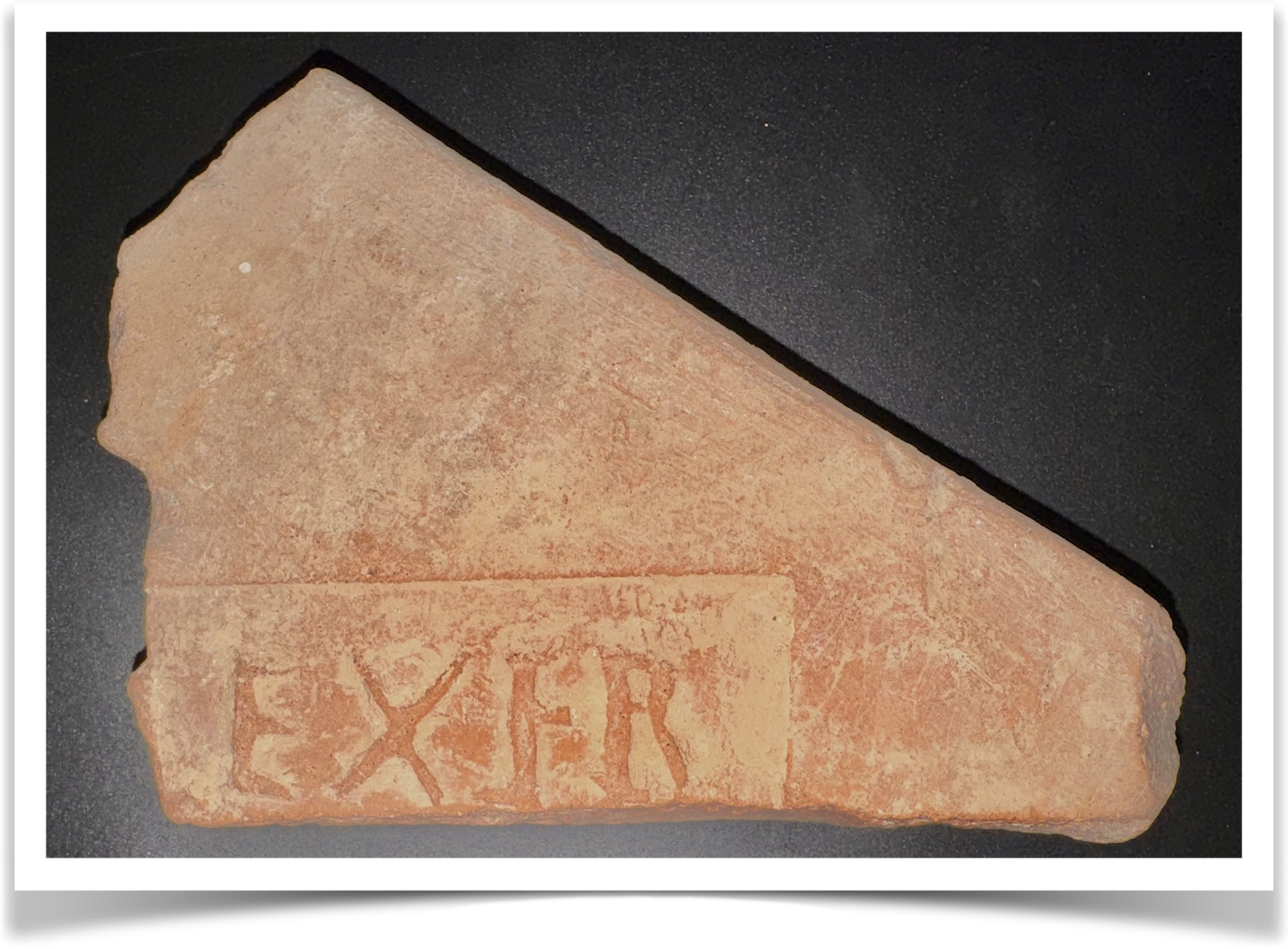
From the Herzl and Zionism Collection of David Matlow, Toronto (www.herzlcollection.com). Photograph by David Matlow.
A Roman soldier who destroyed Jerusalem and besieged Masada might have stood on this.
Found in Jerusalem, it is a piece of a square ceramic floor tile. The rectangular impression contains the letters LEXFR, an abbreviation for Legio X Fretensis (the Tenth Legion of the Strait), which was a division of the Roman army that was stationed in Judaea two thousand years ago. The reference to fretensis (or strait) is because one of this legion’s earliest battles was the Battle of Naulochus in 36 BCE in the Strait of Messina between Sicily and southern Italy.
The Tenth Legion was sent to Judaea in 66 CE to help suppress the Jewish revolt against the Romans (see: https://thecjn.ca/arts-culture/treasure-trove-an-ancient-coin-recalls-the-jewish-struggle-for-jerusalem-during-the-roman-conquest/). In 70 AD the Tenth Legion and other Roman divisions laid siege to Jerusalem. Its base was on the Mount of Olives from which it was able to hurl 25 kg stones about 400 meters and severely damage Jerusalem’s walls. After a five month siege, Jerusalem was destroyed and with it the Second Holy Temple.
Some residents of Jerusalem fled to Masada in the Judaean desert. In 72 CE the Tenth Legion was among the divisions that laid siege to Masada. 15,000 people including about 9,000 soldiers surrounded the 960 people on Masada. By building a massive ramp and giant siege tower with a battering ram the Romans were ultimately able to breach Masada’s walls where they found that all of Masada’s residents killed each other rather than live as slaves (although some question whether this ending is a myth or true).
The Tenth Legion remained in Jerusalem and fought in the Bar Kochba revolt of 132 to 135 CE which ended when they conquered the last Jewish stronghold, Betar.
The Tenth Legion was still stationed in Jerusalem in the third century CE and in 410 CE continued to be located in the area, in Aqaba, on the northern shore of the Red Sea near modern day Eilat. There are no further records of the Tenth Legion after this period.
The Tenth Legion is gone, but two of their military victories, Masada and Betar, serve as inspiration for the return of the Jewish people to the Land of Israel and the reconstitution and defence of the Jewish sovereignty that the Romans destroyed.
Today Israeli soldiers pledge that “Masada shall not fall again” being a commitment to preserve and protect the state. Betar is the Revisionist Zionist movement formed by Ze’ev Jabotinsky which is both the last Jewish stronghold and a modified acronym for Brit Yosef Trumpeldor (Joseph Trumpeldor Alliance).
Rome’s Tenth Legion may be remembered in a floor tile made in Judaea, but the Jewish people have returned and built a new modern country in ancient Judaea. You can lose and ultimately win, and you can win and ultimately be forgotten. This remains as true today as it was 2,000 years ago.
For more treasures from the Herzl and Zionism Collection of David Matlow, which has appeared weekly in the Treasure Trove column in the Canadian Jewish News (www.thecjn.ca) since February 2021, see https://herzlcollection.com/treasure-trove
Treasure Trove is a program of The Herzl Project.

Related Topics