I believe in independent, clear, and courageous journalism – especially where injustice is being silenced
Trump and Syria’s New Strongman Share a Billboard in Damascus — and a Message of ‘Peace’
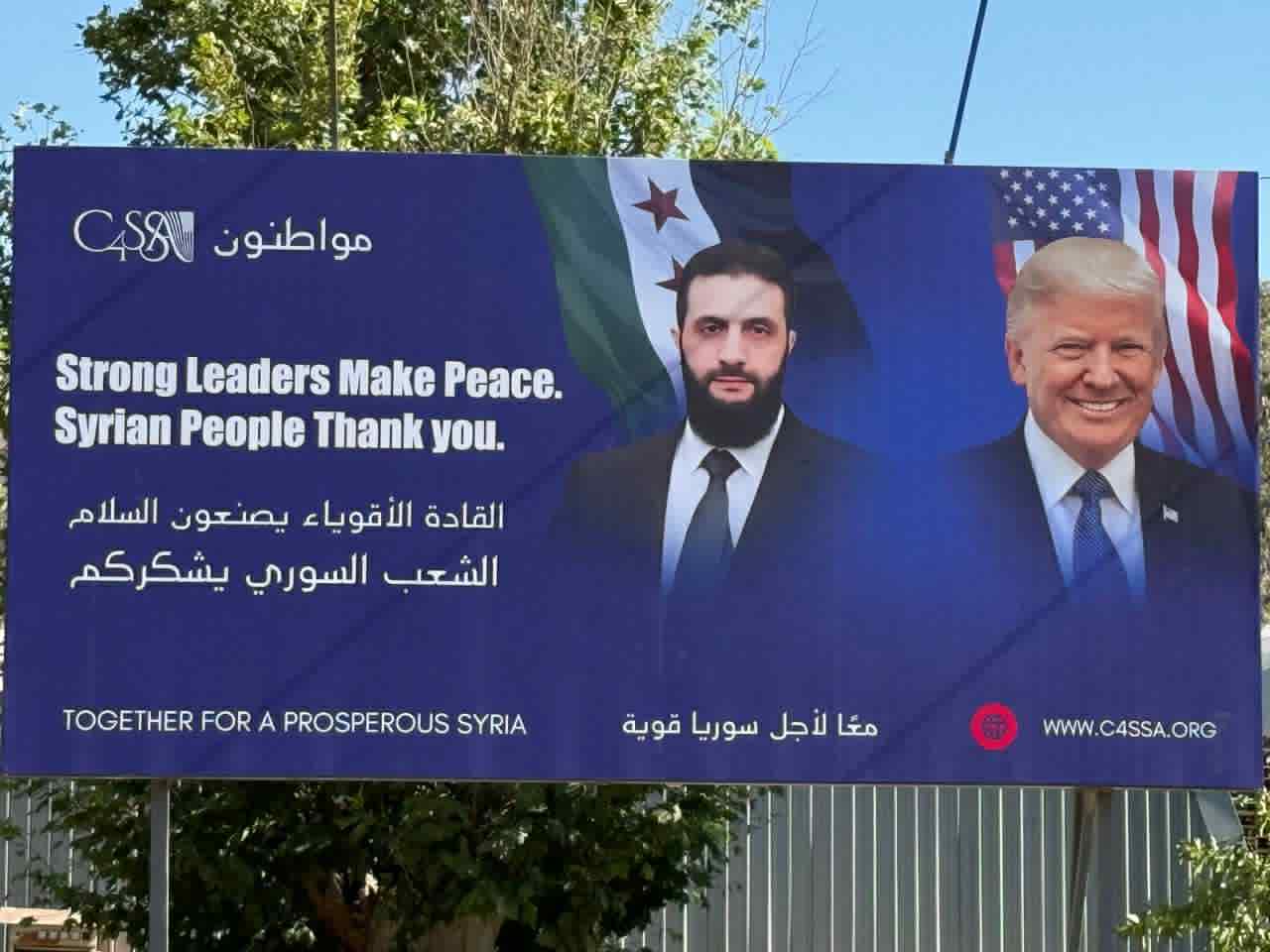
A billboard unveiled in central Damascus via Twitter
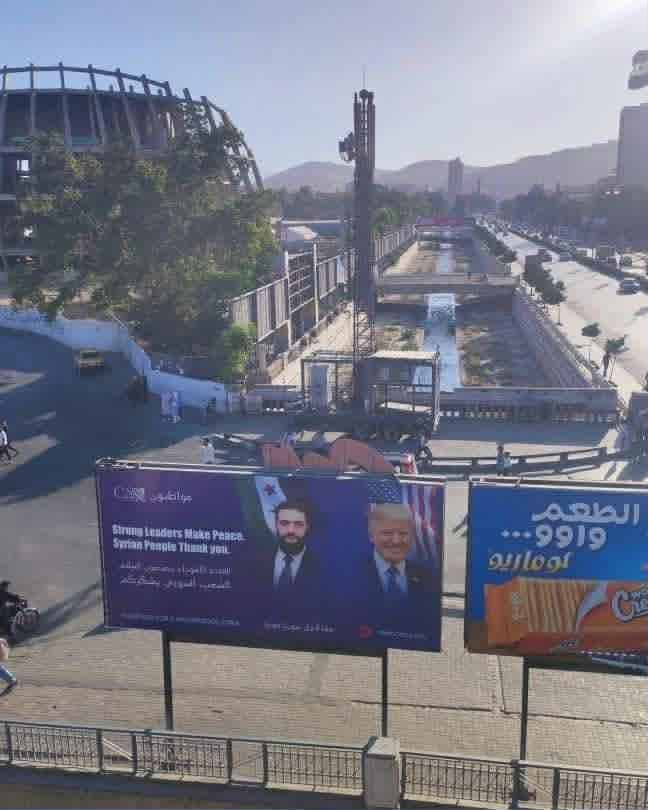
A billboard unveiled in central Damascus this week is raising eyebrows across the Middle East and beyond. It features Syria’s newly installed president, Ahmed al-Sharasa, beside Donald Trump, with an English-language caption that reads:
Strong Leaders Make Peace. The Syrian People Thank You.
The poster appears to be part of a broader campaign by the new Syrian regime to legitimize itself internationally, following more than a decade of isolation and civil war. Yet the public pairing of Trump — a controversial figure in the Middle East — with a former jihadist commander raises pressing questions about the direction of Syrian politics and its implications for Israel and the region.
A Former Militant, Rebranded as a Statesman
Ahmed al-Sharasa’s rise from commander of Hay’at Tahrir al-Sham — once linked to al-Qaeda — to Syria’s presidency has been nothing short of dramatic. Following the Assad regime’s collapse in early 2025, al-Sharasa capitalized on the power vacuum with promises of national unity and stability.
Since assuming power, he has made overtures to Western governments, presenting himself as a pragmatic alternative to years of chaos. His government has taken visible steps to rebrand: softening Islamist rhetoric, inviting foreign investors, and re-establishing diplomatic missions in several capitals.
But beneath the surface, observers say, little has changed in terms of internal repression or the militarized nature of the regime. Human rights groups continue to report widespread arrests, censorship, and the persecution of political opponents.
Trump’s Endorsement and the Sanctions Shift
Trump’s appearance alongside al-Sharasa is more than a visual flourish. In May, the US president met the Syrian leader at a summit in Saudi Arabia, where he praised him as “a strong leader making brave choices.” Shortly thereafter, Trump publicly called for the lifting of sanctions on Syria — a demand that was met in part by a Republican-led congressional resolution easing economic restrictions.
For Syria, Trump’s endorsement was a windfall. His brand of transactional diplomacy offers a potential shortcut to legitimacy — one that bypasses the traditional frameworks of international law and post-conflict justice.
According to several regional media outlets, plans are even underway for a Trump Tower Damascus, pitched as a symbol of Syria’s new openness to Western capital and branding.
Concern in Jerusalem
For Israel, the rehabilitation of a former jihadist leader on its northern border is cause for concern. While Syria has largely maintained calm along the Golan frontier in recent months, Israeli defense officials remain wary of al-Sharasa’s long-term intentions and the potential empowerment of radical elements under the guise of legitimacy.
Israel is also closely monitoring reported talks between Syria and Iran regarding renewed cooperation, despite al-Sharasa’s efforts to portray himself as independent from Tehran’s influence.
As Syria attempts to re-enter the global stage under a new strongman, its messaging is clear: it wants to be seen as stable, sovereign, and open for business. But for Israel and its allies, the image of Trump and al-Sharasa standing side-by-side on a Damascus billboard is less a sign of peace — and more a warning about the risks of premature normalization with a regime still shaped by the shadows of extremism.
Related Topics