

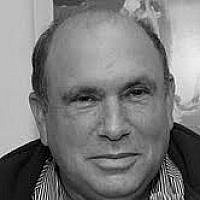
From Kibbutz to the global stage
Trump Asked Herzog for Pardon, Nasrin Sotoudeh Arrested in Iran Democracy Fight
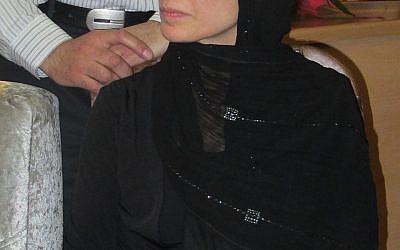
From Israel to Iran: Democracy Cannot Be Imposed from Outside.
The public debate in Israel, surrounding calls for President Isaac Herzog to consider pardoning a prime minister facing criminal proceedings raises a sensitive and fundamental question: what are the limits of democratic institutions, and to what extent is it appropriate to place internal, external, or public political pressure on them during a time of crisis?
Even when such moves are presented as attempts to calm tensions, stabilize the system, or prevent internal rupture, many view them as a test of institutional independence, the rule of law, and democratic sovereignty.
If this is true in an established democracy such as Israel, a broader question naturally follows: how can anyone assume that the political future of Iran can be shaped from outside — through military pressure, sanctions, or declarations calling for regime change?
In recent years, and especially during periods of regional tension, voices in Israel, the United States, and parts of the Iranian diaspora have argued that outside pressure could bring down the regime in Tehran and open the path to a freer, more moderate, and more democratic Iran.
That view is emotionally understandable. The Iranian regime represses dissent, restricts women and LGBTQ people, persecutes journalists, imprisons activists, and destabilizes the region. Yet history teaches that toppling a regime from outside does not guarantee democracy. Quite often, it produces the opposite result: radicalization, chaos, internal succession struggles, or the concentration of power in the hands of even harsher security forces.
Against this backdrop, the story of Nasrin Sotoudeh stands out. The Iranian lawyer and human rights activist was reportedly arrested again in recent weeks. Sotoudeh, often described as “the Nelson Mandela of Iran,” devoted her life to defending women who opposed compulsory hijab laws, representing opposition activists, and fighting for the rule of law.
In 2023, she was awarded the Brown Democracy Medal, presented by Pennsylvania State University to individuals and organizations that advance democracy around the world. In 2025, the same award was given to an American center dedicated to civic education and nonpartisan public engagement among young people. That choice itself is a reminder that even long-established democracies cannot take themselves for granted, and that civic education, public trust, and the protection of free institutions require constant investment.
Sotoudeh herself represents a simple truth: the struggle for freedom in Iran does not begin with missiles or sanctions, but with courageous citizens willing to pay a personal price for human rights and justice.
When a regime feels under attack from abroad, it often portrays all internal criticism as betrayal. The first to pay the price are usually members of civil society — lawyers, students, women activists, journalists, and intellectuals.
Instead of weakening, security mechanisms grow stronger. Instead of opening up, the system closes itself. Instead of pluralism, what often emerges is a more centralized and rigid order.
There is also another question here, one that concerns not only Iran but the wider world: what democratic model is being presented today to those who struggle for freedom?
If democracies are seen as polarized, heavy-handed, dismissive of judicial institutions, or consumed by endless internal conflict, they struggle to inspire those risking their lives in the name of liberty.
Democracy does not persuade only through military strength. It persuades through the example it sets: judicial independence, freedom of expression, respect for minorities, fair elections, orderly transfers of power, and basic civic trust.
Iran’s future will not be decided only through sanctions, covert operations, or speeches delivered from abroad. It will also be decided by the courage of women like Nasrin Sotoudeh, by young Iranians, by lawyers, teachers, students, and citizens seeking a different life.
Anyone who truly wants democracy in Iran should understand this: democracy cannot be imposed from outside. It must be built from within.
About the Author
Rafi Glick is a writer, lecturer, farmer, and business executive with decades of experience at the intersection of academia, technology, agriculture, and international trade.
• He has served as a Senior Teaching Associate at Ben-Gurion University of the Negev, Ono Academic College, Ariel University, Ruppin Academic Center, and as a guest lecturer at Sofia University’s Faculty of Economics and Business Administration (FEBA). At Ben-Gurion University he also advised the BGU–NHSA Accelerator in the Faculty of Science.
• In business, Rafi was CEO of Bidsnet Ltd., a pioneer in deploying fiber-optic cables through unconventional infrastructure (in partnership with CableRunner), delivering high-speed connectivity to homes, enterprises, institutions, and cellular networks. Earlier he held senior roles at ECI Telecom and served on the board of RLF Venture Capital, working with partners such as Intel, Teva, and the Jerusalem Development Authority.
• He contributed extensively to Israel’s trade and investment ecosystem: he directed industrial and agricultural technology divisions at the Israel Export Institute, founded Israel’s AGRITECH as international exhibition, and served on the board of the Israeli Investment Center at the Ministry of Industry and Trade.
• In his early career, Rafi established and served as the first director of the Cargo and Aircraft Supply Security Department in the Security Division at Ben-Gurion Airport (1972–1976). He lived in Kibbutz Parod until 1974.
• Rafi has also been recognized for his writing: in 2008 he was named Best Economic Blogger by TheMarker, Israel’s leading business daily.
• Today he continues to publish essays and commentary—with a special passion for astrophysics, space exploration, technology, economics, and social issues.
From Kibbutz Parod to the global stage, Rafi Glick’s career reflects a lifelong commitment to building connections—between people, industries, and ideas.
Email: rafi.glick@gmail.com
Related Topics
Related Posts
Rafi Glick