Understanding Israel Beyond the Headlines
Trump & Kahane: When Radical Ideas Go Mainstream
 After October 7 and the collapse of decades of peace efforts, ideas once considered politically unthinkable are reentering the mainstream of Israeli and international debate.
For decades, the ideas of Rabbi Meir Kahane were considered politically extreme and far outside the mainstream of Israeli and American Jewish discourse. Yet in the aftermath of the October 7 attacks and the war in Gaza, some of the questions Kahane raised decades ago are quietly returning to public debate.
Today, statements made by U.S. President Donald Trump about the future of Gaza have sparked a new conversation: are ideas that were once dismissed as radical slowly becoming part of the mainstream political discussion?
To understand this debate, it is first necessary to understand who Meir Kahane was and what he believed.
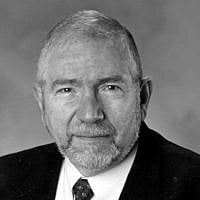
Rabbi Meir Kahane was born in Brooklyn, New York, in 1932. He grew up in an Orthodox Jewish environment and became involved in Jewish activism at a young age.
In 1968, he founded the Jewish Defense League in the United States. The organization emerged during a time of rising antisemitism and social unrest, and its stated goal was to defend Jewish communities and protect Jewish dignity.
Kahane later moved to Israel and entered politics. In the early 1970s he founded the political party Kach, which promoted a radically different approach to the Arab–Israeli conflict.
His central argument was simple, though at the time it was considered extremely controversial.
Kahane believed the conflict between Jews and Arabs in Israel was not merely political or territorial. In his view, it represented a deep national conflict that could not be permanently resolved through negotiations or diplomatic agreements.
Because of this belief, he advocated separation between Jews and Arabs. According to Kahane’s proposal, Arabs who accepted Israel as a Jewish state could remain, while those who rejected Israel’s existence should leave and live in neighboring Arab countries. The idea later became widely known as “transfer.”
At the time, Kahane’s views were considered far outside Israel’s political mainstream. Most Israeli leaders rejected them, and his party was eventually banned from running in elections.
Yet in 1984, Kahane was elected to the Israeli Knesset, demonstrating that even then a small but committed group of voters supported his message.
In 1990, Kahane was assassinated in New York City after delivering a speech at a Manhattan hotel.
Although his movement declined after his death, the ideology associated with him — often called Kahanism — continued to influence parts of the Israeli ideological right.
What was once considered radical in Israeli politics has, in some ways, moved closer to the mainstream.
Evidence of this shift can be seen in Israel’s current governing coalition. Parties such as Otzma Yehudit, led by Itamar Ben-Gvir, draw on elements of the nationalist ideology associated with Kahane.
Another party in the coalition, Religious Zionism led by Bezalel Smotrich, promotes a settlement-centered vision of territorial continuity. According to this approach, expanding Jewish communities across the land strengthens Israel’s long-term sovereignty and control.
The presence of these parties in Israel’s government reflects how dramatically Israeli political discourse has evolved over the past several decades.
The Hamas attack on Israel on October 7 and the war that followed in Gaza shattered many long-held assumptions about Israeli–Palestinian relations.
For decades, diplomacy between Israelis and Palestinians was based on the belief that coexistence — however difficult — was ultimately possible. Israel withdrew completely from Gaza, dismantled its settlements there, and built a sophisticated security barrier with the expectation that separation would allow both sides to live side by side.
But the events of October 7 deeply challenged that assumption.
For many Israelis, the attack reinforced the belief that attempts at coexistence, economic cooperation, and diplomatic agreements had not changed the fundamental hostility of groups that openly call for Israel’s destruction. Slogans such as “From the river to the sea, Palestine will be free” are widely interpreted in Israel as a call for eliminating the Jewish state.
As a result, many Israelis believe the long-standing peace approach has reached its limits. The growing sentiment in parts of Israeli society is that agreements cannot succeed with movements whose stated goal is Israel’s destruction.
Supporters of stronger separation policies argue that the Jewish people have only one small state in the world, while the Arab world consists of many countries across vast territories.
From this perspective, more drastic forms of separation — including ideas once associated with Kahane — are now being reconsidered by some as potential solutions.
This shift in thinking is not limited to Israel.
In the United States, Donald Trump has also raised ideas about Gaza that depart from the traditional diplomatic framework that dominated Western policy for decades.
Following the war in Gaza, Trump openly questioned whether the existing approach to the Israeli-Palestinian conflict still makes sense. In one remark, he said:
“Something has to happen with Gaza. It cannot continue the way it is.”
In discussing reconstruction of the territory, he suggested that population relocation might be part of the solution, stating that “you may have to move people out of Gaza while you rebuild it.”
More broadly, Trump summarized his view of decades of diplomacy with a blunt conclusion: “The current situation clearly isn’t working.”
During his presidency, Trump and adviser Jared Kushner also explored ideas as part of their broader Middle East peace framework that included economic incentives and regional solutions outside the traditional Israeli-Palestinian negotiation model.
In that sense, the comparison to Kahane becomes clearer.
Decades ago, Kahane argued that the conflict between Jews and Arabs in Israel could not be resolved through diplomacy alone and that lasting stability might require separation, including the relocation of hostile populations. At the time, this idea was widely dismissed as extreme.
Yet when modern political leaders begin discussing relocation programs, migration incentives, or the removal of militant actors from conflict zones, the underlying logic begins to resemble arguments Kahane made many years earlier.
Recent developments in Israel may also reflect this shift from theory to policy. Israel recently revoked the citizenship of two Israeli citizens convicted of terrorism and deported them to Gaza. Prime Minister Benjamin Netanyahu has indicated that more similar cases could follow.
History often shows that ideas once considered politically impossible can reappear when circumstances change dramatically.
Whether one supports or opposes these developments, the fact that such ideas are now being discussed again illustrates how profoundly the events of recent years have reshaped the Israeli political conversation.
Related Topics
Related Posts