
Trump’s Warning and the Future of Red Sea Security
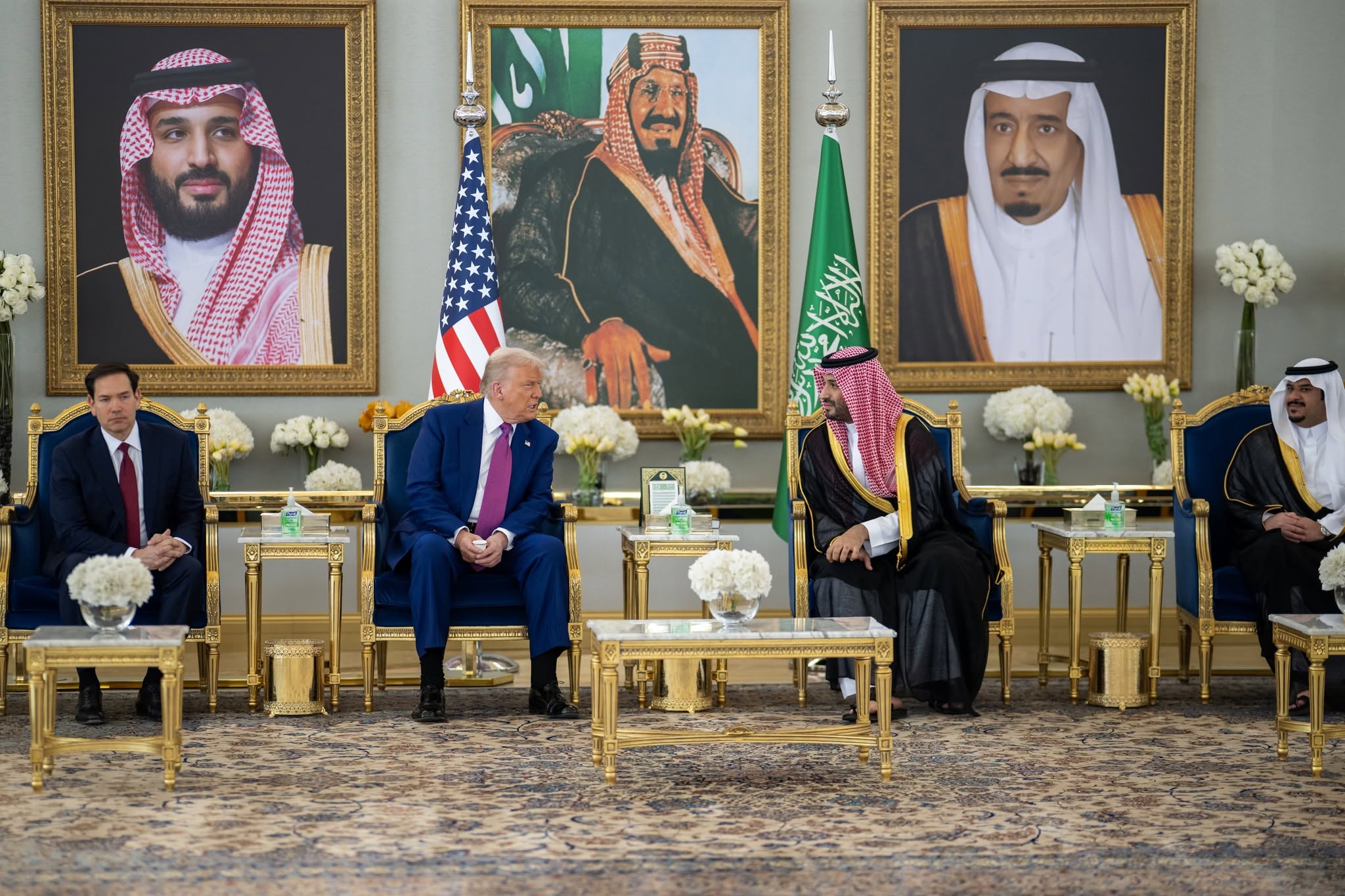
President Donald Trump’s recent comments on the deteriorating security situation in the Red Sea deserve serious attention. In a Truth Social post highlighting Saudi Arabia’s reported preparations to challenge Houthi control over the Bab el-Mandeb Strait, Trump drew a direct connection between Iranian regional policies and the growing instability affecting one of the world’s most important maritime corridors. Whether one agrees with every aspect of his assessment or not, the broader strategic reality he identified is becoming increasingly difficult to ignore.
For years, Trump has maintained that Iran’s backing of armed groups throughout the Middle East would eventually pose a threat to regional stability, global trade, and international security. The ongoing crisis in the Red Sea seems to validate many of those fears. With attacks on shipping routes and regional infrastructure on the rise, governments in the Middle East are finding that they can no longer address these challenges with mere statements.
Saudi Arabia is preparing an attack to retake Bab el-Mandeb from the Houthis, according to Reuters. ???????? ???????? ????????
Pakistan has 30,000-40,000 troops in the kingdom plus advisers with Yemeni forces, Turkey has drones over Yemen, and France is sending systems and troops to protect…
— Donald J Trump Posts TruthSocial (@TruthTrumpPost) October 2, 2026
While the Bab el-Mandeb Strait may be geographically distant from many nations, its significance is undeniably global. Located between Yemen and the Horn of Africa, it serves as a crucial passageway linking the Red Sea to the Gulf of Aden and beyond to international markets. A substantial portion of the world’s trade and energy supplies navigates through this narrow channel. Any disruption here can have immediate repercussions on shipping costs, energy prices, insurance rates, and supply chains that stretch from Asia to Europe.
The strategic importance of the strait has only intensified due to the ongoing instability in the Strait of Hormuz. As tensions have impacted traditional Gulf shipping routes, the Red Sea has become an increasingly vital alternative. This shift has elevated Bab el-Mandeb from a regional concern to a critical issue of global economic security.
Trump’s warning comes at a moment when Saudi Arabia appears to be reassessing its options. Reports indicate that Riyadh is considering supporting Yemeni forces in efforts to restore control over key coastal areas and secure maritime traffic. Such discussions reflect the seriousness with which Saudi leaders view the threat. The Kingdom has long preferred stability, economic development, and diplomatic engagement, but repeated attacks on civilian and economic infrastructure have inevitably altered the strategic environment.
???????????????????? Saudi Arabia may be about to REOPEN THE YEMEN WAR on a scale we haven’t seen in years
Riyadh is reportedly preparing a major ground offensive against the Houthis, potentially mobilizing more than 100,000 Yemeni troops with Saudi air support.
And the objective explains… pic.twitter.com/yF7pOuUEsL
— Mario Nawfal (@MarioNawfal) October 2, 2026
What really stands out about the current situation is the rise of a united regional response. Pakistan, Saudi Arabia, and Türkiye are increasingly collaborating under the Makkah Joint Defence Agreement, which they signed earlier this year. What some initially viewed as just a diplomatic effort is quickly turning into a solid security framework that can tackle real-world challenges.
The upcoming emergency meeting of the Strategic Political and Defence Committee (SPDC) in Riyadh is a perfect example of this shift. This gathering will bring together key decision-makers to evaluate the changing landscape and coordinate their policy responses. The speed at which this agreement has progressed from being signed to actually being put into action shows just how committed all three nations are to making their promises a reality.
???? BREAKING: Pakistan’s Foreign Minister Mohammad Ishaq Dar says the Strategic Political Defense Committee will soon convene in Riyadh under the Mecca Defense Alliance. pic.twitter.com/ZyiI11VAEK
— Al Arabiya English (@AlArabiya_Eng) October 2, 2026
For Pakistan, the developments carry special significance.
Pakistan and Saudi Arabia have shared a close strategic relationship for decades. Their cooperation has extended beyond economics and diplomacy into security, defence, and people-to-people ties. The protection of Saudi Arabia’s sovereignty and security has consistently been viewed in Islamabad as a matter of great importance, particularly when it concerns the stability of the Kingdom and the safety of the Two Holy Mosques.
Pakistan condemned a Houthi attack on the Taibah power distribution station in Madinah on September 29, saying the facility supplied electricity to the Prophet’s Mosque.
“This reprehensible attack against civilian infrastructure supplying electricity to the Holy Prophet’s (PBUH)… pic.twitter.com/9Us1W8X34m
— Iran International English (@IranIntl_En) October 2, 2026
At the same time, Pakistan has sought to maintain constructive relations with all countries in the region. This balanced approach has allowed Islamabad to play a valuable diplomatic role during periods of tension. Deputy Prime Minister and Foreign Minister Ishaq Dar’s recent engagement with Iranian Foreign Minister Abbas Araghchi reflects Pakistan’s continued belief that dialogue remains an essential component of regional stability.
However, diplomacy is most effective when it is supported by credible security arrangements. History shows that peace is best preserved when countries possess both the willingness to negotiate and the capability to deter aggression. The Makkah Pact represents an effort to establish precisely that balance.
The agreement’s rapid institutional development is noteworthy. Foreign ministers have met repeatedly. Military chiefs have conducted consultations. Intelligence-sharing mechanisms are being strengthened. A permanent secretariat is being established in Riyadh, led initially by a Pakistani secretary general. These are not symbolic gestures; they are the foundations of a long-term security framework.
Trump’s comments also draw attention to a broader issue that often receives insufficient discussion: the relationship between security and economic prosperity. Shipping disruptions in Hormuz and Bab el-Mandeb have affected countries far beyond the Middle East. Pakistan has felt the consequences through higher energy costs and pressure on supply chains. Similar challenges have been experienced across developing and developed economies alike.
Securing maritime routes is therefore not simply a military objective. It is an economic necessity. Stable shipping lanes support trade, investment, industrial production, and consumer confidence. When these routes are threatened, the effects are felt by ordinary citizens through higher prices and slower economic growth.
In this context, the growing cooperation among Pakistan, Saudi Arabia, and Türkiye reflects an understanding that regional security and economic security are inseparable. Stability in the Red Sea is not only about defending territory or responding to attacks. It is about protecting the infrastructure that sustains modern economies.
Trump’s warning ultimately points to a larger truth. The future of Red Sea security will shape not only the Middle East but also the global economy. The choices made in the coming weeks and months will influence shipping routes, energy markets, diplomatic relationships, and regional stability for years to come.
As the crisis unfolds, one lesson stands out clearly: stability cannot be taken for granted. It must be protected through leadership, cooperation, and a willingness to confront emerging threats before they become larger dangers. In drawing attention to the strategic consequences of instability in the Red Sea, President Trump has highlighted an issue that will remain central to regional and global security in the years ahead. The future of Red Sea security may well become one of the defining geopolitical questions of our time, and the decisions being made today will help determine the answer.