
Geopolitical & Defense Analyst
Turkey, Syria & Riyadh: The Anti-Israel Axis
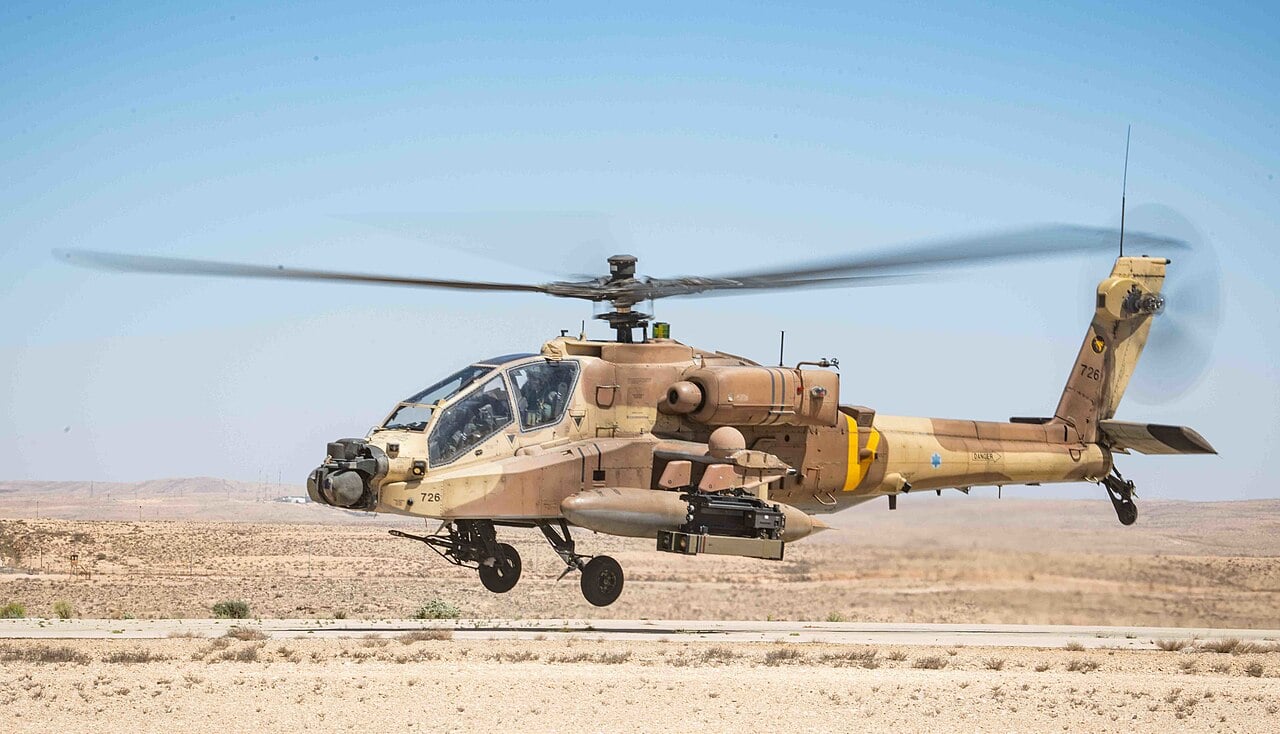
An Israeli Air Force AH-64D Apache helicopter. (Photo: IDF Spokesperson's Unit / Wikimedia Commons / CC BY-SA 3.0)
Geopolitical developments across the Levant and North Africa are no longer disconnected regional events; they form an aggressive, coordinated grand strategy orchestrated by Ankara to achieve regional hegemony and encircle the Jewish state. In my previous analysis, “Turkey’s Strategic Noose Around Israel”, I detailed how Turkey is systematically engineering this encirclement, highlighted by the rapid military build-up at the Jaghbub airbase in eastern Libya—a mere 23 kilometers from the Egyptian border, featuring an expansive 3.6-kilometer strategic runway.
Today, that strategic noose is tightening on Israel’s northeastern flank. Following the collapse of the Assad regime in December 2024, Saudi Arabia signed its first defense cooperation agreement with transitional Syria under Ahmad al-Sharaa. Parallel to this bilateral pact, Syrian Foreign Minister Asaad al-Shaibani recently announced that Damascus is actively exploring accession by early 2027 to the tripartite Saudi-Pakistani-Turkish defense bloc—widely referred to as the “Mecca Pact”.
What international observers naively celebrate as “post-war normalization” is, in operational terms, a dangerous consolidation: Ankara is positioning itself as the ultimate patron of a Sunni military matrix, funded by Gulf capital, designed to dilute Israeli military freedom of action, flank Egypt, and exert immense pressure on Israel’s maritime allies, Greece and Cyprus.
The Syrian Front: From Civil War to Northern Protectorate
The fall of Damascus did not produce an independent sovereign state; it produced a vulnerable entity whose northern territories remain under direct Turkish military occupation and influence. Ankara now controls the northern switchboard. By facilitating Riyadh’s financial and defense re-entry into Damascus, Turkey is positioning itself to supervise the rebuilding of the Syrian armed forces—equipping them with Turkish doctrine, electronic warfare, and drone technology.
The aspiration of Damascus to enter the “Mecca Pact”—a framework featuring collective defense commitments analogous to NATO’s Article 5—is an overt effort to deter Israeli preemptive maneuvers. Certain regional commentators have speculated that Syria might offer military cooperation to Riyadh against the Iranian-backed Houthis in exchange for defense integration. However, the notion that an Article 5-style umbrella will shield Damascus from the Israeli Defense Forces (IDF) is a dangerous illusion. As realistic military analysts concede, none of these states—neither Turkey, Pakistan, nor Saudi Arabia—will enter a direct war with Israel to contest its operations in southern Syria.
Connecting the Flanks: Jaghbub to Daraa
To understand the systemic nature of Turkey’s strategy, one must examine the geopolitical map as an integrated theater:
-
The Western Pincer (Eastern Libya): Ankara’s deep infrastructure works at the Jaghbub airbase, directly on Egypt’s doorstep, provide Turkey with an operational staging ground. It threatens Cairo’s western border, enforces Ankara’s illegitimate maritime claims, and seeks to project power across the Mediterranean basin.
-
The Levant Corridor (Syria): In the north, Turkey seeks to replace the vacuum left by Tehran with its own military architecture. Deploying Turkish-supplied radars, sensor networks, or air defense systems along the Syrian axis would directly impinge on Israel’s intelligence collection and air defense bubble.
-
The Strategic Stranglehold on Greece and Cyprus: This expansive crescent directly targets the trilateral partnership linking Israel, Greece, and Cyprus. By anchoring bases in eastern Libya and exercising defense hegemony over Syria, Turkey seeks to establish an anti-access wall in the Eastern Mediterranean, jeopardizing strategic energy corridors like the Great Sea Interconnector and isolating democratic partners.
The Midday Warning: IAF Dominance Over Southern Syria
Israel does not govern its national survival through diplomatic press releases. The operational response to these expanding defense talks was delivered directly in the sky: Israeli fighter jets executed assertive, low-altitude sweeps in broad daylight over Daraa, As-Suwayda, and the southern approaches to Damascus.
This midday show of force delivered an unequivocal, three-fold operational message:
-
To Damascus: Signing defense pacts in Riyadh or seeking refuge under Ankara’s umbrella will not prevent the IDF from interdicting hostile nodes. Syrian airspace remains transparent to Israeli air superiority.
-
To Ankara: Israel is fully tracking Turkey’s military expansionism—from radar installations in northern Syria to military airfields in eastern Libya. The IDF will preemptively dismantle any infrastructure threatening its freedom of action.
-
To Riyadh: Tactical alignments aimed at neutralizing the Houthis cannot come at the expense of empowering new hostile security belts on Israel’s northern border.
The Invariable Reality
The emerging convergence of Ankara, Islamabad, Riyadh, and post-Assad Damascus represents the most aggressive revisionist challenge to Middle Eastern stability in recent decades. It directly threatens Israel’s border security, challenges Egypt’s national sovereignty, and imperils the vital maritime interests of Greece and Cyprus.
While regional powers discuss collective defense agreements to constrain Israeli action, the strategic baseline remains absolute. The true borders of deterrence in the Middle East are drawn neither in Riyadh nor in Ankara; they are defined and enforced by the decisive reach of Israeli air power over the Levant.
Related Topics
Related Posts