
Seeking honest leadership, and new narratives.
Two Elections and the Future of the US-Israel Relationship
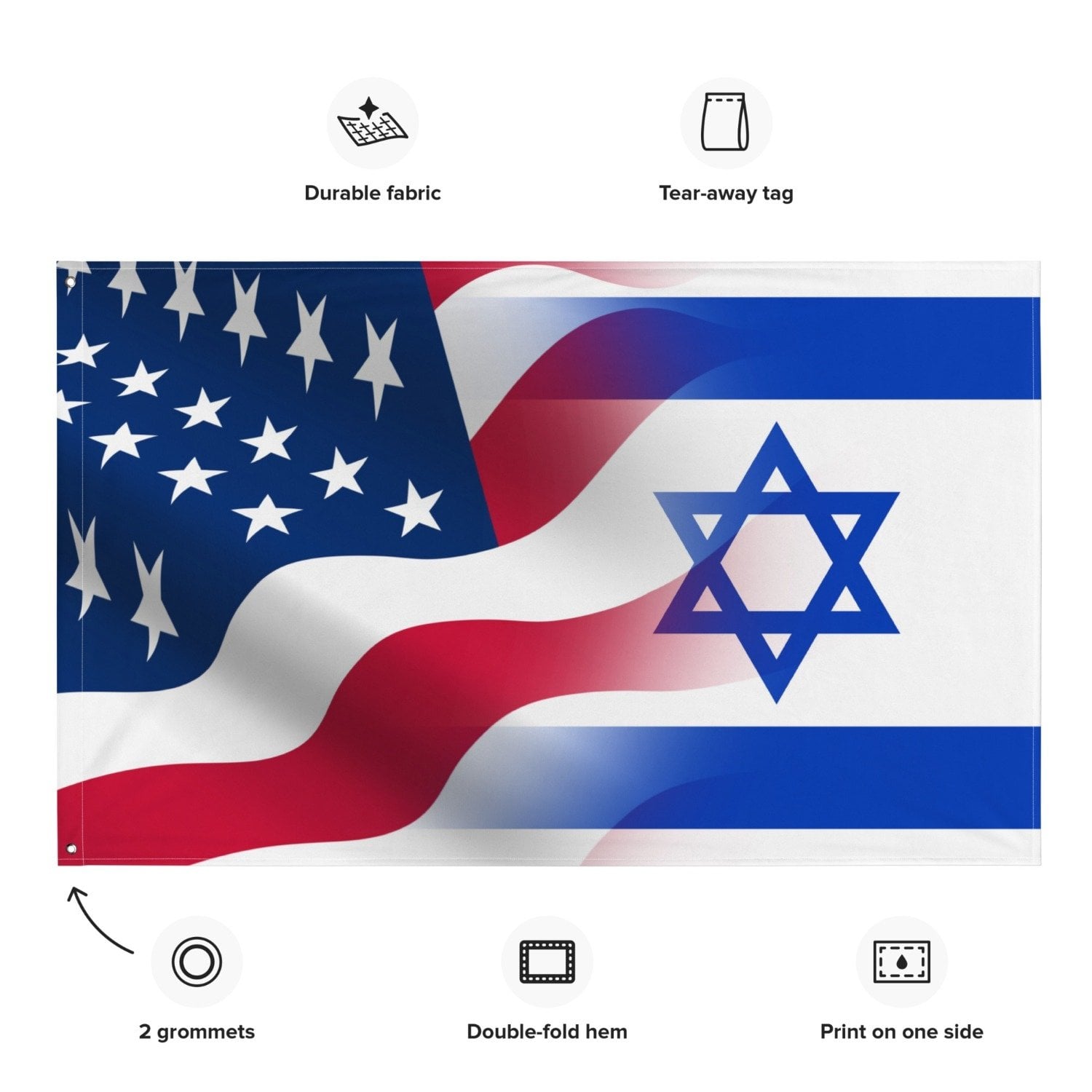
Credit: Shutterstock
Israelis go to the polls next week, on October 27. Americans follow them in the November 3 midterms. A week separates the elections, but their consequences will overlap for years.
The question of Benjamin Netanyahu’s political future carries a larger question about accountability. Israel deserves a credible, independent reckoning with the failures that made October 7 possible. The public must be able to trust that those entrusted with its security will answer for their decisions. That principle should apply to every government, whatever its politics.
The next coalition will also shape the independence of Israel’s courts and the relationship between religion and state. The military service debate asks whether obligations can be shared fairly.
Israel needs leaders who can confront threats from Iran and armed groups while offering a credible strategy beyond repeated wars. Talking about Palestinian civilian lives and rights seriously, not turning a blind eye to Jewish terrorism in the West Bank and preserving possibilities for regional agreements, belong in that strategy. Military strength cannot compensate indefinitely for political isolation.
Don’t assume that replacing Netanyahu would automatically produce a diplomatic breakthrough. As Reuters reported this week, he and Gadi Eisenkot both oppose Palestinian statehood, although they differ over settlement policy and prospective coalition partners. Any new government should be judged by its decisions and coalition commitments once a new coalition government is formed.
In the United States, Americans are choosing a new Congress, with state elections also carrying substantial consequences. Donald Trump will still occupy the White House after the midterms, but the election can change how effectively Congress scrutinizes his administration.
I yearn for a Congress willing to defend constitutional limits and demand answers from the executive branch. Its spending decisions will affect health care and public services; its oversight can expose abuses of power. Senate control also matters for judicial confirmations.
For American families, these elections concern the cost and character of everyday life. What most Israelis fail to understand is that Americans will be going to the polls in November to determine their own future, not the future of the Middle East. For Israelis its a hard pill to swallow.
For Israel, a Democratic victory in either chamber could bring more scrutiny of arms transfers, settlement policy and the future of peace in the region. It could strengthen efforts to attach conditions to assistance. Those are possibilities, not automatic outcomes: Democrats disagree among themselves, and changing legislation generally requires both chambers and the president, or enough votes to override a veto. The same can be said of the Republican Party.
Israelis should resist treating a Democratic victory in November as a defeat for Israel. However, one must look at the makeup of the new class of Democratic legislators in the House and Senate to see where the wind will take us. I once refered to the “squad” as just that, a small group of legislatures. Today, I am looking to see if the “squad” has turned into a “tsunami.” The future make up of legislators in Washingon will affect the way I will view bi-lateral relations between our countries, and again I also look at the incoming class of Republicans. Gone are the days Israel could claim that one party is more committed to Israel than the other.
My post-October 7 acumen stipulates that Democrats have a responsibility to take Israeli security seriously and confront antisemitism clearly. Much more than many of them are doing today. I have no problem with the party talking about Palestinian rights, but as far as I am concernbed, the party has to fully recognize the legitimacy of Israel and the fears of its citizens above all, and not treat the ongoing Middle East conflict through rose colored glasses.
A Republican victory would not resolve the relationship’s deeper vulnerabilities either. My concern is that continued Republican control, alongside another Netanyahu-led coalition, could encourage both governments to mistake political alignment for lasting public support. Though we are noticing that Republican support for the ongoing conflict with Iran is waning. The question I ask is what will happen to this sentiment on the day after the elections if Republicans maintain the upper hand in both houses.
A different Israeli coalition could create an opening with either party in Washington. That opening would depend on visible changes: respect for independent institutions, credible action against settler violence and a serious diplomatic strategy. A new face would have limited value if Americans saw the same policies. Conversely, substantive change could help even where personal relations between leaders were less comfortable.
There is a concrete deadline behind these political choices. The current ten-year security assistance framework, negotiated under President Barack Obama, runs through fiscal 2028. Congress still decides what to fund each year. The Congress elected this November will therefore serve during a consequential period for the future framework. Israel has a direct interest in maintaining confidence across party lines as that discussion develops.
America also has interests of its own in preserving this partnership, including joint defense research and cooperation against regional threats. A more isolated Israel could complicate American diplomacy. A stable, credible Israeli partner could help Washington pursue regional agreements while managing the risks of further conflict.
The public foundations of the relationship deserve equal attention. Pew Research Center’s May survey found that 52 percent of Americans viewed the Israeli people favorably, down from 67 percent in 2022. Its October analysis of the May data also highlighted a striking Republican age gap: 43 percent of Republicans under 35 viewed Israelis favorably, compared with 79 percent of those 50 and older.
These are attitudes toward people, not simply a verdict on Netanyahu. I read them as a warning sign against assuming that support will renew itself with each generation. Israelis need relationships with Americans who disagree with its government, including people who have never felt a personal connection to the country.
Encounters with Israeli civil society can give Americans a fuller picture of the country: people building shared communities, solving practical problems and contributing beyond Israel’s borders. Such relationships create space for honest conversation. They cannot erase the consequences of government policy, and their credibility depends on acknowledging difficult realities.
Neither country should choose its government to please the other. Both should understand that the way they exercise power at home affects the trust they can earn abroad. An Israel that protects democratic institutions strengthens the case made by its friends. An America that respects constitutional limits becomes a more dependable partner.
I want these elections to produce leaders who understand that responsibility. The relationship we leave to the next generation must be strong enough to survive a different prime minister, a different congressional majority and a different president. We should judge this autumn’s choices with that longer future in mind.
Related Topics
Related Posts