Undoing Qatar’s hold on US classrooms
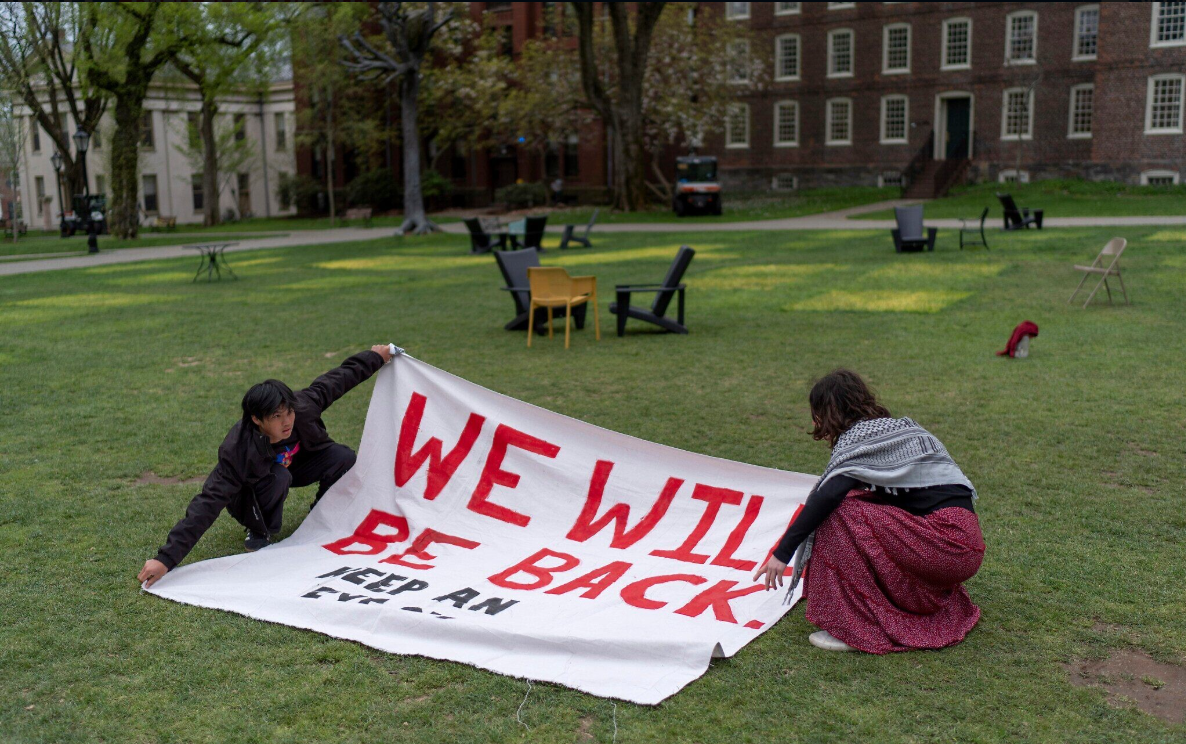
Today marks a quiet but deeply significant moment in the struggle for academic integrity in the United States: Brown University officially shut down its widely influential Choices Program for K-12 educational programming.
For decades, this curriculum, used in more than 8,000 schools and reaching over a million students nationwide, was marketed as a neutral, scholarly resource for teaching global affairs. In truth, as the Institute for the Study of Global Antisemitism and Policy (ISGAP) has uncovered, it functioned as a pipeline for Qatari-sponsored ideological influence. It distorted history, erased Jewish and Christian narratives from the Middle East, and embedded anti-American, anti-Israel content in K-12 classrooms across the US.
Brown’s decision to discontinue the program by June 30 followed ISGAP’s investigative report and a subsequent federal Title VI investigation into the university. Yet the university has offered no explanation, no public reckoning, and no acknowledgment of wrongdoing. The closure is happening quietly, with no accountability, no transparency, and no assurance that similar ideological campaigns are not taking place elsewhere.
Education in America is under siege. A foreign authoritarian regime is quietly infiltrating US classrooms, shaping the worldview of millions of students, and doing so in plain sight. Qatar, a state with documented ties to Iran, the Taliban, Hamas, and the Muslim Brotherhood, has manipulated K-12 curricula to systematically distort history, delegitimize Israel, and influence young minds. This is an orchestrated campaign of ideological warfare, executed through a well-funded and deeply embedded network of influence in the American education system.
We have known about Qatari financial influence in our higher education for years. In July 2019, I presented the findings of ISGAP’s ongoing “Follow the Money” research project at the Department of Justice in Washington, DC. This investigation uncovered billions of dollars in illicit and undisclosed funding from Qatar into US universities. That funding promoted anti-democratic, antisemitic ideologies and, in some cases, connections to terrorism. Our latest report demonstrates something even more insidious: Qatar is no longer content with targeting universities. It is now turning its attention to K-12 education, shaping young minds before they even reach college.
The findings reveal how Qatar Foundation International (QFI), a key instrument of the Qatari regime, has covertly influenced the Choices Program at Brown. What was presented as objective historical education instead erased critical primary sources, removed maps, and advanced a narrative in line with Qatar’s foreign policy interests. The Middle East was portrayed as an exclusively Muslim region. Jews and Christians, present in the region for millennia, were written out.
Even more troubling is the lack of transparency. Unlike traditional textbooks, which are reviewed and publicly available, the Choices Program is a digital curriculum. It can be edited in real time without oversight, without school board approval, and without parental consent. That is not education. That is covert indoctrination.
Under U.S. law, universities are required to disclose foreign gifts over $250,000. The evidence strongly suggests that Brown University failed to disclose millions in Qatari funding tied to the Choices Program. That may represent a serious violation of federal law. Brown’s decision to shutter the program just as a federal investigation gathers steam appears more evasive than corrective.
Monday’s shutdown should not be seen as closure. It is a beginning. The US Department of Education and the Department of Justice must continue their investigations. Congress must hold oversight hearings to determine the extent of Qatar’s role in shaping K-12 education, and to hold Brown accountable for its failure to act sooner. Qatar Foundation International must be required to register under the Foreign Agents Registration Act (FARA), as its activities meet the legal threshold for acting on behalf of a foreign power.
The United States rightly acted to dismantle China’s Confucius Institutes. Qatar’s penetration of our school systems is more dangerous still, because it targets children at their most formative stage, before they have had a chance to critically examine the world.
This is not just about antisemitism. It is about protecting the integrity of our educational institutions, defending democratic values, and safeguarding national security. If we permit authoritarian regimes with ties to terrorism to shape what our children learn, we are surrendering the foundations of our civic life.
The real question is no longer whether this infiltration is happening. It is whether we are willing to confront it. The battle for academic integrity begins in the classroom, and it is one the United States, nor the world, cannot afford to lose.