Russian-American-Israeli Palestinian. Palestine is Israel.
Us vs Them, Part II
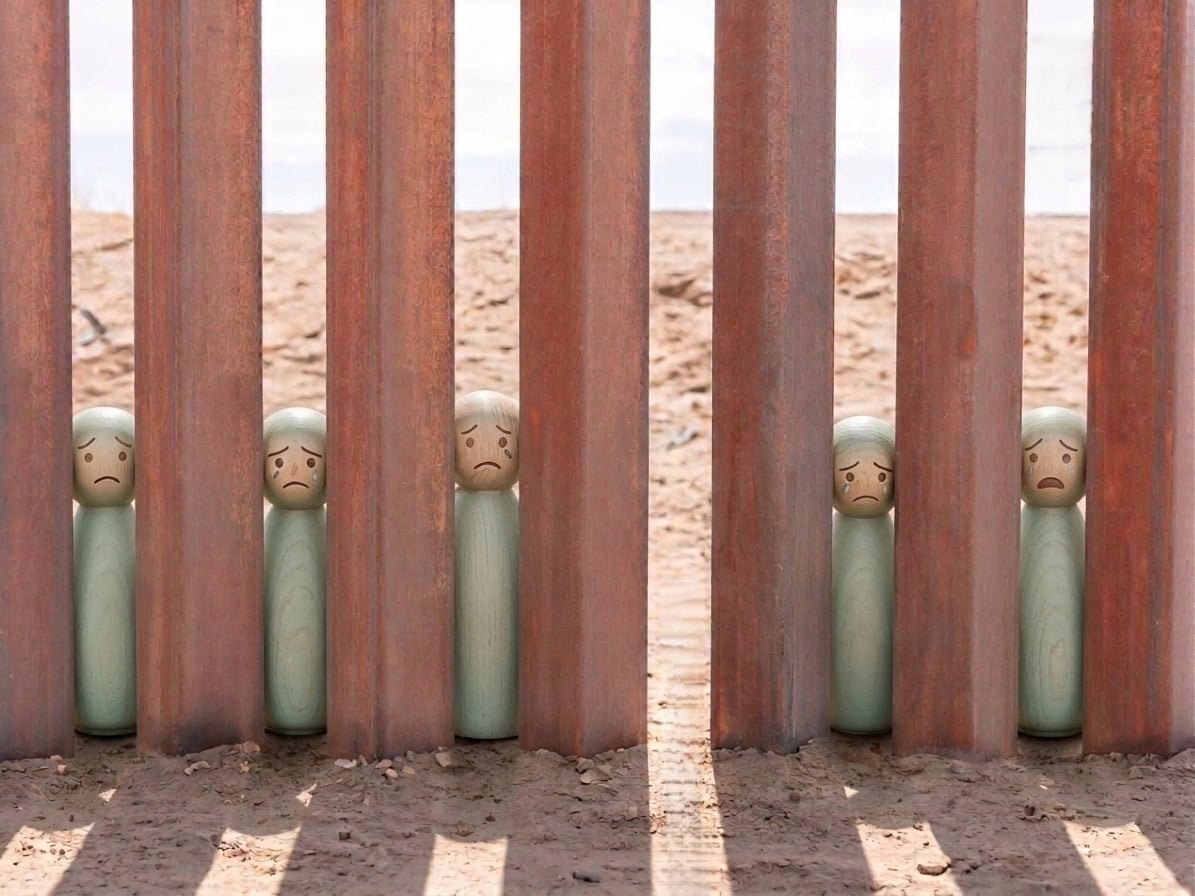
When Belonging Becomes a Boundary: How do group boundaries become social and political institutions? Image © Ivan Bassov, 2026. Licensed under CC BY 4.0.
When Belonging Becomes a Boundary
In Part I, we examined the psychological origins of “us” and “them.” We saw how easily people form groups, how arbitrary an initial boundary can be, and how differences can acquire meaning after that boundary has been established.
But psychological boundaries do not remain inside people’s minds.
They can become social categories, political identities, laws, borders, and institutions.
This raises the second question:
How do group boundaries become social and political institutions?
The examples range from highly assimilated Jews in Western Europe to the creation of more homogeneous nation-states after the collapse of European empires, and from postwar population transfers to the very different contemporary ideal of multicultural coexistence.
The Puzzle of Assimilated Jews
This helps explain one of the great puzzles of European history.
Many Jews in nineteenth- and early twentieth-century Western Europe were highly assimilated.
They spoke fluent German or French.
They attended the same schools and universities.
They worked in the same professions.
They served in national armies.
They participated in national culture.
They dressed like their neighbors.
Many considered themselves thoroughly German or French.
If language, culture, education, and civic participation were enough to establish belonging, the boundary should have disappeared.
It did not.
For antisemites, the criterion could simply change.
Jewishness could be redefined in terms of ancestry.
A person could speak perfect German and still be told that he was not truly German.
A person could convert to Christianity and still be classified as Jewish.
A family could participate fully in German society and still be treated as fundamentally foreign.
The important question was no longer:
How do you live?
It became:
Who were your ancestors?
The boundary had become hereditary.
And once the boundary was defined that way, assimilation could no longer eliminate it.
The marker had changed.
The boundary had remained.
The Illusion of Final Assimilation
The experience of assimilated Jews raises a broader question:
Can assimilation ever eliminate “us” and “them”?
Perhaps not.
Even when two populations become almost indistinguishable culturally, another boundary can emerge.
If religion becomes less important, politics may become more important.
If ethnicity becomes less important, class may become more important.
If class becomes less important, ideology may become more important.
And if one division loses its force, people may find other ways to distinguish themselves.
Human beings seem remarkably capable of creating new circles of belonging.
This does not mean that assimilation is useless.
Shared language, culture, institutions, and citizenship can create powerful common identities. They can make boundaries less important and create genuine solidarity across previous divisions.
But assimilation cannot guarantee that all boundaries disappear.
People can always create new ones.
The divisions change.
The tendency to divide does not.
That creates a difficult political choice. If boundaries cannot simply be erased, societies have to decide how to organize life around them.
One possible answer has been to reduce the number of competing groups within a state.
That brings us to one of the great experiments of modern European history.
The Pursuit of Homogeneity
The idea that different peoples living together inevitably produces conflict has influenced the drawing of borders for centuries.
The logic is simple:
If two populations have incompatible national identities, separate them.
If an empire contains many competing nationalities, allow the empire to dissolve into nation-states.
If a new border leaves a minority on the wrong side, move the population rather than the border.
After the collapse of the great European empires—and especially after the Second World War—this logic was applied on an enormous scale.
Millions of people were displaced or forcibly relocated.
Germans were expelled from large parts of Eastern and Central Europe.
Poles, Ukrainians, and others were transferred as borders shifted.
The partition of India produced one of the largest population movements in modern history.
The underlying assumption was not necessarily that homogeneous societies would be peaceful. It was more modest—and more pragmatic:
Perhaps people with incompatible national identities are less likely to fight if they do not have to share the same state.
The result was a Europe whose borders and populations were, in many places, deliberately made more homogeneous.
The UNRWA Clientele Exception
There is, however, a striking postwar exception.
After the Second World War, Europe witnessed enormous population transfers. Millions of people were moved across newly established borders, sometimes voluntarily, sometimes under coercion, and sometimes through outright expulsion.
The international system largely accepted the principle that population movements could accompany the creation of new political realities.
Yet one displaced population was treated differently.
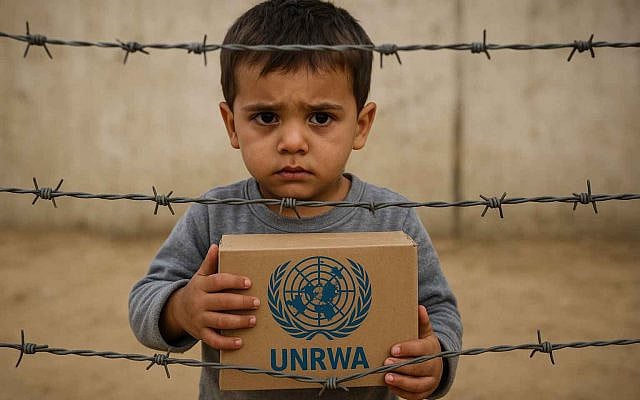
The people who became the clientele of UNRWA were not permanently resettled on the scale applied to many other displaced populations of the postwar era. Instead, a separate institutional system was created specifically for them, and refugee status was transmitted across generations under a framework different from the general UN refugee regime.
The result was unusual.
While many other displaced populations were eventually absorbed into new states and their refugee status formally ended, the UNRWA clientele remained within a distinct and continuing refugee framework.
This creates an interesting contrast with the postwar logic of population transfers.
Europe responded to ethnic and national conflict partly by moving populations and consolidating states.
The UNRWA clientele case instead preserved a population in a continuing refugee status, turning that population into a pawn and a tool in the orchestrated conflict against Israel.
Whatever one’s view of the politics, the historical contrast is difficult to ignore.
The postwar world experimented with two very different approaches to the problem of “us” and “them”:
separate the populations and end the conflict between them,
or
keep the UNRWA clientele in place and preserve the conflict as a political instrument.
One approach ended the conflict through separation. The other institutionalized the conflict through continued refugee status.
The Direction Has Changed
Today, the prevailing order in much of Europe has moved in the opposite direction: rather than separating populations, it embraces the UN’s new model of integrating different, often hostile groups within the same political communities—replicating the failed UNRWA experiment.
Large numbers of immigrants from very different linguistic, religious, cultural, and ethnic backgrounds have moved into European countries, including millions of Muslims.
The contemporary ideal is generally not separation but integration.
Diversity is often regarded as a social good.
The assumption is that people with different backgrounds can live together peacefully within the same political community, provided that they share laws, institutions, and civic norms.
There is some truth in this.
Different people can coexist.
But coexistence does not mean the disappearance of group boundaries.
People bring their identities with them.
Religion remains important.
Language remains important.
National identity remains important.
Political loyalties remain important.
And when these identities overlap with economic inequality, segregation, competing social norms, or conflicting ideas about national identity, some degree of social and political conflict is inevitable.
This does not mean that every immigrant group will become hostile to the host population, or that coexistence is impossible.
It demonstrates something more fundamental:
Changing the composition of a population does not eliminate the human tendency to form groups.
The postwar solution was often to reduce the number of competing groups within a state.
The contemporary solution is largely to allow multiple groups to coexist within the same state.
Neither approach eliminates “us” and “them.”
They simply manage the boundary differently.
From Boundaries to Institutions
Part I examined how “us” and “them” emerge in the mind.
This part has examined what happens when those boundaries move beyond the mind and become institutions.
A distinction that begins with “us” and “them” can become a classification.
A classification can become a legal category.
A legal category can determine rights, obligations, citizenship, residence, and political participation.
And eventually, a boundary can become a border.
The crucial point is that institutions do not eliminate the human tendency to form groups. They organize it.
Some institutions try to make group boundaries less important by creating shared citizenship, common laws, and overlapping identities.
Others reinforce boundaries by assigning people different legal or political statuses.
Some attempt to separate populations geographically.
Others attempt to hold them together within a common political framework.
The choice is not simply between having boundaries and having none.
The real choice is what we do with the boundaries that human beings inevitably create.
A boundary can define a community without making outsiders enemies.
It can distinguish membership without denying the humanity of those outside it.
Or it can become a mechanism for exclusion, discrimination, domination, and violence.
The psychological distinction between “us” and “them” is therefore not, by itself, the problem. The question is what happens when that distinction becomes institutionalized.
And this brings us to the final question of the series:
If human beings will always create circles of belonging—and if those circles can never simply be erased—how can we live together without turning the people outside our circle into enemies?
That is the question of Part III: Living With “Them.”
Related Topics