
Violence in Judea and Samaria (aka the West Bank)
During the Six Day War in 1967, Israel conquered territory that had been part of Jordan since the Jewish state’s 1948 War of Independence; nevertheless, it has remained under dispute for the past 52 years. Despite Israel’s success in the war, Palestinians claim the territory as their own – a lack of resolution regarding the land that has led to various expressions of conflict over the decades.
Even the name by which one refers to the area is telling. The Palestinians, for example, claim the “West Bank” (that is, west of the Jordan River) as their own, based on generations of Arab presence there – at present, almost 3 million Palestinians call it home. Israel has historical and security arguments for holding on to the biblical “Judea and Samaria” (Yehuda and Shomron), as well as a growing population there of half a million Jews.
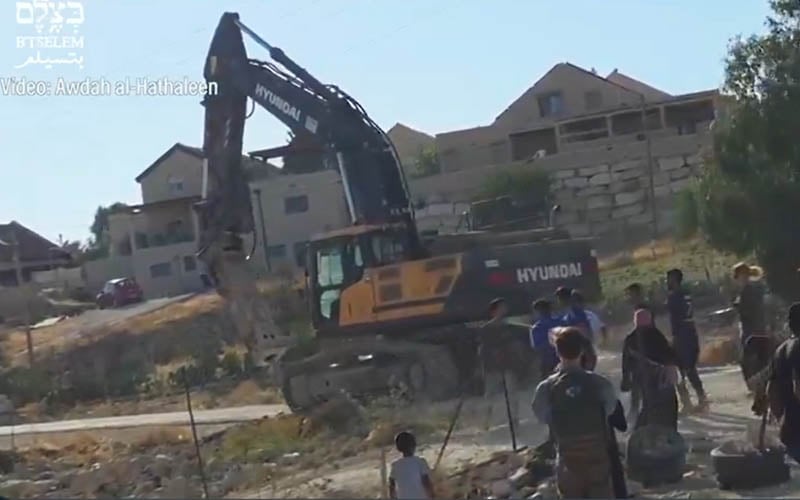
Israel’s power there has always been via its military strength –which the Palestinians have fought with terror attacks – but its civilian presence has grown through the establishment of settlements. Most of these usually small residential enclaves were authorized by the Israeli government, but not all of them. And in recent years, some of the settlers have shown themselves to be radical, perpetrating a steady increase in violence in the area. Their goal? To frighten the residents of the Palestinian villages enough that they are convinced to abandon their homes. Many Israelis disapprove of this goal and these tactics, but they are not blind to the fact that these settlers are extremists in Israeli society – far from the mainstream, at least, until recently — and have caused a fraction of the violence committed by Palestinians in terror attacks. For the Palestinians, however, the violent settlers are a source of terror.
These settlers largely hail from the religious Zionist community, and many perceive themselves to be the most committed pioneers of the modern-day return to Zion. Religious Zionism (the ideology, independent of the political party) has shifted right in its ideology, and it has become focused on the arrival of the messiah like it never was before. Religious fervor about settling the land of Israel today has grown, especially with regard to conquering the biblical territory that was in Jewish hands long ago. The fervent new belief is that Jewish settling of the land is an irreversible part of a process of redemption.
Few religious Zionist rabbis endorse this population and their violent actions, but even fewer condemn the violence. To be clear, it violates Israeli law. The problem is that the authorities rarely subject the perpetrators to the legal consequence of their crimes. And the problem with that, beyond the obvious justice not being served, is the resulting perception that violence is tolerated by both the settlers’ movement and the Israeli government.
What makes the situation worse is the support for the violent settlers by the key ministers in the government who are in charge of the police and also of Judea and Samaria. They have ensured that incidents of settler violence are investigate by Israel Police and units of the IDF – and then judged in Israeli courts. But cases against Jews are sent to different courts than are those against Palestinians. The imbalance of treatment in the respective system was demonstrated recently, when a well-known Palestinian activist was shot and killed. Despite the existence of a telling video of the shooting, the prime Jewish suspect was released from custody quickly, albeit to house arrest – at the same time that 21 Palestinians were arrested. The police then delayed releasing the activist’s body, and his family was forced to negotiate with law enforcement to get permission for his burial.
There are ministers within the government for whom the very term “terrorists” means Arab terrorists. Israeli media are also slow to address the development of a group of Jewish terrorists. They have their hands full with reporting on a country divided, on whether to prioritize freeing the hostages or defeating Hamas, on the Haredi draft, and on the conflict between the government and the Supreme Court and the concerns about the balance of power there. Settler violence against Palestinians in the West Bank (or Judea and Samaria, for that matter) is easy to ignore.
But Israel cannot really afford to ignore violent attacks on Palestinian villages. It smacks of tacit approval, or, worse, justification of the attacks. Even when the Jewish state finds itself without a partner with whom to consider a two-state solution, for example, it must not acquiesce to the Jewish instigation of violence against Palestinians.
Israel must decide whether it is willing to allow an ideologically rigid minority to determine the country’s moral posture (and if it is, why?!). Does the legitimate historical and biblical claim to the Jewish homeland give the Jewish state the right to expel people who have been living in this same land for generations? Clearly, any whiff of the affirmative as a response is problematic. Moreover, Israel was established and accepts itself as both a Jewish and a democratic state. By definition, that should mean that the Arab Israelis should have full citizenship – and yet, the Knesset majority that voted to annex Judea and Samaria made no mention of the nearly 3 million Arabs who live in the West Bank. What is their status to be if Israel proceeds with annexation? The territory under dispute remains a significant source of conflict.
It is a challenge to the moral standing of a beleaguered Israel and, in particular, to the religious Zionist movement.