99.6% Ashkenazi + .4% Viking = 100% Zionist
Wake Up! Stop Hitting Snooze!
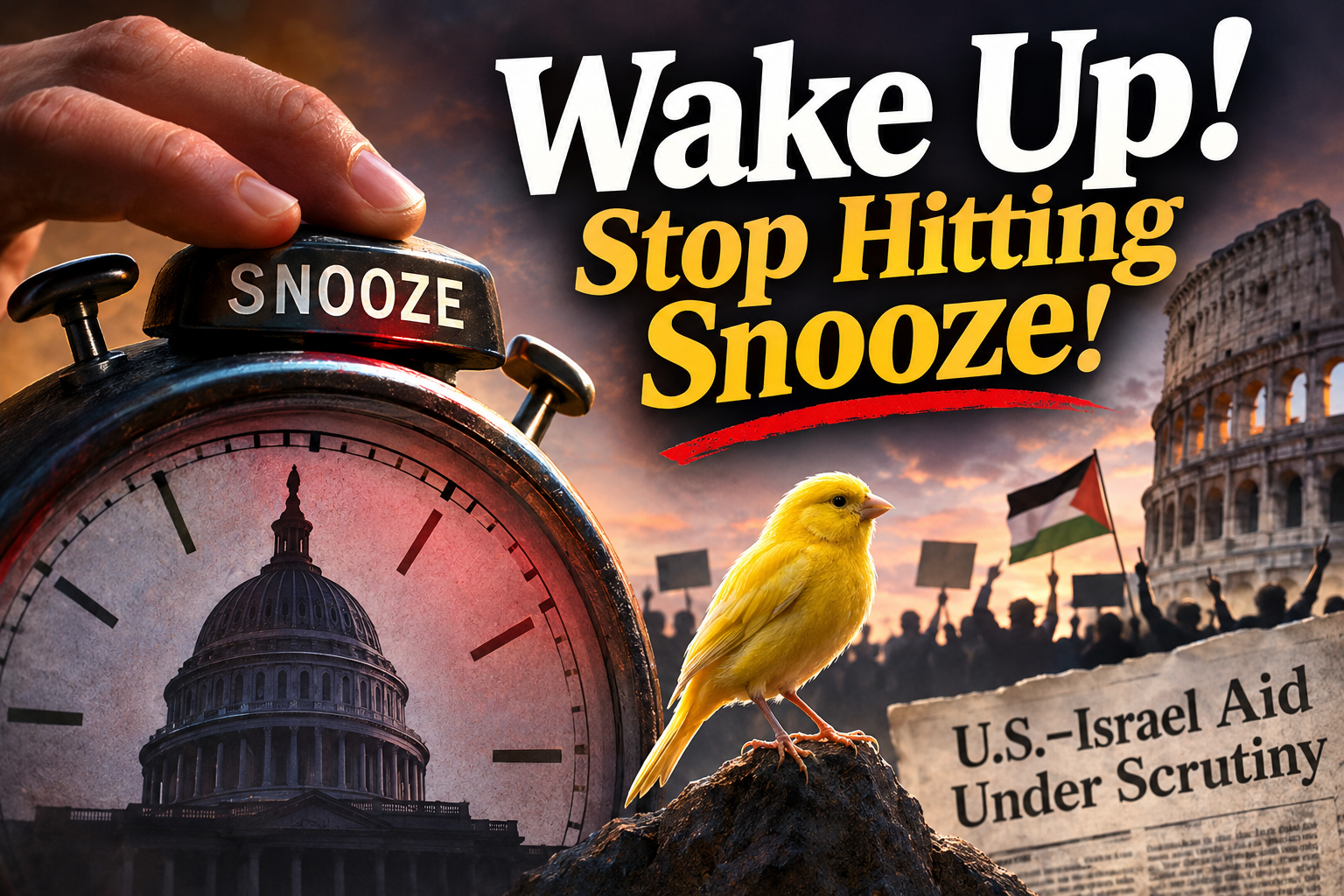
Wake Up!
The warning signs were there long before the 2026 elections. The question is whether America—and especially American Jews—recognizes what they may mean.
TL;DR? Perhaps. But some warnings are too important to ignore—and the snooze button is no longer an option.
I recently returned from Italy, where I spent time in Rome and Florence. Rome is a city where history surrounds you. Ancient ruins, magnificent churches, monuments to fallen empires. Everywhere you look, reminders that even the most powerful civilizations are not immune to change.
But it wasn’t ancient history that troubled me most.
During my late-October visit, pro-Palestinian demonstrators were gathering in Rome. The sheer scale was striking. And Rome was hardly alone. Across Europe, enormous demonstrations over Israel and Gaza have become familiar scenes.
Peaceful protest is a fundamental democratic right. Criticism of Israel is not inherently antisemitic. But when demonstrations include celebrations of October 7, support for Hamas, or hostility toward Jews who have nothing to do with Israeli government policy, something far more troubling is happening.
I returned to America just days before the November 2026 midterm elections.
And another alarm sounded.
The Elections Didn’t Create the Warning. They Exposed It.
The midterms didn’t suddenly change America’s political landscape. They illuminated sentiments that have been growing for years.
Bernie Sanders helped bring democratic socialism into mainstream political conversation. Alexandria Ocasio-Cortez became a national political force. Zohran Mamdani’s rise in New York City showed how that movement could translate into executive power.
Now Abdul El-Sayed has won a United States Senate seat in Michigan.
His campaign questioned American military support for Israel, including connecting the Iran war to rising gasoline and grocery prices. An outside political action committee supporting him went further, producing an advertisement suggesting Americans were sacrificing their ability to buy food to finance violence against Palestinians. El-Sayed’s campaign distanced itself from the ad.
But the underlying message deserves attention: Israel is increasingly being presented not merely as a controversial ally, but as a contributor to Americans’ economic hardship.
There is a difference between debating foreign assistance and turning a country into a convenient explanation for domestic problems. And another, more dangerous line between criticizing Israel and holding Jewish Americans collectively responsible for its actions.
Not every progressive shares these positions. Nor does every Democrat elected in November represent the party’s democratic-socialist wing.
But the elections revealed that ideas once associated largely with activist movements now have influential representatives in government.
The question isn’t simply who won. It’s what Americans have become increasingly willing to accept.
An Uncomfortable Intersection
Intersectionality is a familiar concept in American politics. But we’re witnessing a different kind of intersection in the debate over Israel.
Progressive activists who view Israel through the lens of colonialism. Democratic socialists who oppose military assistance. Younger Americans shaped by images from Gaza.
And on the other side, America First conservatives who oppose foreign entanglements and believe American resources should remain at home.
These groups disagree on almost everything. Yet their positions can converge on reconsidering America’s longstanding relationship with Israel.
For decades, Israel benefited from a durable bipartisan consensus in Washington. That consensus is increasingly contested.
And when national security depends partly on another country’s political decisions, changing public sentiment becomes more than an academic concern.
Israel May Already Be Listening to the Alarm
On November 3, Election Day, President Trump announced that the United States would end approximately $4 billion in annual military assistance to Israel while continuing weapons sales.
Trump said the arrangement had been discussed with Prime Minister Netanyahu months earlier. Yet the timing was noteworthy, particularly because Trump acknowledged the political criticism Republicans faced over assistance to Israel.
The existing agreement runs through fiscal year 2028, and the practical details of an early termination remain unresolved.
But Netanyahu had already been advocating a gradual transition away from American military grants.
Consider the strategic implications.
An Israel that voluntarily reduces its dependence on American funding is in a different position from an Israel threatened with losing that funding unless it changes its policies.
One approach allows Israel to plan for greater independence. The other risks making financial assistance leverage in disputes over Israeli security decisions.
Independence would not eliminate reliance on American weapons, technology, or diplomatic support at the United Nations. And much of the assistance currently supports American defense manufacturers because the funds must be spent on U.S.-made equipment.
Still, perhaps Israel has recognized that the political assumptions underpinning its relationship with America cannot be taken for granted indefinitely.
If Israel is reconsidering those assumptions, should American Jews be reconsidering some of theirs?
The Pendulum Never Stops Swinging
Think about the last quarter-century of American politics.
Bush. Obama. Trump. Biden. Trump again.
Different presidents. Different philosophies. Dramatic reversals in domestic and foreign policy.
Americans have grown accustomed to the pendulum swinging. But what happens when the next swing affects Israel’s security and the political climate surrounding Jewish Americans?
Consider 2028.
Imagine a presidential ticket featuring Gavin Newsom and Abdul El-Sayed. Or Alexandria Ocasio-Cortez and El-Sayed. Or even El-Sayed himself at the top of the ticket.
These are hypothetical scenarios, not predictions. But dismissing a newly elected senator as too inexperienced to become a presidential contender would ignore history.
Barack Obama entered the Senate in January 2005. Less than four years later, he was elected president.
His rise demonstrated how quickly a relatively new national political figure can reach the White House.
That doesn’t mean El-Sayed will follow the same path. But it raises questions about what a future administration advocating a more restrictive relationship with Israel might mean.
Would military assistance become conditional? Would diplomatic protection at the United Nations weaken? Would Israel face pressure to make concessions its government considered contrary to its security interests?
And what might increasingly contentious debates over Israel mean for American Jews if the distinction between Israeli policy and Jewish identity continues to blur?
The pendulum will keep swinging.
The question is which assumptions will survive its next movement.
The Canary in the Coal Mine
Miners once carried canaries underground because the birds were especially sensitive to dangerous gases. When a canary showed signs of distress, the miners knew the air was becoming unsafe.
The canary wasn’t the only creature in danger.
It was simply the first to reveal it.
Jewish history offers painful examples of what happens when economic frustration, political upheaval, and social resentment find a convenient target.
Antisemitism has appeared in different ideological disguises, expressed through religious accusations, conspiracy narratives, and claims that Jews exercise disproportionate influence over national affairs.
Today, debates over Israel introduce another dimension.
Not every criticism of Israel is antisemitic. Nor is opposition to American military assistance inherently hostility toward Jews.
But when Jewish students are held responsible for a foreign government’s actions, Jewish institutions require extraordinary security, or political rhetoric revives familiar themes of collective blame, the warning deserves attention.
And not just from Jews.
Martin Niemöller’s famous First They Came reflection addresses something larger than the persecution of any single community.
It describes the consequences of indifference.
The danger begins when people convince themselves that injustice is someone else’s problem.
When Jews are targeted, it is a Jewish problem. When Muslims are targeted, it is a Muslim problem. When any minority is intimidated or collectively blamed, it becomes a problem for the society that permits it.
The lesson isn’t that America today is Nazi Germany. It is that democratic societies depend on people recognizing threats to others’ rights and security, even when they disagree politically.
The canary’s warning matters because everyone shares the same air.
How Many More Alarms?
I’m not suggesting that every progressive politician harbors antisemitic beliefs or that a change in foreign policy automatically threatens American Jews.
I’m suggesting that several developments deserve to be considered together.
Mass demonstrations across Europe, some accompanied by antisemitic incidents. Israel’s increasingly contentious place in American politics. The use of Israel in arguments about domestic economic hardship. A weakening bipartisan consensus. And an Israeli government considering how to become less dependent on American military financing.
None alone establishes what comes next.
Together, they raise questions that deserve attention.
For American Jews, those questions are personal. For Israelis, they’re strategic and potentially existential. For Americans who value pluralism, religious freedom, and the protection of minorities, they concern the kind of country we intend to remain.
The 2026 elections didn’t create these tensions. They revealed how much the political environment has changed.
We can disagree about Israel’s government, American foreign policy, Gaza, and the direction of our political parties.
But we should recognize the danger when political disagreement becomes collective suspicion, hostility becomes normalized, and people decide that threats to someone else’s security are not their concern.
The canary in the coal mine was never warning only the canary.
It was warning everyone who shared the air.
Wake up, America.
Stop hitting snooze.
Related Topics