
Want to cripple Iran? Follow the money to Baghdad
American aircraft carriers are steaming toward the Persian Gulf, and the Trump administration is weighing military options against Iran. Airstrikes might bring Tehran to its knees. But they won’t touch the regime’s most reliable cash pipeline: around $12 billion it siphons from Iraq every year.
That’s right. Iraq, nominally a US ally, has become Iran’s ATM.
Tehran’s representatives inside Iraq’s own government dip into state coffers, smuggle oil, and manipulate banks. Unlike Iranian oil sales to China, which bypass Western financial systems entirely, Iraqi money flows through dollar-based channels. Washington has real leverage here. It just needs to use it.
Consider what happened in January. Protests erupted across all 31 Iranian provinces. The regime responded with the bloodiest crackdown since 1979. Thousands were killed in the streets at the hands of their own government. The regime survived. But the crisis revealed something crucial: they need support from Iraq.
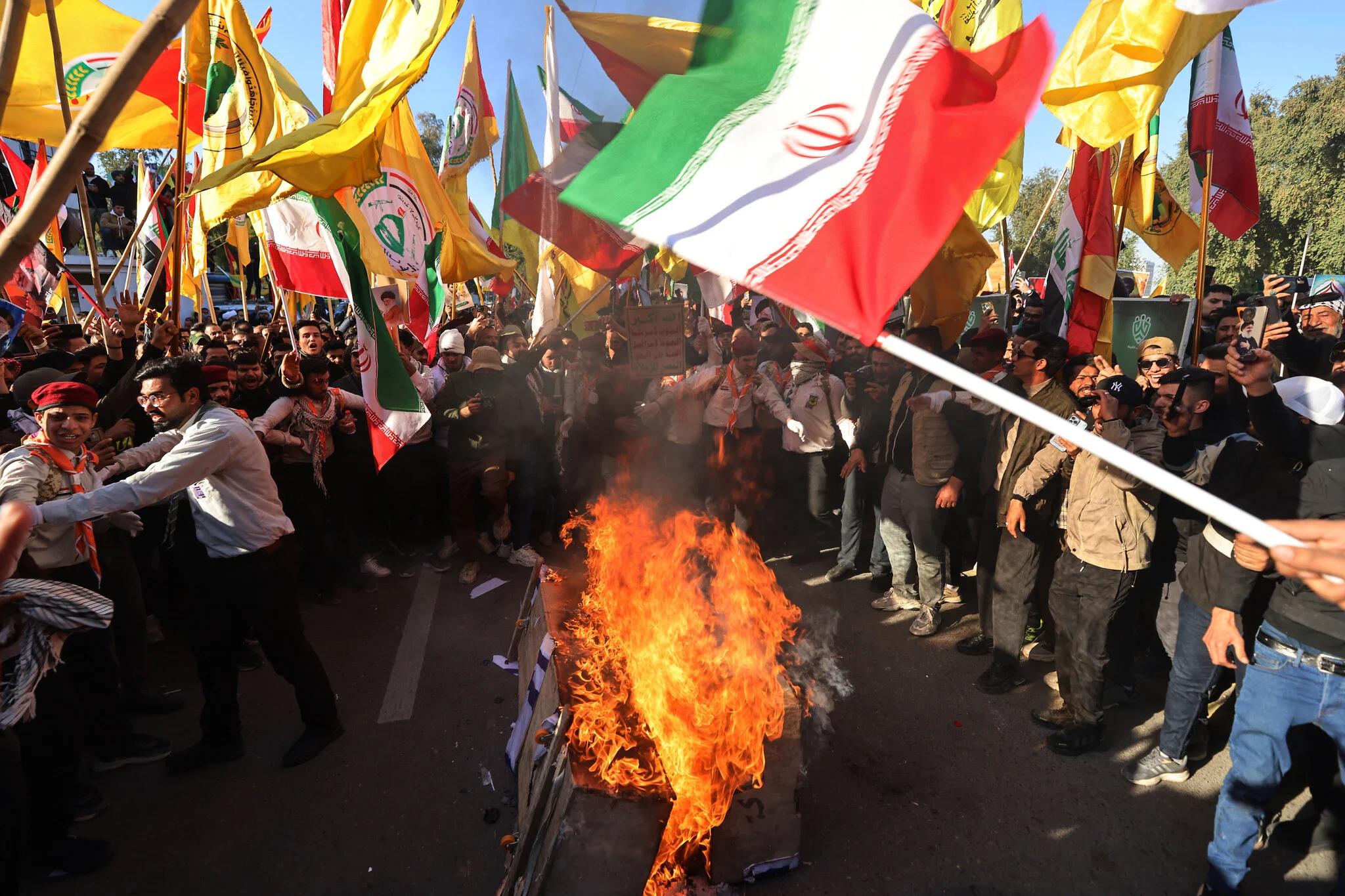
Roughly 800 fighters from Iraq’s Popular Mobilization Forces crossed into Iran to help crush the protests. These were not Iranian mercenaries. They were Iraqis, still drawing salaries from Baghdad’s treasury while doing Tehran’s dirty work. Iraq finances Iran’s regional operations, and Iran can call in Iraqi muscle when needed.
The evidence is clear: war with Israel, combined with sanctions, has crushed Iran’s economy. Tehran needs outside money, and Baghdad provides it.
The Iraqi Popular Mobilization Forces, whose commanders openly pledge allegiance to Iran’s Supreme Leader, receive $3.4 billion annually from Iraq’s state budget. This isn’t Iranian money transferred to Iraq. This is Iraqi money, approved through Iraq’s own budget process, by pro-Iranian militias holding parliamentary seats and cabinet positions.
The graft runs deeper than budget allocations. They are illegally exporting millions of dollar’s worth of Iranian oil to the west repackaged as made in Iraq, as most of the free world won’t buy Iranian oil.
Iraqi banks have executed billions in fraudulent wire transfers directly to Iranian terror proxies worldwide, like Hamas and Hezbollah. These channels are identifiable. They are targetable. And Washington already has the legal authority to go after them.
Here’s the thing: most Iraqis oppose Iranian influence. The problem is that a violent minority, through Iranian militia-aligned parties, controls key positions in government. Yet when Washington pushes, Baghdad moves. US special envoy to Iraq, Mark Savaya, has identified militia dissolution as his primary objective.
Three scenarios frame the choices ahead.
If US strikes succeed but the regime survives, Tehran will need Iraqi revenue more desperately than ever.
If strikes trigger regime change, a window opens for Iraqi realignment with the West. But there’s a catch: militias accustomed to a $3.4 billion budget won’t walk away just because their patron in Tehran fell. Without American engagement, they could become independent criminal organizations or find new rogue sponsors.
And if strikes don’t happen at all, Iraq remains the primary chokepoint for degrading Iranian power without firing a shot.
In every scenario, the prescription is the same: Treasury designations against documented diversion networks, security assistance conditioned on budget transparency, and clear public consequences for sanctions evasion.
Military strikes may be important. But choking off billions of Iraqi dollars flowing to Tehran could financially strangle the regime and open a new chapter for the people of Iran, Iraq, and the entire region.
—