
President of Shahvand Think Tank
Washington’s New Middle East Playbook
Iraq, Lebanon, and the Politics of Conditional Sovereignty
A quiet shift is underway in how power is exercised in the Middle East. It is no longer defined primarily by large-scale military intervention or formal regime change, but by a more indirect mechanism: financial leverage, institutional pressure, and conditional access to global systems of legitimacy. The emerging pattern can be described as conditional sovereignty—the idea that a state’s autonomy is increasingly tied to its ability to meet externally defined benchmarks in governance, finance, and security control.
Nowhere is this more visible than in Iraq and Lebanon, two states where the central challenge is not the absence of government, but the fragmentation of authority across formal institutions and armed non-state actors.
In Iraq, the post-Sudani political transition exposed the continued fragility of executive authority and the external constraints shaping elite selection. Within the Shiite political ecosystem, early momentum toward a familiar leadership configuration reportedly encountered strong resistance from Washington, which has consistently opposed the consolidation of Iran-aligned figures at the head of the executive branch.
This influence does not operate through direct control of appointments, but through the structure of Iraq’s financial dependency. A significant share of Iraq’s oil revenues is processed through mechanisms embedded in the U.S. financial system, creating a quiet but powerful constraint: access to liquidity, international banking channels, and dollar clearance functions as an instrument of political discipline. In this environment, leadership selection becomes inseparable from financial compatibility.
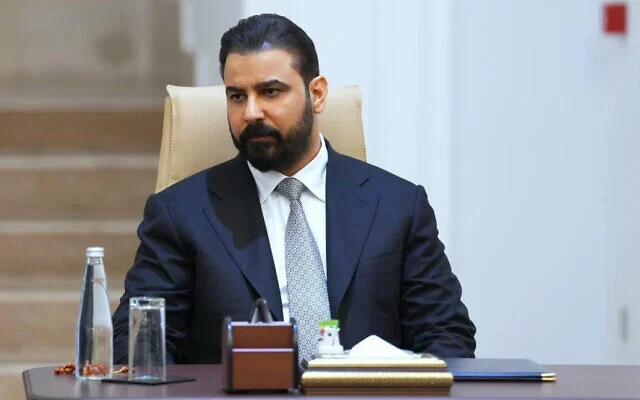
It is in this context that Ali al-Zaidi emerged. A billionaire banker and businessman with a background in Iraq’s financial sector—including earlier ties to Al-Janoub Islamic Bank—al-Zaidi represents a technocratic profile that aligns with the requirements of a system defined by banking oversight and external financial gatekeeping. His acceptability is not simply political; it is structural. In a system where liquidity, compliance, and international banking access are decisive constraints, his profile sits at the intersection of governance and financial credibility.
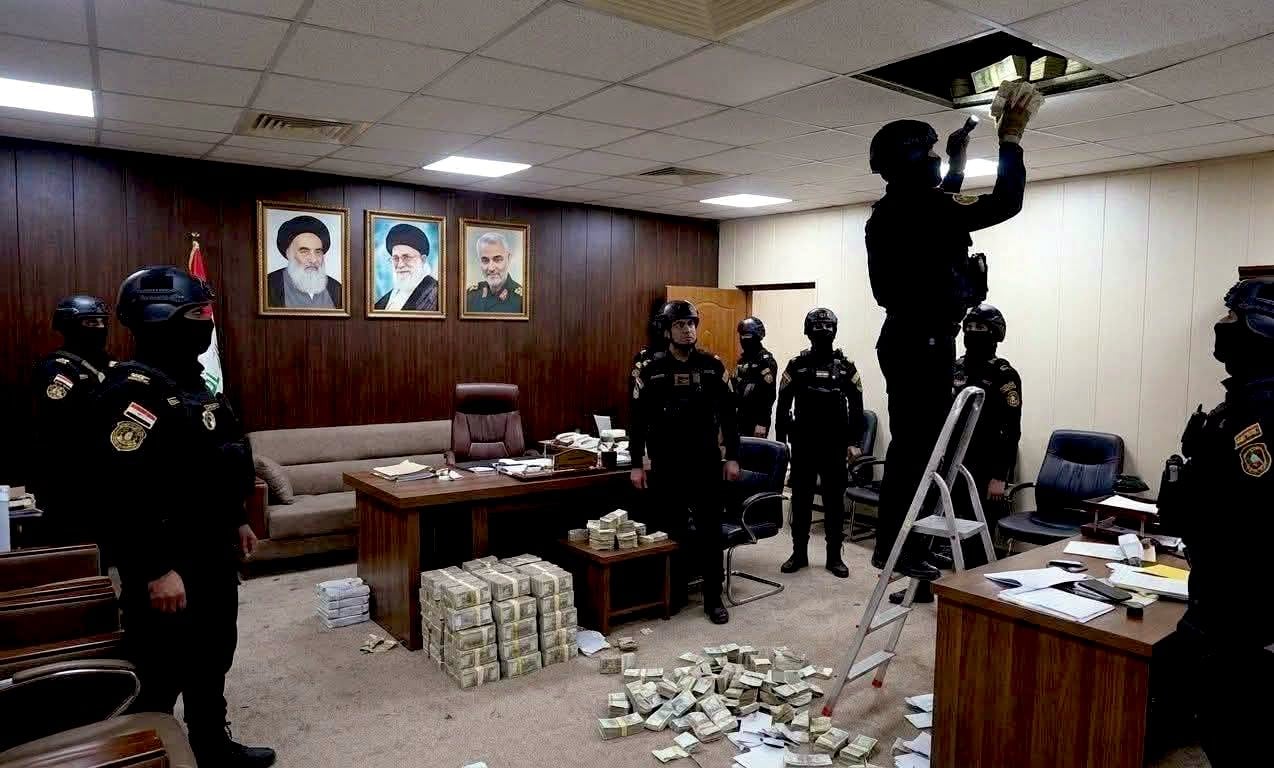
Since taking office, al-Zaidi has launched a series of aggressive anti-corruption campaigns targeting entrenched networks within Iraq’s oil and security sectors. High-profile arrests in Baghdad signaled an attempt to reassert state authority over fragmented patronage systems that have long blurred the line between political office, militia-linked economic activity, and state resources.
In Iraq, the effort to centralize authority has already reached beyond Baghdad’s traditional power centers, with implications that extend into semi-autonomous regions such as the Kurdistan Region, where fiscal disputes and security arrangements remain tightly linked to federal–regional bargaining structures.
Crucially, these operations are not narrowly targeted. While Washington broadly interprets such measures as aligning with efforts to dismantle illicit financial channels associated with Iran-aligned militias, the actual scope of the crackdown has been wider. Individuals and networks connected to both Sunni and Shiite political establishments have been affected. This breadth is significant: it suggests that the campaign is not merely an external geopolitical alignment effort, but also an internal attempt by the Iraqi state to rebuild legitimacy by demonstrating a degree of institutional impartiality.
At the center of this effort remains the unresolved question of armed authority. Iraq’s government continues to emphasize the principle of a state monopoly over force, while multiple militia structures retain independent operational capacity and political integration. Discussions around disarmament timelines reflect this tension, but implementation remains uncertain given the deep embedding of these groups in Iraq’s political economy.
If Iraq represents the financial and institutional dimension of conditional sovereignty, Lebanon represents its security and kinetic dimension.
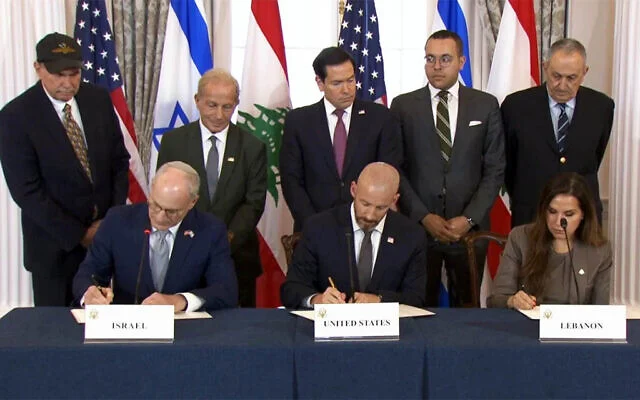
A U.S.-backed framework in Lebanon increasingly links Israeli military posture to the gradual disarmament of Hezbollah. Under this logic, Israeli redeployments are conditioned on verifiable steps by the Lebanese state to extend authority into areas where Hezbollah maintains de facto control. Sovereignty, in this model, is no longer treated as absolute or declarative, but as performance-based and incremental.
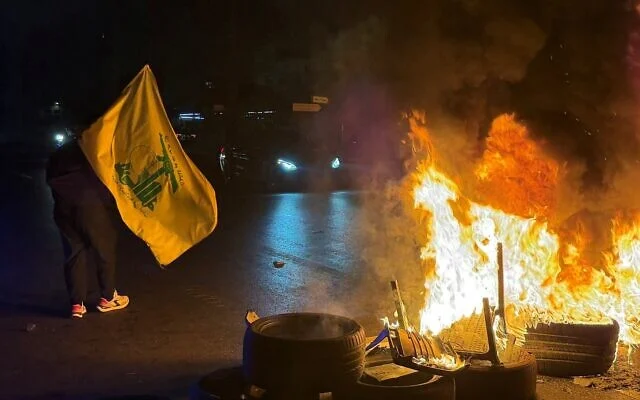
Yet Lebanon’s internal balance makes this exceptionally difficult to execute. The Lebanese Armed Forces remain institutionally constrained, while Hezbollah functions simultaneously as a political party, a social organization, and a heavily armed military actor with deep territorial and societal integration. Any attempt to alter this equilibrium carries significant risk of internal destabilization. Hezbollah, for its part, rejects disarmament frameworks as external impositions that undermine what it defines as national resistance.
The result is a fragile and contested equilibrium: external pressure pushing toward centralization, and internal structure limiting the state’s capacity to absorb it.
Despite their different contexts, Iraq and Lebanon are increasingly part of a single strategic logic. Both revolve around the same structural problem: how to manage or neutralize armed non-state actors in environments where state authority is incomplete and fragmented.
What is changing is not the objective, but the method. Earlier phases of U.S. engagement in the region were often associated with direct military intervention or regime change doctrines. The emerging approach is more indirect and system-based. It operates through financial infrastructure, diplomatic coordination, security assistance, and conditional legitimacy—tools that shape internal political outcomes without requiring territorial occupation.
This shift reflects both strategic adaptation and political constraint. Direct intervention has become costly and politically constrained, while global financial systems now provide continuous channels of influence that can operate with lower visibility and longer duration.
Related Topics
Related Posts