Purpose does not have an expiration date
We Are Our Brothers’ Keepers: Israel’s Mental Health Crisis
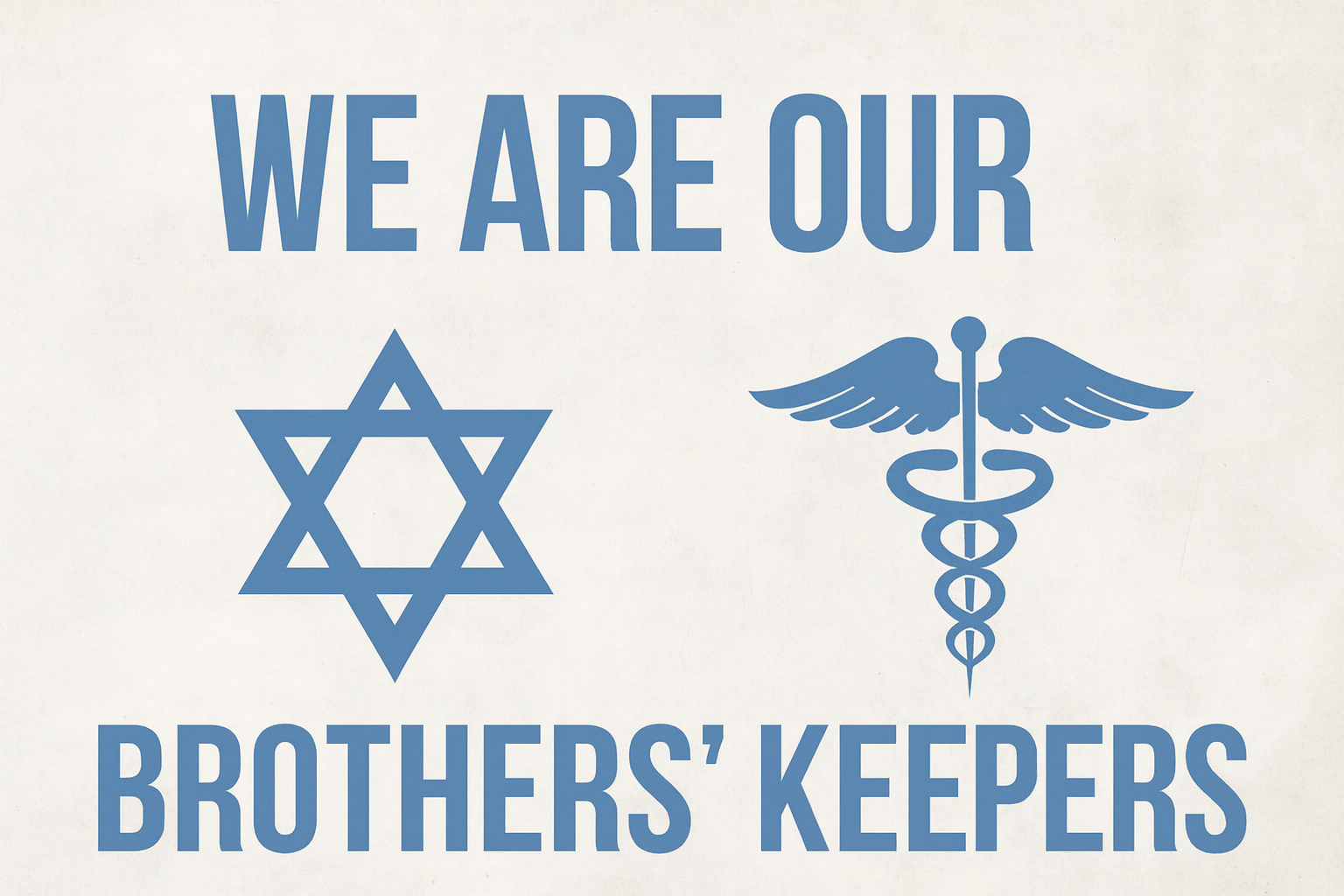
AI generated illustration
Cast your burden upon G-d, and He will sustain you – Tehillim 55:23. Our work of Tikkun Olam begins by shortening the distance between a person’s distress and the care they deserve. In this moment, being our brothers’ keepers means bringing comfort, connection, and hope within reach of every soul in pain.
Since October 7
Since October 7, millions of Israelis have been carrying trauma, displacement, fear, and grief. National surveys from the Israel Ministry of Health show sharp rises in anxiety, depression, and PTSD symptoms across the population. Researchers at major Israeli universities report that PTSD symptoms nearly doubled in the months following the attacks, and anxiety and depression rose across all age groups.
Mental‑health experts remind us that suicide risk often rises years after mass trauma, not in the immediate aftermath. Israel is now entering that long‑tail phase; the moment when psychological wounds deepen even as the world’s attention moves on.
The Hidden Toll
According to the Israel Ministry of Health, 400–500 Israelis die by suicide each year, and thousands more attempt suicide. Suicide remains one of the leading causes of death among young adults. While post–October 7 suicide data is not yet available, clinicians across the country are sounding the alarm: untreated trauma, economic instability, and prolonged uncertainty create conditions historically linked to rising suicide risk. The Israel Trauma Coalition reports unprecedented demand for trauma‑related services. Community clinics are overwhelmed. Families are waiting months for appointments. Teachers, soldiers, parents, and teens are carrying invisible burdens with nowhere to put them.
A System Struggling to Keep Up
The State Comptroller has repeatedly documented severe shortages in mental‑health staffing, long wait times, and uneven access to care. In many regions, public‑system wait times stretch from several weeks to several months. Private therapy is unaffordable for many families.
The Ministry of Health has expanded its national mental‑health program, but independent analyses show that the system remains under‑resourced relative to the scale of need. Civil‑society organizations, volunteers, and philanthropies are filling critical gaps; but the gap is widening faster than the support.
Two Teenagers Who Changed My Perspective
Last year I met two exceptional teenagers from Jerusalem; Maor Wolf and Benny Spierer, who took a devastating loss they faced at just fourteen and turned it into a mission to help others. Their resilience brought to life the teaching from Pirkei Avot 1:14: “If I am not for myself, who will be for me? And if I am only for myself, what am I?” They chose to heal themselves while lifting others; a true act of Tikkun Olam. Their strength, choosing purpose over despair, reminded me that Tikkun Olam often begins with those who have known pain and still choose to bring light. It is a daily responsibility, one that often begins with listening to those whose voices are easiest to overlook.
B’tzelem Elokim: A Jewish Imperative
Our tradition teaches that every human being is created B’tzelem Elokim, in the image of G-d. Since it is true; then protecting a person’s emotional and psychological wellbeing becomes not optional, but a sacred calling.
To help someone rediscover their worth, to offer acceptance, to remind them that their life has meaning; this may be the greatest gift one human being can give another. It is a form of spiritual rescue. It is Tikkun Olam in its purest form.
The Resilience Circle: A New Communal Mission
In this moment, we need a new model of Jewish responsibility; one that recognizes mental health as a core pillar of national resilience. The Resilience Circle is emerging as a framework for both Israelis and Diaspora communities to step into that responsibility.
Its three commitments are simple but transformative. The first is awareness, choosing to speak openly about trauma, depression, and suicide risk rather than allowing silence to deepen suffering. The second is access; supporting efforts that shorten the distance between a person’s distress and the care they deserve. And the third is action; building a culture in which asking for help is understood as an act of courage, not shame. This is not charity. It is peoplehood. It is the belief that Jewish survival depends not only on physical safety, but on emotional and spiritual safety as well.
A Call to the Global Jewish World
Across Israel, civil‑society organizations from hotlines to youth groups to trauma centers; are stepping in where the system cannot keep up. Their work is essential, but they cannot carry this burden alone. The global Jewish community has always risen to meet moments of crisis. We have rebuilt after wars, absorbed waves of immigrants, and supported Israel through every imaginable challenge. Today, the frontline is different, but no less urgent.
This is the moment to strengthen the safety net. This is the moment to stand with those who feel unseen. This is the moment to remind every person that their life matters. If we fail to act, the long‑term consequences will be profound. If we act now, we can save lives. The teenagers I met understood this instinctively. They were not asking for miracles. They were asking for adults to join them in the work of healing; the work of Tikkun Olam.
Related Topics
Related Posts