
‘We have no Israel to escape to’: Germany and Europe’s crisis of confidence
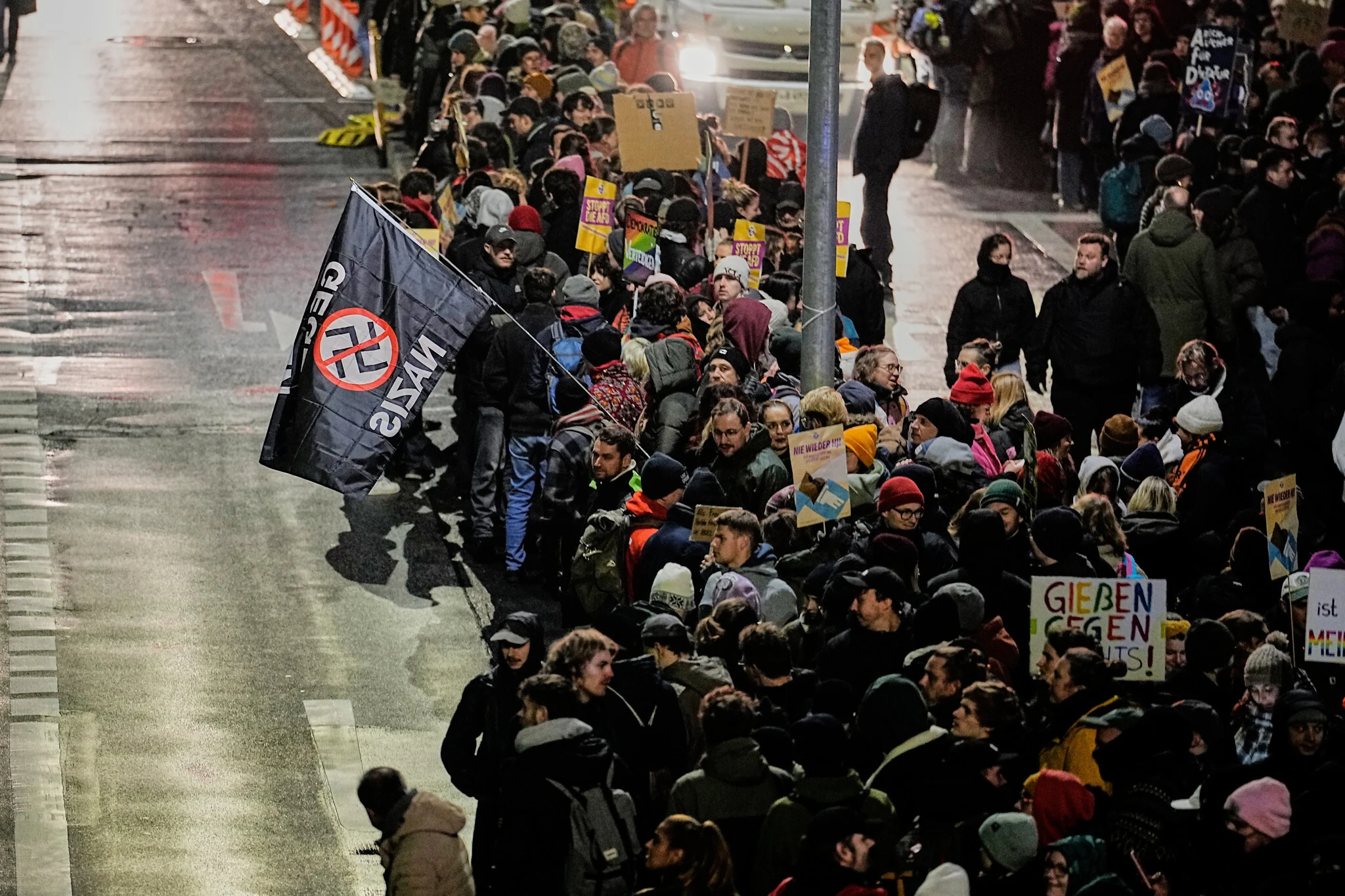
A German academic said it quietly at a faculty gathering in Frankfurt last week. The conversation had turned to Alternative for Germany (AfD) and to what might happen if the party entered government. Someone mentioned leaving the country. Someone else nodded. Then came the sentence that ended the conversation: “Jews have Israel. We have nowhere to go.”
The comparison was imperfect. It was also revealing. It did not mean Germany is returning to the 1930s, or that the AfD can be equated with the Nazis. It pointed to something more immediate: a loss of confidence, in Germany and across parts of Europe, that liberal democracy is as secure as many people once believed. For Jews, that fear has a history.
For decades, many Europeans assumed the political lessons of the 20th century had been absorbed. Nationalism, democratic breakdown, and exclusionary politics were treated as dangers Europe had overcome. Germany carried special weight in that story. After the Holocaust, it rebuilt its public life around constitutional limits, democratic institutions, and the duty of remembrance.
To many Jews and Israelis, postwar Germany showed that a society could change morally as well as materially. It offered Europe its strongest evidence that liberal democracy could restrain nationalism and hatred. That confidence is now weakening.
Chancellor Friedrich Merz faces some of the weakest approval ratings recorded for a postwar German leader. His coalition looks divided and tired. Meanwhile, the AfD is rising. A recent INSA poll put the party at 28 percent, ahead of all other parties. Polls are not election results, but in Germany such numbers have a particular resonance. They also have practical consequences: they shape alliances, media attention, and the choices of mainstream parties.
Critics of the AfD accuse it of normalizing xenophobia and weakening the civic norms built after 1945. Supporters argue that it gives voice to legitimate anger over migration, economic stagnation, and a political class that ignored ordinary concerns for too long.
Both things can be true in different ways. Many AfD voters have real grievances. Ignoring them would deepen distrust. But democratic societies also have to draw a line between addressing public anger and accepting a politics that treats minorities as a threat or makes ethnic identity the measure of belonging.
What is different now is not simply the rise of nationalist parties. Europe has seen populist surges before. What is different is how openly educated professionals are asking whether they would stay in their countries if parties like the AfD became more prominent in actual governance. These conversations are taking place in universities, churches, cafés, and homes. Doctors, journalists, engineers, and academics talk about leaving not mainly because of war or the economy, but because they fear a political culture built on resentment and contempt for pluralism. When people like that begin to plan for departure, democracy is already under pressure.
The reference to Jewish history is uncomfortable and must be handled carefully. Contemporary Germany is not Weimar Germany. The AfD is not the Nazi Party. The remark in Frankfurt was not a serious historical analogy. It was an expression of fear that democratic stability may be less durable than many Europeans had assumed. It reached for Jewish experience because Jewish history gives that fear its most severe example.
Jews understand this fragility in a particular way. Jewish life in Europe has often depended on political conditions that could change quickly. Israel emerged in part from the recognition that even advanced European societies could turn against Jews under conditions of fear, polarization, and institutional weakness. At the same time, Jewish life in Europe has flourished when liberal norms, strong institutions, and civic pluralism were protected. For many Jews, Israel’s security and European democracy once seemed to reinforce each other.
That relationship is now harder to describe. For decades, European support for Israel came mainly from liberal democratic parties shaped by Holocaust memory and by postwar commitments to minority rights. That has changed. Some nationalist and Eurosceptic movements are now among Israel’s strongest supporters in Europe, even as they promote political cultures that many liberal Jews regard with unease.
Successive Netanyahu governments have cultivated these relationships. They have used them to reduce pressure from European Union institutions critical of Israeli policy. There are also real ideological affinities: an emphasis on national sovereignty, suspicion of supranational bodies, and hostility toward parts of the liberal international order.
This creates a serious dilemma. Some of the loudest pro-Israel voices in Europe now come from parties that challenge the democratic assumptions on which secure Jewish life in the diaspora has depended. For Jews watching Israel and Europe at the same time, old categories no longer work neatly. The Frankfurt remark hurt because it relied on a distinction that once seemed clear: Jews had a refuge, while Europeans had stable liberal democracies. Today, neither side of that distinction feels simple.
The answer cannot be to dismiss every nationalist voter as an extremist. Many people turning to the AfD or similar parties feel ignored by leaders who speak fluently about values but less convincingly about security, wages, schools, housing, and social cohesion. Democracies have to take those concerns seriously. But they cannot do so by normalizing language that casts minorities as permanent outsiders or by weakening the institutions that protect equal citizenship.
Europe learned through catastrophe that democratic erosion usually does not arrive all at once. It advances through polarization, exhausted institutions, and the slow loss of trust. That is why the Frankfurt remark matters. Its importance lies less in its historical accuracy than in what it revealed about the return of political doubt in societies that thought they had moved beyond it.
Germany has long been Europe’s most important example of democratic recovery. If Germans themselves begin to doubt the durability of that recovery, the consequences will not remain German. Jews have reason to take that doubt seriously. So should Europe.