
We Must Brace Ourselves for Round Two
The recent confrontation between Israel and Iran will rightly go down in military history. Israel’s intelligence penetration alone was nothing short of extraordinary. So, too, was the precision with which the Israeli Air Force struck Iranian targets. Since October 7th, the world has watched Israel methodically execute a divide and almost conquer strategy: concentrating forces on one front at a time, degrading enemies in sequence, eventually laying the groundwork for an attack on Iran itself. This has been a display of remarkable patience, courageous military leadership, and exceptional strategic clarity.
By any measure, the results have been prodigious. Iran’s nuclear ambitions are delayed. Senior IRGC commanders are dead. Key missile and air defense systems lie in ruins. The regime’s greatest weapons: its proxies, are badly weakened. The very pillars of the Iranian Regime’s power are teetering.
Despite achieving this singular moment of battlefield superiority, Israel stopped short of completely destroying the Iranian military. The uncomfortable truth is that Israel, for all our strength, chose not to finish the job. Iran still possesses offensive capabilities. It has not been disarmed, nor decapitated. The regime is humiliated, but intact.
That choice, however calculated, carries enormous risk.
Qisās and Sharaf
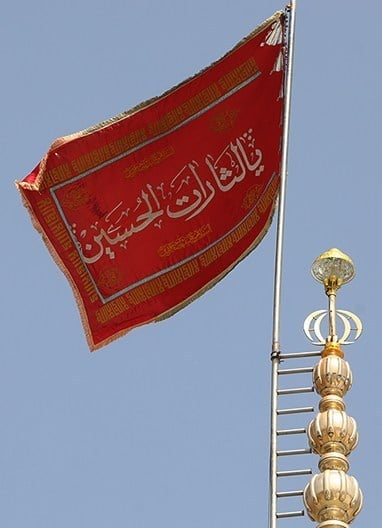
In the Middle East, honor is not just cultural, it is strategic. Sharaf, the traditional concept of personal and collective honor, forms the backbone of political psychology across the region. Together with Qisās, the principle of retributive justice (essentially, an eye for an eye), pride constitutes a critical aspect of Middle Eastern political culture. A regime that has been publicly shamed must restore its standing or risk collapse from within. Iran, whose military, political, and ideological machinery has been so thoroughly exposed and degraded, cannot simply walk away.
Israel is no stranger to this concept. In 1967, on the eve of their attempted surprise attack, Israel crushed the armies of Egypt, Syria, and Jordan, tripling our territory in six days. The victory reverberated through Israeli society, giving rise to a belief in the invincibility of the IDF. But those regimes were humiliated, not destroyed. Despite Israeli intelligence assessments, they quickly rearmed and struck back in 1973 in what became Israel’s darkest hour.
The historical pattern is also clear with respect to Hamas in Gaza. Israel fought wars with Hamas in 2008 and 2014, with limited conflicts in 2012 and 2021 as well, each supposedly achieving “deterrence.” On October 7th, a recovered and functional Hamas led thousands of Palestinians in that infamous massacre, the tragic culmination of a long-standing pattern: wounding our enemy, but not destroying him.
Lessons from History
This hard lesson reverberates through history: you must completely crush your enemies; anything less invites revenge. When a powerful actor harms its adversary but stops short of total destruction, it risks creating something far worse: disgrace. A humiliated enemy returns more dangerous, more ideologically hardened, and more determined. As Machiavelli warned in The Prince: if you strike a king, you must kill him, or prepare for his revenge.
This principle also runs through Jewish history. Moses, for all his spiritual leadership, understood the necessity of decisive force. When he descended Mount Sinai and found the Israelites worshiping the Golden Calf, he ordered the Levites to kill thousands of idolaters. Later, before the Israelites entered the Promised Land, God commanded them (through Moses) to destroy the Canaanite nations completely. This was not out of cruelty, but to prevent spiritual corruption and future conflict.
Failure to adhere to this wisdom, and its consequences, is also recorded in Jewish scripture. Joshua did not crush all the Canaanite nations, and the Book of Judges details the consequences: cycles of idolatry, civil strife, and foreign domination. Later, King Saul famously disobeyed God’s command to completely destroy the Amalekites by sparing their king, Agag. According to rabbinic tradition, centuries later, Haman, descended from Agag – nearly wiped out the Jews of the Persian Empire.
Why Didn’t We Crush Iran?
The honest answer is, I don’t know. There are likely several reasons.
First, resources. Israel is a small country with finite munitions and a high dependency on foreign supply. Our forces have been engaged in sustained combat for 21 months. Even the strongest military has limits.
Second, psychology. Israelis do not revel in war. Even after an enormous military success such as this, there were no parades; only quiet relief, restrained magnanimity, and the enduring pain of knowing that 50 hostages remain in Gaza.
Third, politics. Perhaps we ran out of targets, and did not want to be accused of indiscriminately destroying Iran’s critical infrastructure. It’s also possible the cost of human lives would become unbearable. Lastly, it’s possible the final decision to stop came from outside Jerusalem. Such is the price of strategic dependency. Simply put: Trump told us to.
When to Stop, And When to Push
It is also true that overreaching can be dangerous. History is filled with generals who followed a retreating enemy into a trap or empires that went one campaign too far. Knowing when to stop is the hallmark of a disciplined tactician.
Moreover, there may very well be non-military benefits to the cessation of hostilities as well. Sometimes, restraint opens the door to diplomacy. After 1973, Israel’s decision not to destroy Egypt’s Third Army allowed Anwar Sadat to save face – and eventually led to a peace treaty. Israel’s restraint, coupled with the overwhelming demonstration of military strength, may in fact inspire more Muslim states to join the Abraham Peace Accords, reshaping the regional order. Meanwhile, the weakened state of the Iranian regime may embolden internal dissent, potentially paving the way for revolutionary change.
What We Must Do
Israel is at a strategic crossroads. We cannot afford to believe this war is over. We must prepare now for round two and do everything in our power to ensure it unfolds on our terms.
I’m not a general, so I won’t pretend to outline military plans. Some things, however, are clear: we must consolidate our gains, maintain relentless pressure, replenish our stockpiles, and strengthen our defenses against every imaginable threat.
To that end, we must also think like the attacker. In its early days, Israel’s Palmach, and later the IDF, excelled at innovating ways to overcome otherwise superior foes. Though the Iranian regime bears no moral resemblance to nascent Israel whatsoever, it does face a similar tactical reality: confronting a stronger adversary. Recognizing they cannot defeat us in open battle, Iranian commanders will likely seek unconventional yet still devastating methods to close the gap.
Diplomatically, we must clarify red lines with our allies and adversaries alike. A new strategic doctrine must be articulated: even moderate transgressions from Iran will trigger devastating responses. Iran must not rearm.
In 1919, the Entente imposed the Treaty of Versailles on Germany – harsh in theory, but soft in enforcement. Into that vacuum stepped Hitler, rearming and redrawing Europe’s map while the world hesitated. The cost of restraint was a second, bloodier war.
The Iranian regime is not Nazi Germany, but its genocidal objectives, regional aggression, and ideological antisemitism make it the closest modern parallel. And now, humiliated but not completely defeated, it stands ready for vengeance.
Lastly, but not any less importantly, we must prepare psychologically. The Israeli public and Jews worldwide must brace ourselves for another confrontation. This war did not end. It paused.
A Moment Between Wars
We are living in a dangerous lull, a moment between wars. The first round against Iran was, from an operational standpoint, an absolute triumph. The Iranian regime will seek revenge. That is the nature of this enemy.
I am not arguing to commit IDF soldiers to war. That is a decision for the democratically elected leaders of Israel, our military, and, by extension, the Israeli people. I’m simply warning of what I believe will unfold in the future.
The Iranian regime has been weakened, that much is certain. But we should be clear-eyed: there will be a second round. The questions are first, when it will happen, and second, whether Israel can shape what the fight looks like: that is, to draw Iran into a confrontation on our terms.
Israel likely paused the offensive for good reason. But history does not reward pauses, it punishes indecision. Khamenei has been severely beaten, but he will regroup and seek revenge. I have full confidence in the IDF’s proven ability to wage creative strategies that result in victory. But by stopping short of completely destroying Iran’s military, we’ve all but ensured we’ll have to use them.