An Aging Jewish Feminist
We Need to Apologize to Our Soldiers: Moral Injury and Parshat Re’eh
MORAL INJURY
Just yesterday I read in the newspaper that one of the demands of the ongoing protests is for the government to provide greater support for soldiers coping with trauma from their military service. The Israeli army is well aware of the rising suicide rate among reservists and active-duty soldiers, much of which stems from the traumatic experiences they have endured. According to the head of the Combat Mental Health Unit, the number of those seeking treatment has increased by more than 1,000%. Israel is a small country, and our soldiers carry what they have seen and experienced on the battlefield back home to their families and communities. For them, the war does not end when they leave the front lines.
TIME FOR REPENTANCE
We are once again in a season of transition—this time from the month of Menachem Av to Elul. Elul is traditionally the month of selichot—literally, “apologies.” But apologies to whom? To ourselves? To society? To our friends? To God? For simply existing? I have heard individuals say, half-jokingly, “Excuse me for living!” —a phrase that was even used as the title of a romantic comedy. But apology in religious practice is more than that. To apologize is to seek forgiveness, to request pardon. We say “excuse me” in daily life when we cut into a line or bump into someone. The French, more directly, say “pardon.” A pardon, in political life, can be the ultimate “get-out-of-jail-free card,” issued by a sympathetic—or corrupt—president.
In the spiritual sphere, however, pardon has a different meaning. People who pray at this time of year hope that God will forgive their sins. But, one may wonder, what sins? Most of us are not criminals, after all. Our transgressions run the gamut from swatting flies and killing cockroaches to telling little white lies that save someone (or ourselves) from embarrassment. On Yom Kippur, we recite a long litany of sins, over and over again, confessing en masse—even though we, as individuals, may not have committed them all. This ritual is meant to remind us that knowingly or unknowingly, in big ways or small, we have all fallen short. We pray to God with a plea:
יהִי רָצוֹן מִלְּפָנֶיךָ ה’ אֱלֹהֵינוּ וֵאלֹהֵי אֲבוֹתֵינוּ ואמותינו, שֶׁתְּרַחֵם עָלֵינוּ, וְתִמְחָל־לָנוּ אֶת־כָּל־חַטֹּאתֵינוּ, וּתְכַפֶּר־לָנוּ אֶת־כָּל־עֲוֹנוֹתֵינוּ, וְתִמְחֹל וְתִסְלַח לְכָל־פְּשָׁעֵינוּ
“May it be Your will, Adonai our God and God of our ancestors, that You have mercy upon us, pardon all our sins, atone for all our iniquities, and forgive all our transgressions.”
And yet, when I read through that long list of so-called sins, I cannot help but ask: are these truly sins? If I overeat, or snap at my parents, is that a sin against God—or is it just part of being human, flawed and imperfect? Judaism has cultivated a culture of guilt, and perhaps for good reason. But sometimes we get so used to saying “excuse me” that the words themselves don’t mean anything anymore. Certainly, this time of year demands introspection. It is healthy—even necessary—to pause and take stock of our actions. But sometimes the scale tips too far, and we risk being overwhelmed by regret for “sins” that may be nothing more than symptoms of our humanness.
As we move from Av into Elul, I find myself wondering: perhaps we must be out in the world, living, celebrating, and loving the joy of being—not merely beating our chests for nonexistent sins and imaginary transgressions. And let me be clear: I am not referring to our political leaders. They are the ones who should be apologizing, day and night, left and right. But they will not. Which leaves the rest of us to decide whether we will go through this season weighed down by guilt—or whether we will balance apology with joy, self-examination and self-compassion.
ARE WE CURSED? INSIGHTS FROM PARSHAT RE’EH
Behold, ראה, this day I set before you blessing and curse: blessing, if you obey the commandments of your God יהוה that I command you this day; and curse, if you do not obey the commandments of your God, but turn away from the path that I command you this day and follow other gods, whom you have not known (Deuteronomy 11: 26-28).
The Israelites, on the verge of entering the Promised Land, are reminded that repercussions—blessings or curses—hinge directly on their moral and spiritual choices.
Commandments When Entering the Land
Contrary to what one might expect—settling the land, building homes, and defending their new settlements—the Torah prescribes two opening commandments upon entrance:
“You shall destroy all the places where the nations whom you shall dispossess served their gods, upon the high mountains and in the hills and under every green tree; you shall break down their altars, dash in pieces their pillars, burn their sacred poles with fire, and hew down the graven images of their gods, and destroy their name out of that place” (Deuteronomy 12:2-3).
This radical command prioritizes religious purity over coexistence, ordering the Israelites to remove all traces of idolatrous worship from the land. Rather than encouraging understanding or neighborliness, the Torah commands eradication—a command that raises fraught questions about culture, coexistence, and historical trauma.
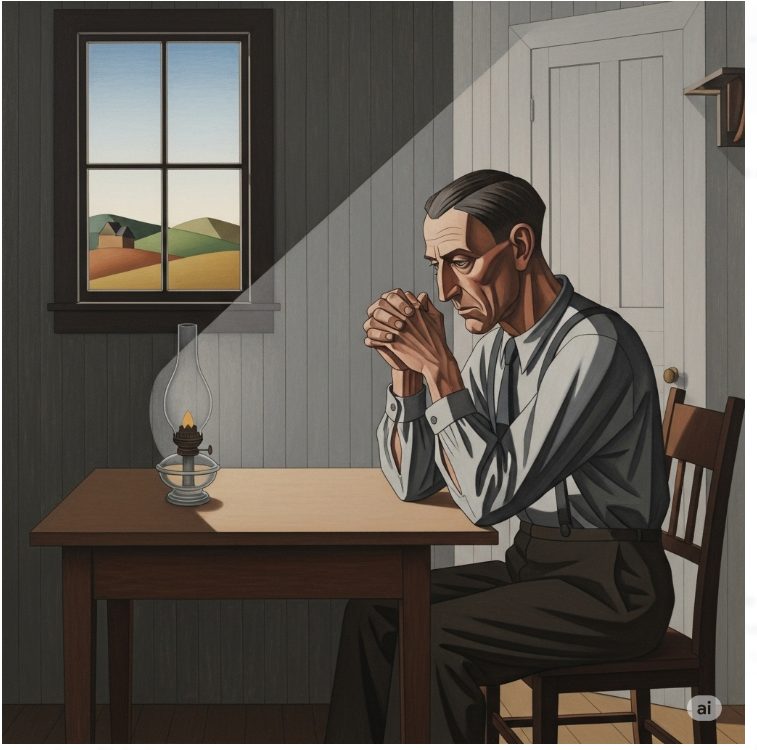
Parshat Re’eh teaches that human choice has ramifications. Every action reverberates throughout history, with profound moral repercussions. For those who’ve experienced war or trauma, this gives voice to the phenomenon of moral injury—the deep psychological and spiritual damage that results from acting in a way that transgresses one’s moral code.
Soldiers and caregivers, for example, may experience ongoing guilt, shame, or existential questioning after they witness or participate in violence that conflicts with their values. The parsha repeatedly warns against seduction by idolatry. Straying from the moral path leads not only to personal estrangement—what can feel like alienation from one’s own values—but also to communal curses. Moral injury manifests as PTSD, anxiety, or spiritual silence, in which one becomes isolated by what one has witnessed. Soldiers may struggle with PTSD, reliving the trauma in the form of flashbacks, nightmares, or anxiety. They may grapple with guilt, shame, or the haunting question: Did I do what was right?
HEALING AND RESTORATION
At the center of Parshat Re’eh, however, is the possibility of choice. Even after deep regret or trauma—whether from following horrendous orders or merely surviving moral conflict—the Torah summons us to confront what we have done, to acknowledge pain, and to seek healing. “I have set before you life and death, blessing and curse. Choose life” (Deuteronomy 30:19). Just as the Israelites were told to “choose life,” so too can we strive to reintegrate our experiences and be healed to a state of moral and spiritual health. So parshat Re’eh is less a list of instructions than it is a call to examine the consequences of our choices, especially in the presence of the legacies of violence and exclusion. The Torah is cognizant both of the risk of moral injury and of the possibility of healing, urging us to make conscious decisions that align with our loftiest values.
THE PSALMS AS INSTRUMENTS OF COLLECTIVE HEALING
To a nation in collective trauma, the Psalms are not ancient verse—they are a spiritual toolkit for approaching and healing profound wounds. The Psalms remind the sufferers and survivors that we are not alone in our suffering, that our grief has a place, and that healing is possible. The Psalms articulate the range of emotions that arise in crisis. They are the sacred words of sorrow and moral struggle, authorizing tears as well as the need for comfort.
Psalm 6 reminds us that it is holy to lament: “My eye wastes away from grief; it grows old because of all my enemies.” This Psalm expresses exhaustion and sorrow, naming candidly the impact of chronic trauma and inner conflict.
“The Lord is near the brokenhearted and saves the crushed in spirit” (Psalm 34). Here, the speaker assures us that God is with us and supports those with emotional and moral wounds.
“Though I walk through the valley of the shadow of death, I fear no evil, for You are with me; Your rod and staff comfort me” (Psalm 23). Amid fear and uncertainty, the Psalm assures us that God’s companionship and protection are close, even in the worst of times.
These texts allow us to recognize our vulnerability. In experiences that are defined by crisis, moral injury, and PTSD, the Psalms offer a way in which we can name our pain, seek meaning, and pursue healing. Grief and exhaustion are holy rather than shameful. Brokenness is met with comfort and assurance that we are not abandoned. Nowadays, worldwide uncertainty leaves many in a state of suspension—dodging disaster yet worried about what comes next. The Psalms enable us to bear pain by giving us a holy vocabulary to process suffering.
Healing is not about denying our wounds—it’s about finding ways to return us to wholeness. Because when we believe things cannot get worse, they do. The Psalms serve as a voice for those who wait in the dark, reminding them (and us) that even when things get worse, they (and we) do not wait alone.
THE HAFTARAH: 1 SAMUEL 20
The Haftarah tells the story of the profound relationship between David and Jonathan. As David runs for his life and conceals himself from King Saul, Jonathan vows loyalty to him—protecting and warning David from danger. This narrative resonates with those who suffer from moral injury or PTSD. Hypervigilance and fear are constant companions, reflecting David’s own reality of danger and isolation. Trusting relationships—as exemplified in Jonathan’s steadfast friendship—offer the necessary grounding, support, and hope. Emotional honesty and responsibility are critical to survival and healing, as seen in the open communication and promises exchanged between David and Jonathan. Just like David who is alone and vulnerable, those who have suffered moral injury can also be haunted by painful memories or regrets. The story of Jonathan and David instructs us: Loyalty and compassion are lifelines in times of suffering.
With these themes and the present moment in mind, I was moved to write a special blessing for all those who are carrying the burden of moral injury. A “Mi Shebeirach” is a prayer for healing and other blessings, often recited during, before, or after the Torah readings. It’s a request for divine intervention and healing for individuals or groups facing various challenges, including illness, difficulty, or other needs. The prayer takes its name from the opening Hebrew words, “Mi shebeirach,” meaning “May the One who blessed…”.
MI SHEBEIRACH
May those who are weighed down by moral injury be given understanding, protection, and unwavering support. May faithful companions be with them, and may they be blessed with healing, strength, and inner peace.
Mi Shebeirach avoteinu Avraham, Yitzchak, v’Yaakov, v’imoteinu Sarah, Rivka, Rachel, v’Leah. May the One who blessed our ancestors Abraham, Isaac, and Jacob, Sarah, Rebecca, Rachel, and Leah, bless and heal those who have served, carrying the weight of actions that trouble their hearts and minds. “R’eh, natati lifneikhem ha-berakha v’ha-klala…” (Deuteronomy 11:26) “See, I set before you today a blessing and a curse…Even as the Israelites were called to choose the path of life, we acknowledge the burdens of those who were forced to choose under fire, whose decisions haunt their dreams and darken their waking moments.
As David, who wept tears of sorrow throughout the night (Psalm 6:7); as Saul, pursued by fear and horror after battle (1 Samuel 16:14); as Ahab, who tore his clothes in repentance in remorse when faced with wrongdoing (1 Kings 21:27); and as Athaliah, burdened by the weight of violence she committed against kin (2 Kings 11:1). Like Hannah, who prayed in bitterness of soul (1 Samuel 1:10); and Rachel, who wept for her lost children and would not be comforted (Jeremiah 31:15).
We lay before You the souls of all soldiers haunted by battlefield experiences, by choices made under fire, by guilt, fear, and sleepless nights.
God of compassion, You are acquainted with the burdens of the heart: the memories that will not let go, the decisions forged in battle and fear, the shadows that haunt the night. “Adonai karov l’nishbrei-lev; v’et dakei-ruach yoshia.” (Psalm 34:19) “The Eternal is close to the brokenhearted, and rescues those shattered in spirit.”
God of justice and compassion, You know the weight of conscience: the silence that isolates, the guilt that oppresses, the shadows that cloud the soul.
Guide them to choose blessing over curse, even in the aftermath of what cannot be undone. Restore their spirits, heal their minds, and their hearts. May they find courage to live fully, strength to seek peace, and tenderness to forgive themselves.
“Gam ki-elekh b’gei tzalmavet lo-ira ra, ki-ata imadi.” (Psalm 23:4) “Though I walk through the darkest valley, I fear no evil, for You are with me.”
Let the words of Torah, the Psalms, and Your presence be a light in the darkness, a balm to wounded souls, and a guide back to moral and spiritual wholeness.
V’khen yehi ratzon, v’nomar amen. So may it be Your will, and let us say: Amen.
As we move from Menahem Av into the month of Elul, I wish you all a Shabbat shalom and Hodesh Tov.
Related Topics
Related Posts