Protect What You Love
We Replace Hate With Hate
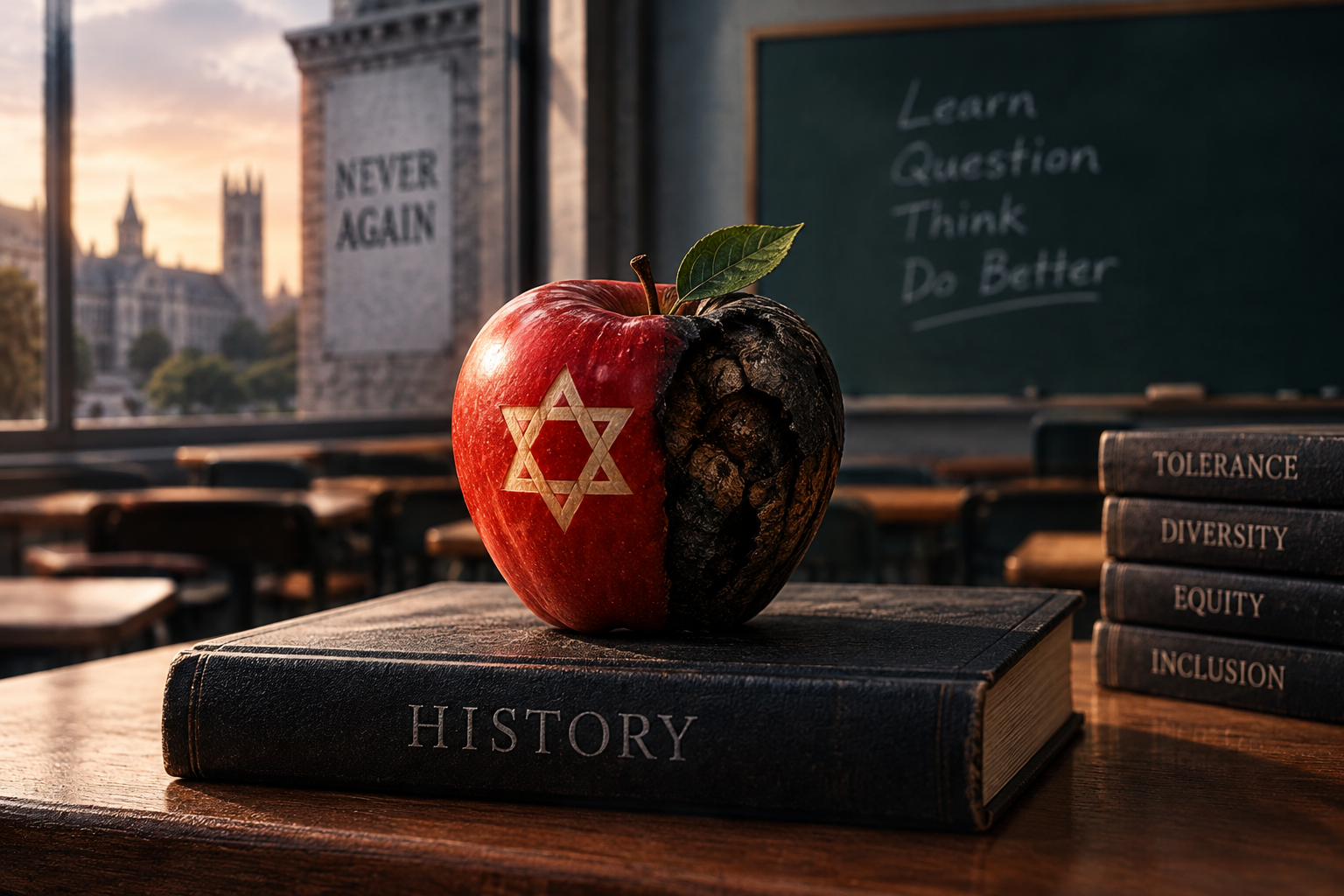
We teach the history of hatred while allowing it to take root in the institutions responsible for preventing it.
What happens when the institutions teaching our children about the dangers of hatred begin making excuses for it?
We have spent generations teaching the Holocaust, condemning antisemitism and explaining how educated societies became comfortable persecuting Jews. Today, some of the institutions responsible for teaching those lessons have allowed hatred of Jews to become acceptable, and certain educators have contributed to it.
As a Jew raising children in New York, I find this deeply disturbing. As someone who has spent most of his life teaching, I find the role of educators particularly troubling. They have enormous influence over how young people understand the world, and some are using that influence to perpetuate prejudices we should have learned to recognize long ago.
I wonder what all our education has accomplished if we can recognize hatred so clearly in history while finding intellectual justifications for it in our own time.
I grew up in Israel, where the Holocaust was part of our collective memory. I understood why the Jewish people needed the ability to protect themselves and why remembering our history was an obligation we couldn’t abandon. I also believed that educating future generations would help prevent the hatred our ancestors experienced from becoming acceptable again.
Since 10/7/2023, I have encountered violence multiple times, sometimes while holding the hands of my two young children. That experience forced me to consider what they would learn about their Jewish identity from the society around them. Since then, I’ve become increasingly concerned about what they’ll encounter as they grow older, particularly in the educational institutions we’ll eventually trust with their future.
Columbia University’s own Task Force on Antisemitism documented harassment, exclusion, and hostility experienced by Jewish and Israeli students. Its December 2025 report examined the classroom experience, including allegations involving faculty conduct and concerns about intellectual diversity. These findings came from an investigation conducted by the university itself.
I keep thinking about the influence of the people standing in front of those classrooms.
I’ve taught thousands of students throughout my career, including university students. I understand the responsibility that comes with being an instructor. Students arrive with questions, uncertainties and assumptions they may never have examined. They give their teachers an opportunity to influence how they understand themselves and the people around them.
The influence of a good teacher can last a lifetime . I’ve experienced that personally, and I carry lessons from my own instructors into the way I teach today. An educator’s authority can also give harmful ideas credibility, particularly when students haven’t developed the knowledge or confidence to challenge them.
That is why I find the normalization of antisemitism in education so concerning.
For centuries, Jews were blamed for problems they hadn’t created. Religious accusations survived long after the events they supposedly concerned. During epidemics, Jews were accused of spreading disease. Economic hardship brought familiar conspiracy theories about Jewish control and manipulation.
The Holocaust demonstrated how far this thinking could go when racial hatred gained the authority of the state.
We have studied that history extensively. Museums preserve the evidence, survivors have shared their testimonies, and schools teach children how discrimination gradually became institutionalized.
Yet a Jewish student today can still find himself treated as personally responsible for the actions of the Israeli government. His actual beliefs may have little influence on how others judge him. Jewish identity alone can become sufficient grounds for suspicion.
When an educator encourages that reasoning, prejudice gains authority from the classroom itself.
I believe this exposes a weakness in the way we understand education. We can teach historical events accurately while failing to develop the independent judgment needed to recognize similar behavior in our own communities.
Consider what happens when a professor expresses an opinion and students accept it because they respect the person delivering it. The professor may be knowledgeable, accomplished and genuinely convinced of his position. Those qualities don’t guarantee that his conclusions are correct.
I’ve seen how easily people confuse confidence with competence. In self-defense, that mistake can have immediate consequences. Someone follows an instructor’s advice, discovers under pressure that it doesn’t work, and pays the price for trusting information he never properly tested.
The consequences of poor moral education can take much longer to become visible. Students may carry an idea for years before finding themselves in a position to act on it.
This is why I want my children to develop the ability to question what everyone around them accepts as normal. They’ll encounter people they admire who hold opinions I strongly disagree with. I want them to listen carefully, examine the evidence, and have enough independence to reach their own conclusions.
I expect educators to encourage that independence, even when students challenge their own opinions.
Our society has worked hard to confront historical discrimination. America’s treatment of Black people, including slavery and segregation, deserves honest examination. The Holocaust requires unconditional remembrance. These histories demonstrate what can happen when societies accept collective judgments about entire populations.
The principle I want my children to understand must remain consistent when the identities involved change.
I sometimes ask my students to test a technique under resistance because I want them to discover its weaknesses while they still have an opportunity to correct them. Our moral principles deserve similar examination.
Imagine someone you strongly disagree with gaining the authority to apply your standards tomorrow. Would you accept those standards if your own children were subjected to them?
An educator who believes collective responsibility justifies hostility toward Jewish students should consider whether that principle would remain acceptable when applied to another minority.
I expect universities to protect political disagreement and allow criticism of Israel. I also expect them to investigate discriminatory harassment, apply their rules consistently, and take responsibility when faculty contribute to a hostile learning environment.
The solution begins with educators examining their own assumptions and accepting that their authority carries responsibility. Students deserve an education that equips them to challenge established ideas, including those their teachers personally support.
I want my children to understand that historical knowledge creates an obligation to examine our own behavior. They should recognize prejudice even when it comes from people they respect and question accusations that assign responsibility according to ancestry.
I also want them to understand that protecting their identity may require standing apart from the crowd. Their ability to judge people fairly should survive that experience.
One day, our children will study what happened on American university campuses during this period. They’ll have access to the reports documenting antisemitism and the decisions made by educational institutions. They’ll know that we understood the Holocaust and had generations of knowledge about the consequences of collective hatred.
They’ll also know how we responded when prejudice appeared in our own classrooms.
I hope they’ll inherit institutions that have learned to confront antisemitism within their own communities and educators who are willing to question their beliefs as seriously as they question their students.
We’ve already taught our children what happened when previous generations allowed hatred of Jews to become acceptable. Our responsibility now is to demonstrate what we’ve learned while our own decisions can still make a difference.
Do something amazing,
Tsahi Shemesh
Related Topics
Related Posts