
We Teach Children to Survive War. We Owe Them More.
Children in Israel learn early what to do when a siren sounds. They know where the nearest shelter is and how many seconds they have to reach it. They know not to touch a suspicious object. We teach them these things because they save lives. But what does it say about us that so much of what we teach our children is meant to prepare them for war?
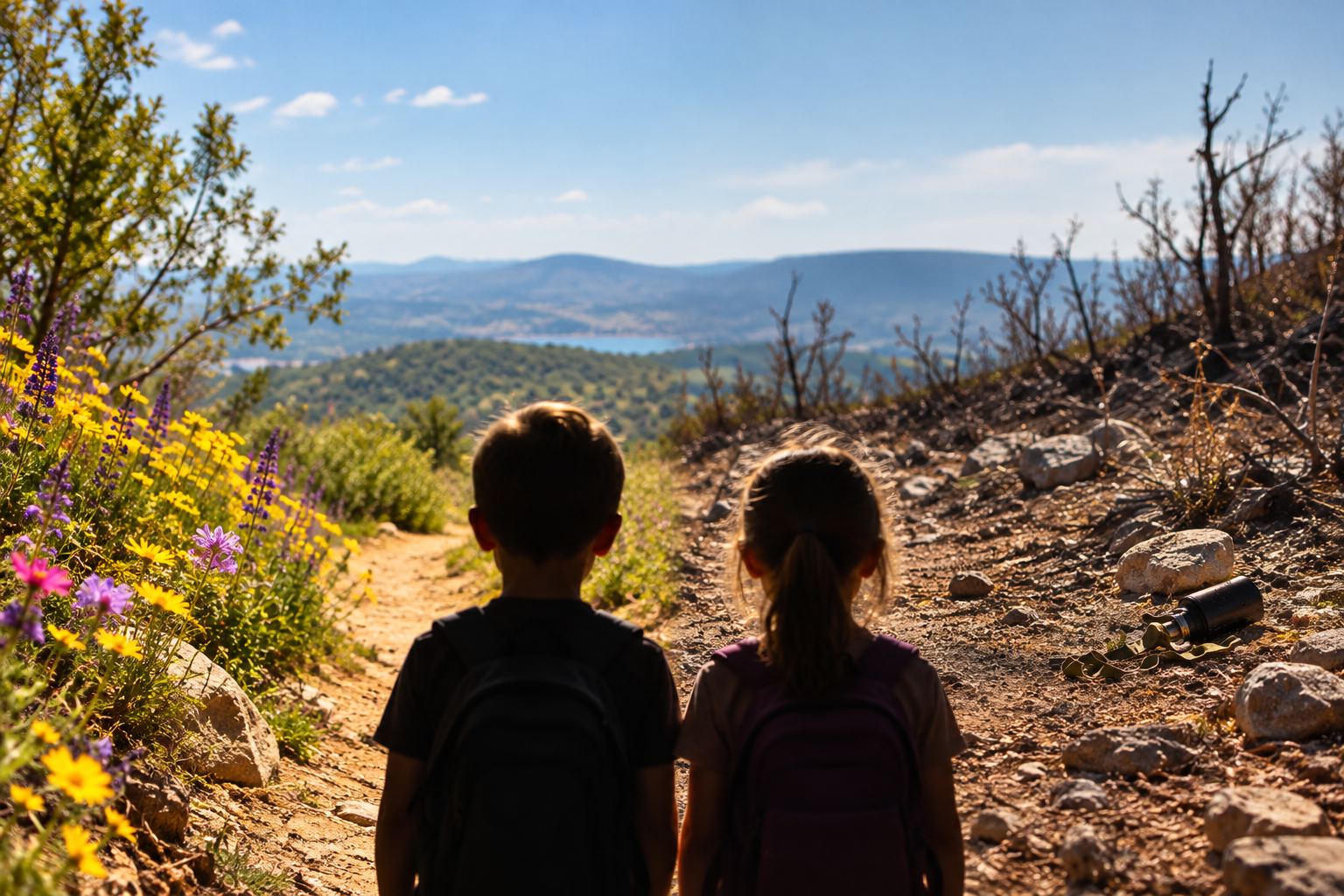
At Ramim Ridge in northern Israel, that question became painfully immediate. A school hike ended with a 14-year-old boy dead and 24 others injured after students found what appeared to be part of a missile and reportedly handled it before it exploded. By their own accounts, within minutes children were improvising tourniquets from belts and socks, performing CPR on classmates, and calling a parent on video to learn how to stop their own bleeding.
Their courage deserves admiration. The circumstances that demanded it should shake us. A school trip should never become a scene in which children struggle to keep their classmates alive.
The first questions are concrete, and they must be answered in full. Who approved the route? Was the area searched for unexploded ordnance after the fighting, and were the hazards marked? What were the students and their teachers told? Identifying and clearing unexploded munitions must be a priority wherever civilians are expected to return. If failures in approving the route, assessing the risks or warning the students are established, those responsible must be held accountable.
But even a thorough investigation cannot answer the larger question this tragedy raises: what does growing up with war teach children to expect?
We count the costs of war in casualties, destroyed homes and displaced families, and increasingly in trauma. But war also takes something from children that appears in none of these counts. War occupies space in their education, their routines and their imagination. Time and attention that might otherwise be devoted to discovering the world must also be spent learning how to survive its dangers. More than that, war shapes their expectations of the future. A child who knows how many seconds it takes to reach a shelter has learned more than an emergency procedure: that schools may close again, that home may become unsafe overnight, and that another war is something to prepare for.
You can hear it in the language of Israeli childhood. Children say mamad, the reinforced room in the apartment, as casually as they say kitchen. Many learn to distinguish the sound of an interception from that of an impact. This is how children make sense of the world they are given. But a vocabulary is also a map of what a society expects, and ours is drawn for war.
Here lies the paradox. Every drill, every shelter and every warning system is necessary. They save lives. Yet the better we become at preparing children for war, the more war comes to look like weather: something you dress for, not something anyone chose.
Children absorb this expectation from the adults around them, and from the country those adults have built. Israel has developed some of the world’s most sophisticated systems for withstanding attack, and it needs them. But a country can grow steadily better at surviving wars without moving any closer to a future with fewer wars to survive. When resilience becomes the measure of success, the capacity to absorb the next round can quietly replace the effort to prevent it. What we then pass on to our children is not only survival skills, but resignation.
Resilience keeps us standing. It cannot tell us where we are trying to go.
Israel faces real threats, and no government can promise there will not be another war. But war is not a law of nature, and the future is not fixed. The question is whether Israel is pursuing every opportunity to make another war less likely with the same seriousness it devotes to preparing for one. Preparing for the next war is necessary. It cannot be the extent of our ambitions.
Our children need to know never to pick up an unexploded munition. They should also be able to walk among the wildflowers of the Galilee without wondering whether something lying there might explode.
We owe them the skills to survive the world as it is. We owe them, just as much, a serious effort to change it.