
Wearables: Humanity’s Savior
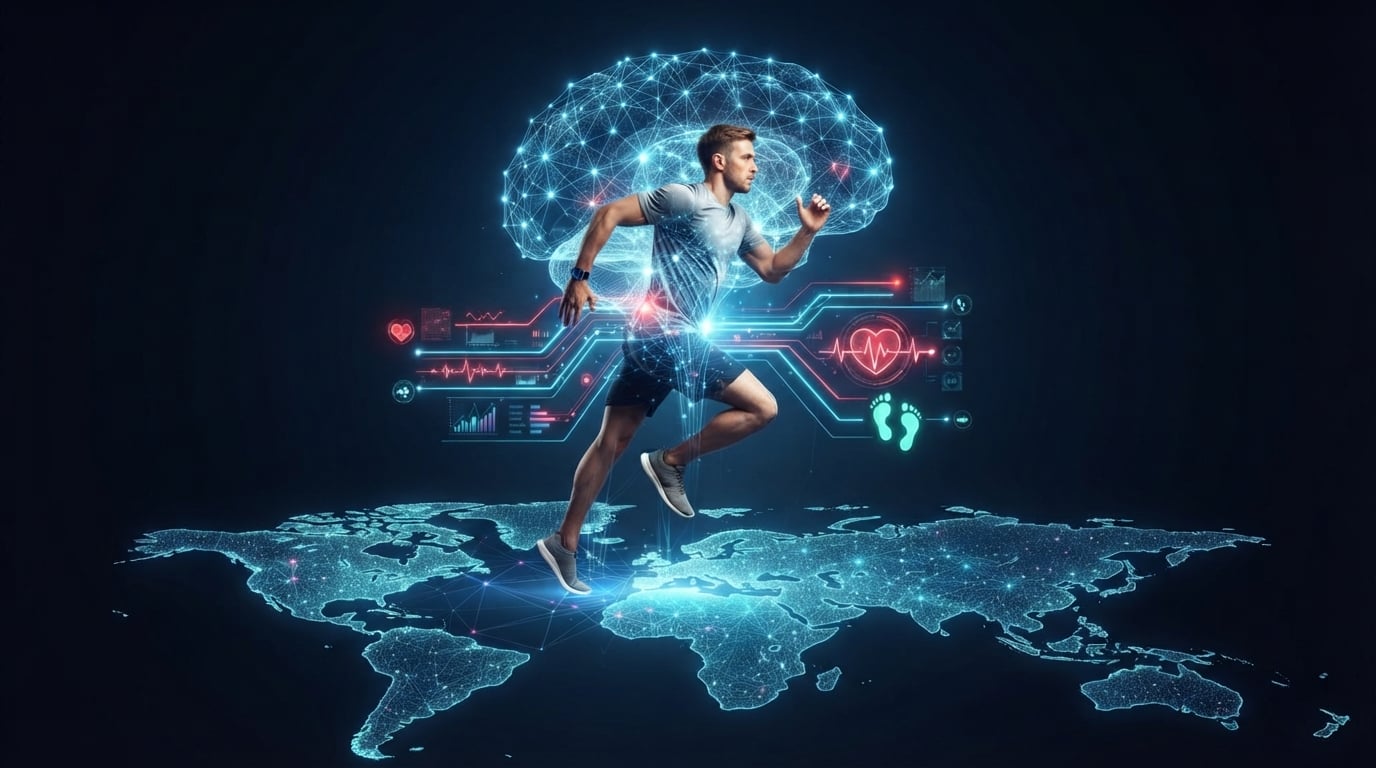
In my previous piece, “Wearables: The End of Humanity,” I made the case that wearable technology is quietly severing us from our own bodies, disconnecting us from a bodily wisdom we evolved over millions of years. I believe every word of it.
I also believe that those same devices, the same relentless tracking, the same externalizing of the body into numbers that I called a loss, may also be the single most promising thing to happen to human health in history.
And we are only at the beginning
It’s easy to look at today’s smartwatches and think we’ve seen what wearables are. We haven’t. This is the very beginning.
Every year we expand what we can track, sharpen the accuracy, and add new measures we couldn’t capture before. The trajectory is obvious, and it reaches well beyond the wrist. We will likely all end up with continuous blood monitoring, much like the small sensor that already sits in a diabetic’s arm, constantly measuring and analyzing hundreds of data points in real time. Glucose, hormones, inflammation markers, hydration, and dozens of signals we don’t yet think to look for.
Not to mention nutrition. Wearable AI devices like smart glasses can already see what we see, and it’s a short step to instantly scanning and processing every single thing we put in our mouths, logging it without a thought from us. And every one of those readings, from every device on every person, is being recorded and stored.
Which is where the real story begins.
Step one: the largest, most accurate dataset on Earth
Zoom out from one wrist to millions of them, and here is what we get: the largest, most accurate dataset on human biology ever assembled. Continuous, real-world data tracking the same people over years, on how actual human bodies behave, across populations, across every variable you can imagine, gathered from millions of people around the globe.
We have never had anything close to this. Medicine has always run on snapshots, the occasional blood test, the annual checkup, the symptom bad enough to finally send someone to a doctor. Wearables turn the snapshot into a film, recorded continuously, at planetary scale. And as the sensors multiply, that film only gets richer.
Step two: research we’ve only ever dreamed of
A dataset like that unlocks research previously impossible to imagine.
Today, our best studies are small, short, and expensive. A few hundred people, a few years, a handful of variables, and a mountain of guesswork to fill the gaps. We argue for decades over questions we simply lack the data to answer. What does a given diet actually do to a real body over a decade? How does exercise interact with sleep, with stress, with age? What do climate, environment, altitude, and air quality really do to long-term health?
With continuous data on millions of people, these stop being debates and become measurable facts. We could see, in real bodies over real time, what genuinely helps and what actively harms.
Step three: AI doing research at a scale no human can
Now add AI to that dataset, and the ceiling disappears entirely.
A human researcher can hold a few variables in mind and test one hypothesis at a time. AI can sift the entire dataset at once, across millions of people and hundreds of signals, hunting for patterns no person would ever think to look for, let alone be able to see. Research stops being constrained by how many studies we can fund and run, and starts running continuously, automatically, at a scale beyond anything humans could do alone.
And that is where the staggering results come from:
- Catching what we currently can’t see. AI could discover that people of a certain ancestry, in a certain region, develop a sharply elevated risk of a specific cancer once they hit their fifties, a signal buried in subtle shifts of heart rate, temperature, and blood chemistry, years before any diagnosis. We’d never find that today. No study is large enough, long enough, or continuous enough. With this data, that pattern simply emerges, and with it a forewarning for diseases we currently catch far too late.
- Settling the questions medicine has argued about for a century. Diet, exercise, sleep, environment, finally answered with evidence instead of opinion, personalized down to bodies like yours rather than averaged across everyone.
- Discovering cures we’d never have found. Traditional clinical trials test one treatment on a fairly uniform group and look for an effect on average. That design hides anything that only works for a specific kind of person. A drug that does nothing across the whole population but quietly cures a narrow subgroup, defined by their genetics, their environment, their unique mix of biomarkers, would simply be ruled a failure and shelved. At this scale, AI can find those hidden responders. It can spot the treatment that works wonders for one in ten thousand people, and identify exactly who those people are, surfacing cures and connections we never thought to test for.
- Turning prediction into prevention. Where we can’t cure outright, we could predict with real accuracy, and prediction is the doorway to prevention. When you can forecast a condition years out, you can intervene early, and early-stage treatment is often dramatically more effective than late-stage treatment. Sometimes it’s the entire difference between a manageable problem and a fatal one.
If every metric of every moment of every day were tracked and fed to an intelligence that never stops analyzing it, the number of diseases and health problems we could solve is hard to overstate. Possibly most of them.
The more we track, the more we save
The logic is simple. The more we wear, the more we track, the more we collect, the more lives we save. Earlier detection, better prevention, cures we never knew existed, and finally understanding the human body at a scale we’ve never come close to.
Wearables come at a cost (see “Wearables: The End of Humanity“). But weigh that cost against the prize: the real chance of conquering disease itself. From where I’m standing, that’s a trade worth making.
The only thing standing in the way is that the data is scattered. Every wearable company is sitting on its own walled-off pool of readings. The missing piece is a company bold enough to step in, pull all of it together from across every device and every brand, and compile the one unified dataset that makes all of this possible. Whoever does that doesn’t just build a business. They hand humanity the map to its own body.