
What Budapest Taught Me About Life Beyond Netanyahu
Something feels different in Budapest.
I have been coming to this city for years, and I still catch myself noticing Viktor Orbán’s absence. After sixteen consecutive years with him as prime minister, it takes some getting used to.
Orbán seemed to be everywhere. Hungarians could admire him, despise him, or be thoroughly tired of hearing his name. Somehow, every conversation about their country’s future eventually came back to him.
Then, in April, he lost.
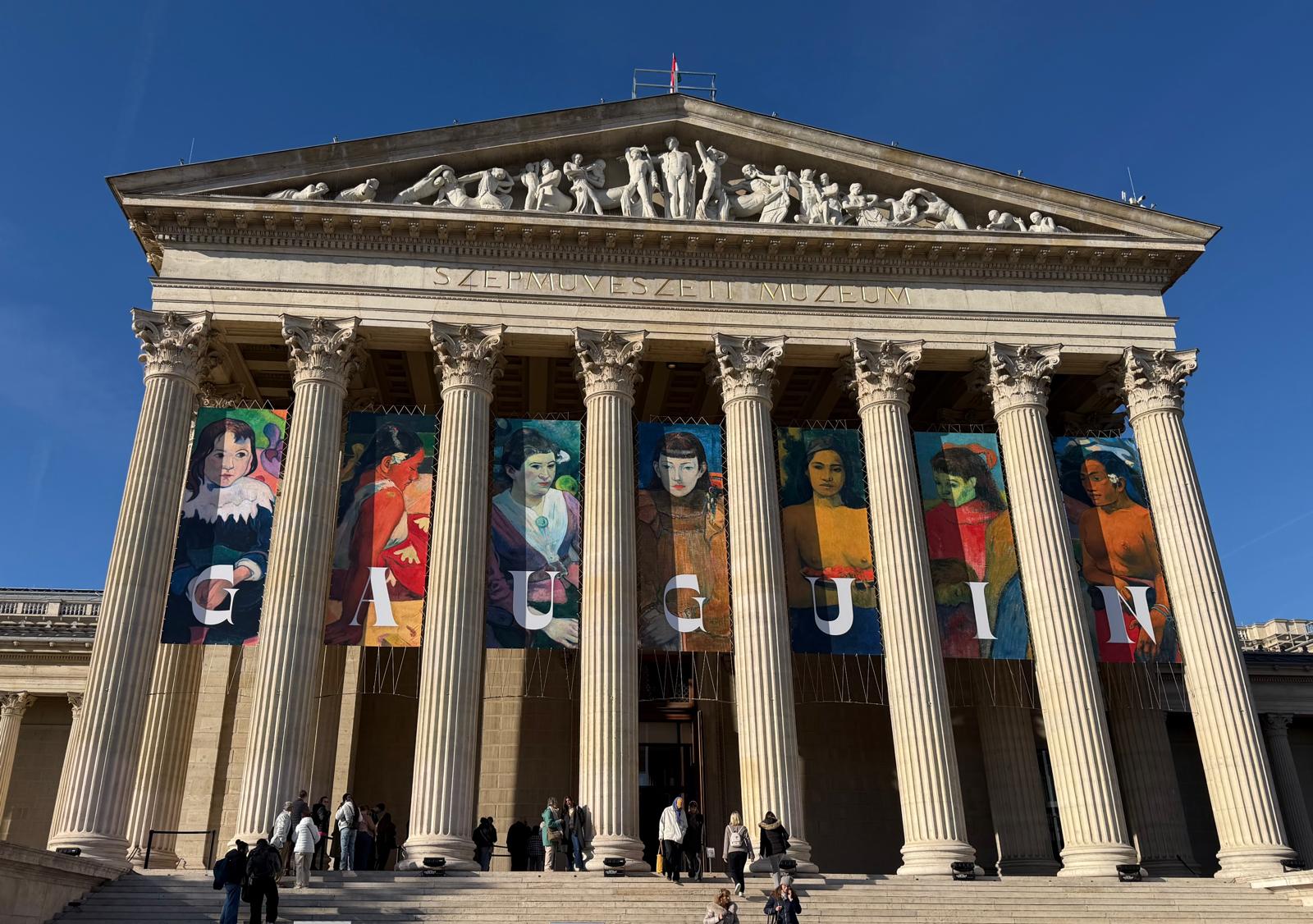
Last week, I went to the Museum of Fine Arts to see the new “Bonjour Monsieur Gauguin” exhibition. The museum was packed. Visitors leaned toward paintings, whispered to one another, and pointed out details I had missed. Outside, Budapest was getting ready for Christmas. Shop windows were bright, cafés were full, and I was happy to be back in a city I love.
Of course, Hungarians went to museums under Orbán too. But somewhere between one painting and the next, I realized I hadn’t thought about him for hours. I rather liked that.
Later, on a bus, I noticed two young men kissing. They seemed perfectly comfortable. I have no idea whether they would have felt any less comfortable a year ago. But after watching Orbán’s government turn LGBTQ rights into a political battleground, I couldn’t help smiling.
Two young men sharing a kiss on their way somewhere. Nothing more. And why should there be?
I know a museum visit and a bus ride tell us very little about Hungarian democracy. I may be reading too much into an afternoon. Still, I kept wondering how quickly we can get used to life without someone we once thought would always be there.
The anthropologist Alexei Yurchak wrote a book about the last Soviet generation called “Everything Was Forever, Until It Was No More”. He described how a seemingly permanent system collapsed, and how people discovered they were more prepared for its disappearance than they had imagined.
I have always loved that title. Here in Budapest, it came back to me. Hungary offers a warning, though. Orbán lost office in 2002 and returned eight years later. His successor, Péter Magyar, a former Fidesz insider, has built a movement closely associated with himself. Changing the person at the top does not necessarily change the way a country does politics.
Last week brought another reminder of how difficult it can be to leave the past behind. On November 4, 70 years after Soviet forces entered Budapest to crush the 1956 uprising, Magyar’s government opened an online database containing records on tens of thousands of people connected to the communist secret police.
Imagine learning that someone you loved had cooperated because a person close to them was threatened. The records are incomplete, and not everyone named was a willing collaborator. Some Hungarians welcome their release. Others worry about the damage they may cause.
The contrast stayed with me. In the same week, Hungarians were searching for answers about their past and queuing to see Gauguin.
A country needs to face its past. Hungary reminds us how long unanswered questions can haunt a society. But surely it also deserves the chance to enjoy its present.
Budapest makes me think about Israel for another reason. For years, Orbán was Netanyahu’s most dependable ally in the European Union (EU). His government repeatedly shielded Israel from EU criticism. In April 2025, he welcomed Netanyahu despite the International Criminal Court’s arrest warrant and announced Hungary’s withdrawal from the court.
That friendship mattered, especially when Israel felt increasingly isolated. But it came with a weakness. Too much depended on Orbán staying in power. In May, Hungary’s parliament voted to reverse the withdrawal. Budapest also lifted Orbán’s veto against EU sanctions on violent settlers.
Israelis can disagree about those sanctions. But when diplomatic protection depends so heavily on a personal friendship, it can disappear with an election result. Friendships between leaders matter. Countries, however, need relationships that outlast them.
And that brings me home. How many Israeli family dinners have ended with someone pleading, “Can we please talk about something other than Netanyahu?” And how often, five minutes later, someone mentions him again? I understand why feelings run so high. I also find it exhausting.
We have tried life without Netanyahu before. In 2021, Naftali Bennett and Yair Lapid brought together parties that disagreed on almost everything, including Ra’am, an Arab party. It was a remarkable experiment. But opposition to Netanyahu was much of the glue holding that coalition together. He left the prime minister’s office, but never really left the room. Eighteen months later, he was back.
Even the question of an Arab party’s legitimacy as a coalition partner became tied to Netanyahu’s political fortunes. That should trouble us, whatever our views.
Israel’s October election settled little. Whatever happens next, I wish we could begin asking a different question. What kind of country do we want, regardless of who leads it?
There are experienced alternatives. Bennett has been prime minister. Eisenkot, a former military chief, served in Netanyahu’s war cabinet. Avigdor Lieberman has been defense minister. None is beyond criticism. But experience does not belong to one man.
I would love to hear Israelis argue about Gaza, the Haredi draft, the judiciary, or Europe without first calculating what each proposal means for Netanyahu.
Changing our political habits would not solve our problems. October 7 still demands a state commission of inquiry. Israel’s security threats and divisions will remain. But perhaps we could give those problems the attention they deserve.
There is something rather ridiculous about coming to Budapest for a few days, enjoying a wonderful afternoon at a museum, and then sitting down to write about Netanyahu.
I can almost hear a friend asking whether I am capable of taking a holiday. Apparently not.
We will argue about Netanyahu’s achievements and failures for decades. We should. But we do not have to spend those decades organizing our lives around him.
Budapest has not forgotten Orbán. Hungary may not even be finished with him. Yet for an afternoon, I watched people enjoying paintings, preparing for Christmas, and getting on with their lives.
I would like that for us, too.
Just imagine.