What Inspired Me to Be a Jewish Professional
What Inspired Me to Be A Jewish Communal Professional
How Finding my Voice in the Jewish Community Led me to a Life Dedicated To Self Actualizing the Aspirations of the Jewish People
When people ask why I pursued a career in the Jewish communal world, the hardest part is deciding where to begin and figuring out how much time they really have to listen.
I have a short answer that goes something like this: working in nonprofits with Jewish missions felt like the natural culmination of my Jewish identity reaching its fullest and most authentic expression. It’s both a reflection of where I come from and the kind of future I hope to build.
My longer and more accurate response requires some additional time to tell.
My Story
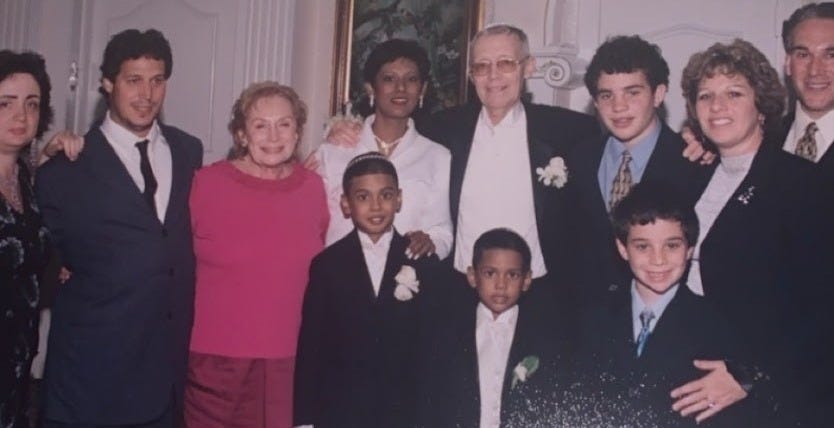
As a Jewish campus engagement professional living in one of the most polarized eras in American history working in the second most Jewish city in the world, I never shy away from the opportunity to share my Jewish Trinidadian immigrant story with those willing to listen. In fact, I take pride in telling both the joyful moments and the painful times that have both shaped my experience in Jewish communal spaces and have influenced my desire to enter a career in public service and leadership.
Issues of belonging, visibility, and representation have been central to my journey towards a career in Jewish service. And I’m not alone. The 2021 JOC (Jews of Color) report makes clear that Jews with other marginalized identities have felt discriminated against in Jewish spaces and yet we still show up.
And why do we keep showing up? I believe it’s because, deep in our kishkas, Jews who live at the intersections, who check more than one box, still believe in the ideal of Jewish community. We show up not because it’s always easy, but because we carry a vision of what it could be. Even when faced with belittlement or entitlement, or with people who question or diminish our Jewishness, I’ve learned to see these moments as ignorance at best—and as symptoms of American racism at worst.
Years of lived experience have taught me that true belonging means showing up especially when people and institutions fall short and using your voice to push for change.
The role of Jewish organizations in my life not only served a cultural function, but continues to serve as an essential component to my Jewish identity, amplifying my push for inclusion and building a global Jewish community. Being affiliated and involved in many diverse Jewish organizations and programs, as well as feeling connected to a broader Jewish community has shaped how I live my core values and bring it to my places of work. My memories of them fuel my personal passion for breaking down harmful stereotypes of American Jews while removing barriers of entry to communal participation.
דַּע מֵאַיִן בָּאתָ, וּלְאָן אַתָּה הוֹלֵך
“Know from where you come, and where you are going” Pireki Avot 3:1
To stake a claim in one’s community is ultimately to take pride in who you are and where you come from.
It definitely was not always easy for me to open up and make myself vulnerable to share personal parts of my life with complete strangers but Jewish organizations and institutions laid the fertile soil for my Jewish identity to blossom and encompass a global Jewish family. One where I came to see my difference as my biggest strength.
Connecting Family
Growing up in NYC public school, and bullied for being Jewish, I was in desperate need of Jewish spaces beyond the synagogue where I could feel seen and express myself. Jewish organizations like the Kings Bay YM-YWHA played a crucial role serving as the primary site of Jewish community.
I first came to learn about the Kingsbay YM-YWHA through my older brother Kai, who had spent years working for them as a summer camp counselor. As for me, I spent countless hours at the Y throughout my teens eventually working there as a CIT. The Y provided the opportunity for me to build bridges across difference with Jewish and non Jewish staff, members, campers, Israeli shluchim, and parents.
In the summer of 2014 following the kidnapping of three Israeli students Eyal Yifrach, Gilad Shaer, and Naftali Fraenkel, Kai decided he had to leave New York. The kidnapping of three Israeli students, an event that echoed the millennia-long vulnerabilities of our people, spurred him into action and his decision wasn’t just a whim. It was thoughtfully coordinated with the help of the very same Kingsbay YM-YWHA we had both worked at for years.
Upon hearing of his dilemma of having no family in Israel and his lack of Hebrew proficiency, as well as listening to his dream of enlisting in the IDF and making Aliyah, the Y sponsored his ticket. Setting him up with living accommodations for when he arrived, eventually lead him to teach English at a school in Gan Yavne, a Southern Israeli town where he eventually gained an adopted Israeli family, the Gavras who looked out for him as their own.
While Kai was acclimating to Israeli society and gaining a new sense of community, the impact of organizations like the Kingsbay YM-YWHA in self actualizing his dream of living out a two thousand year long aspiration of Jewish self-determination in the Land of Israel demonstrated that boundaries of Jewish community went far beyond the local operations of a community center in Sheepshead Bay Brooklyn. The Y saw in Kai what Kai saw in himself, a selflessness and a deep love for the Jewish people, a love that could only have been cultivated over the course of an entire lifetime, a purpose worth putting his life on the line for.
It was in Israel that Kai discovered a deeper love for the Jewish people, one not based on on being a Trinidadian American but becoming an Israeli, a process where communal bonds are forged in dirt and wearing the green uniform. It was there he actualized a purpose that transcended backgrounds, boarders, and birthplaces, for only in Israel did Kai feel he finally belonged.
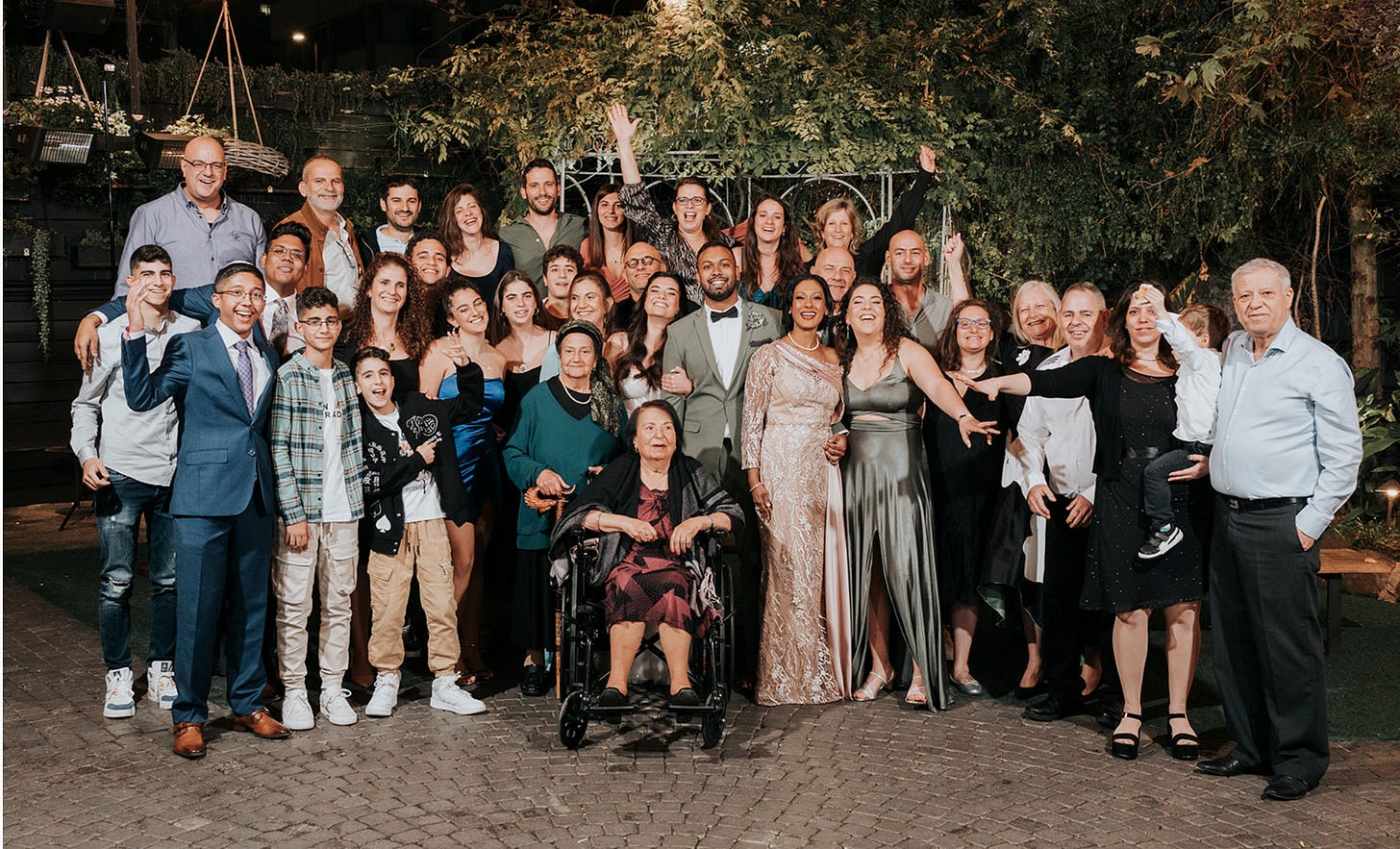
As for me, at just 14, I was still figuring out where I belonged. I had seamlessly lost my big brother to a country I had never seen, visited, or fully understood. His decision left me with a plethora of fresh perspectives, Thanks to first Skype and eventually Whataspp ,my family and I had a rare front-row view into his assimilation process from his initial arrival to his army gibbush, to introducing him to my Birthright bus to his wedding day. The support of the Kingsbay YM-YWHA had indeed set in motion a whole slew of milestone experiences.
Finding My Footing
If Kai’s way of living a purposeful Jewish life was through service and building a life in Israel, mine became leadership in the American Jewish community. Giving back to a New York Jewish community I had grown to love and felt called to strengthen seemed only natural as I became more entrenched in communal organizations.
I first got involved with Jewish communal organizations like Hillel , Birthright, and the Nachshon Project in college due to the incentives. Any chance to go to Israel on organized trips I readily took on, and as I went came back, I found myself getting more involved in leadership roles and becoming intrigued in what a Jewish career could look like.
Beginning in 2017, I got involved with Hillel at Hunter. It was the first demographically and geographically diverse Jewish community I had ever experienced. Bringing together Jews from Reform, Syrian, Modern Orthodox backgrounds, and everyone in between and serving 1000+ students, our Hillel was not housed in a dedicated building, but comprised a single classroom we turned into a multipurpose room. What the Hillel lacked in space, it made up for in ingenuity. Their approach to engagement relied heavily on establishing and maintaining deep personal connections, often through one-on-one coffee dates, where I experienced some of my most meaningful and relatable conversations with Hillel staff members. Through these interactions, I began to take greater ownership of my Jewish identity and felt connected to a Jewish community.
Some days, the Hillel space was used for Jewish learning sessions; other times, it transformed for board games or movie nights. Having a sense of Jewish community on campus kept me rooted in a Jewish life that felt like my own. As a student-athlete commuting from Sheepshead Bay to the Upper East Side, then to tennis practice in the Bronx, and finally to night shifts at American Eagle in SoHo, Hunter Hillel was a crucial pit stop serving many needs.
In the summer of 2019, one of my Hillel staff members encouraged me to apply for the Nachshon Project—a fellowship that sends student leaders to Hebrew University during their spring semester to engage in Jewish learning and explore careers in Jewish communal life. I applied, not really expecting to get in or with a full understanding what a “Jewish communal professional” actually was. To be honest, I still couldn’t give you a textbook definition and that’s partly because the experience was so transformative.
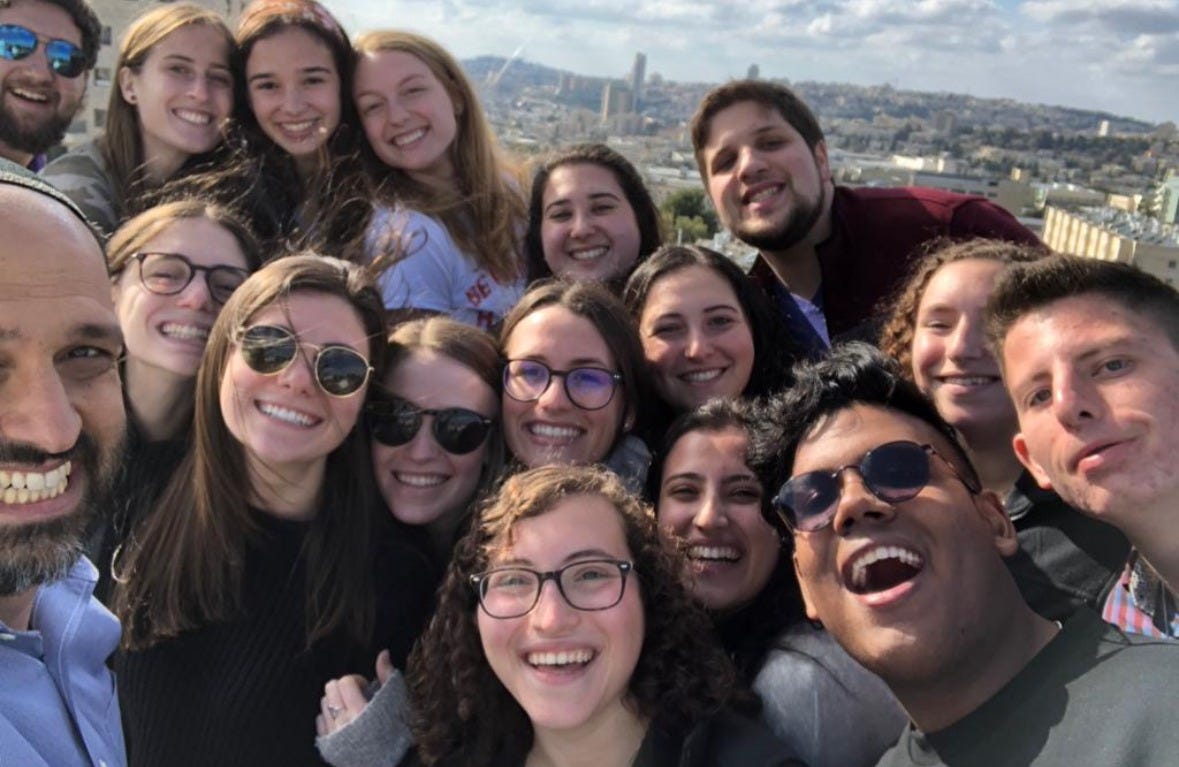
Attending the Nachshon project felt less than a study abroad than a homecoming. It was a full immersion into Israeli society, language, and history through both academics and experiential learning. While Birthright focused on giving us a vital taste of the land, it was on Nachshon that we traveled across the country and met with thought leaders from every corner of Israeli society: futurists, professors, nonprofit leaders, tour guides, day school principals, rabbis of every denomination, and more. Experiencing it within a social context provided ample space to reflect, offer feedback, and participate meaningfully.
Gaining new experiences like pluralistic Beit Midrash at Pardes and being introduced to towering figures in the Jewish world like Yehuda Kurtzer and Avram Infeld left an indelible mark with how I constructed Judaism no longer as a religion but as a people. In some sense, while I had always felt this way, his strong South African accent cemented this belief and inspired something innate in me. While our time at Hebrew University was cut short by COVID-19 and global shutdowns, participating in the Nachshon project solidified my desire to play a larger role in shaping Jewish life especially on college campus.
Entering the Marketplace
Upon graduating I had a decision to make.
Did I want to live Jewish history and feel the Jewish calendar or give it up to work in the secular world. Where would I most be useful and what did I love to do?
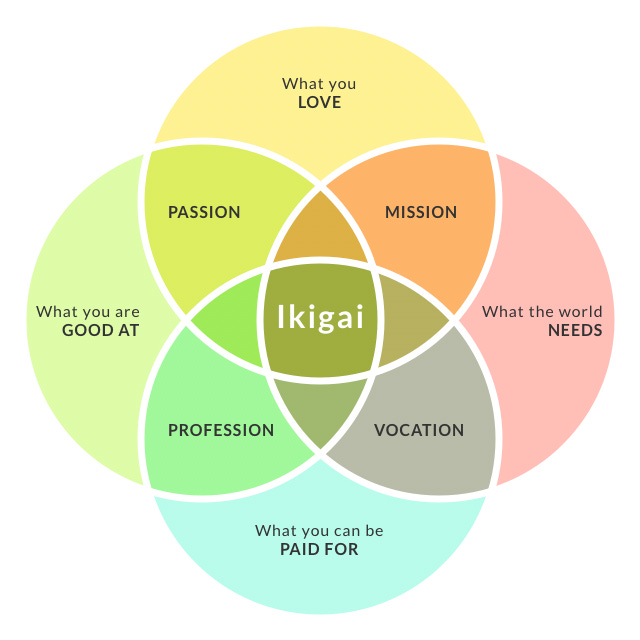
Introduced to the concept of Ikigai during Nachshon, I carefully considered three job offers as a Springboard Fellow at Hillel chapters at the University of Pittsburgh, CUNY Baruch, and San Diego State University. I ultimately chose to serve at Hillel at Baruch College in New York City because I wanted to make a difference for students with similar struggles I had experience dealing with. These were students who were working full time, commuting hours on the MTA, and often juggling caregiving responsibilities.
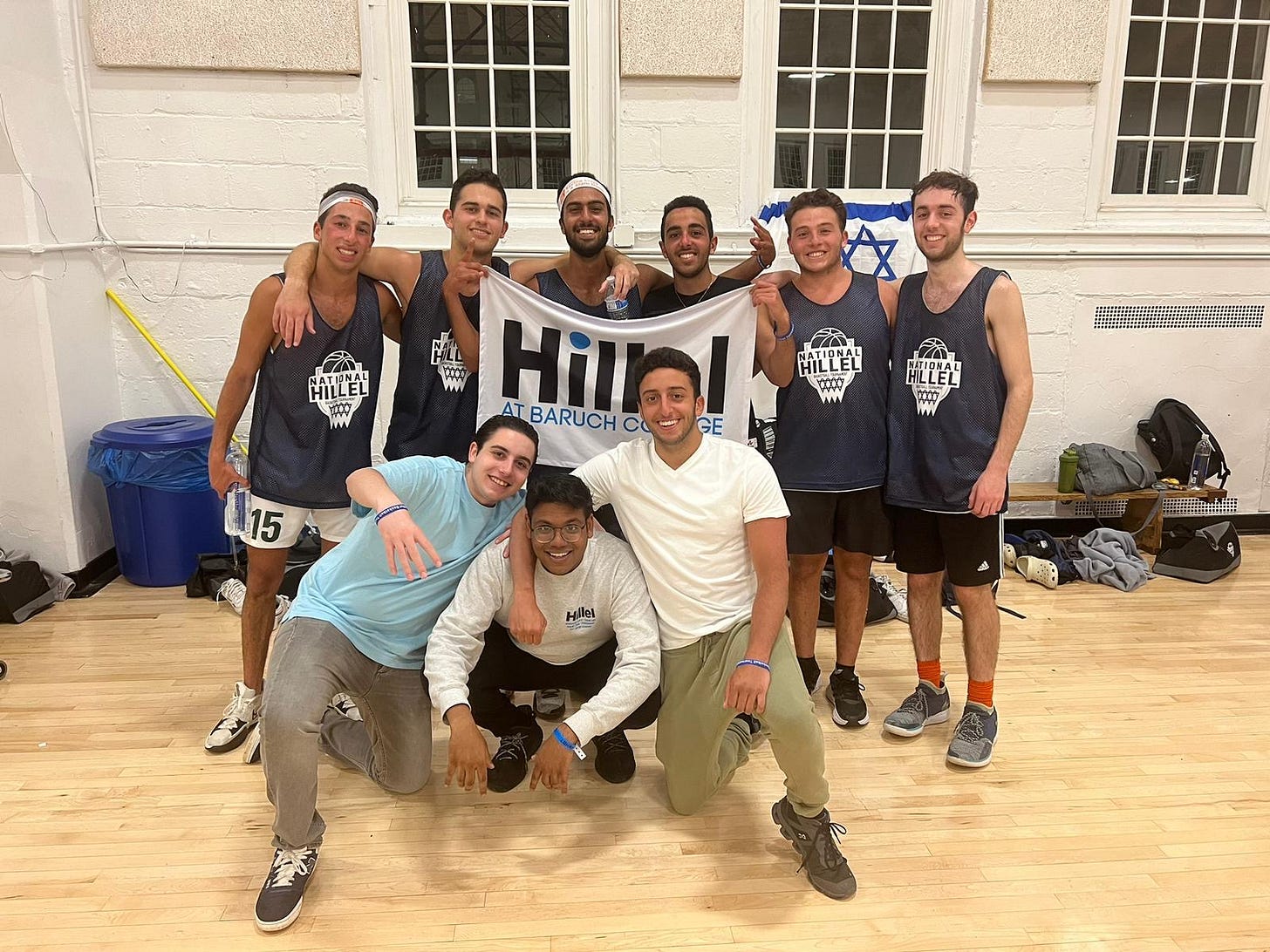
Working at one of the most demographically and Jewishly diverse Hillel’s in the country, I had the privilege of serving college students from Persian, Bukharian, Russian-speaking, Israeli, and Syrian backgrounds. From 2020 to 2024, I supported these students across campuses including Baruch, City College, John Jay, Fordham, FIT, Pace, the New School, and SVA recruiting Israel trips, running interfaith jam sessions, and helped create opportunities for students to get more involved with leadership. The experience was both eye-opening and deeply meaningful, with each engagement making me more aware of how to be a better advocate for them.
After two years working as a full time staff member, I faced a new question.
Do I stay in this work, or do I do as Kai did? Serve my time for a greater purpose and then move toward secular careers and goals?
As I pondered where I’d go from here, it became quite apparent that my mission in Jewish communal leadership was just the tip of the iceberg. Reflecting on my own journey as part of a global Jewish family I imagined the kind of Jewish community my children would inherit. Who would lead these communities? What values would they uphold? I realized I wanted leaders who understood the complexity of Jewish identity, who embraced diversity with confidence and empathy. Leaders with the skills, network, and values to run organizations efficiently and ethically towards their missions.
2023-Present
The concerns I had identified at my time at Hillel at Baruch like the isolation of Hillel with other student clubs and demonization of zionism reached a painful crescendo with the devastating terrorist attacks on October 7th, claiming over 1,200 Israeli lives—including Kai’s adopted brother, Omer Gavra z’’l. In the agony of that day, I remembered why I decided to enter on this journey. On October 8th, I penned an op-ed that gave voice to the trauma and resilience of that day.
Some have embraced a renewed pride in Israel, while others have distanced themselves from Jewish institutions altogether. This complex landscape is exactly where I see my role and others who work in the Jewish community as uniquely vital.
As I complete my degree, I strive to keep making my heart a palace of chambers capable of holding multiple perspectives while proudly affirming my Jewish identity as one tied to a global Jewish community. The Nachshon Project returned to my life through their graduate fellowship opportunity, enabling me to develop skills with Prizmah Day School, and IYUN organizing young adults from the comfort of my apartment in Morningside Heights NYC.
The lasting impact of Jewish organizations, in instilling pride and confidence, has empowered me to stake my claim within the Jewish world authentically and proudly. While every organization’s mission has differed , they collectively saw me the way I saw myself, as a member of the community worth investing in leading me to realize my passion was enabling others to actualize the potential of their stories, and to thrive in safe Jewish spaces.
As divisive politics seeks to undermine the institutional legacy of Jewish organizations, I firmly believe Jewish communal leaders have a duty to go out of their way to do everything possible in welcoming everyone’s story as part of the fold, for I see it is an essential step toward bringing the lofty ideal of community back into reality inching one step closer to uniting one Jewish family.