
What McDonald’s gets right about war and peace
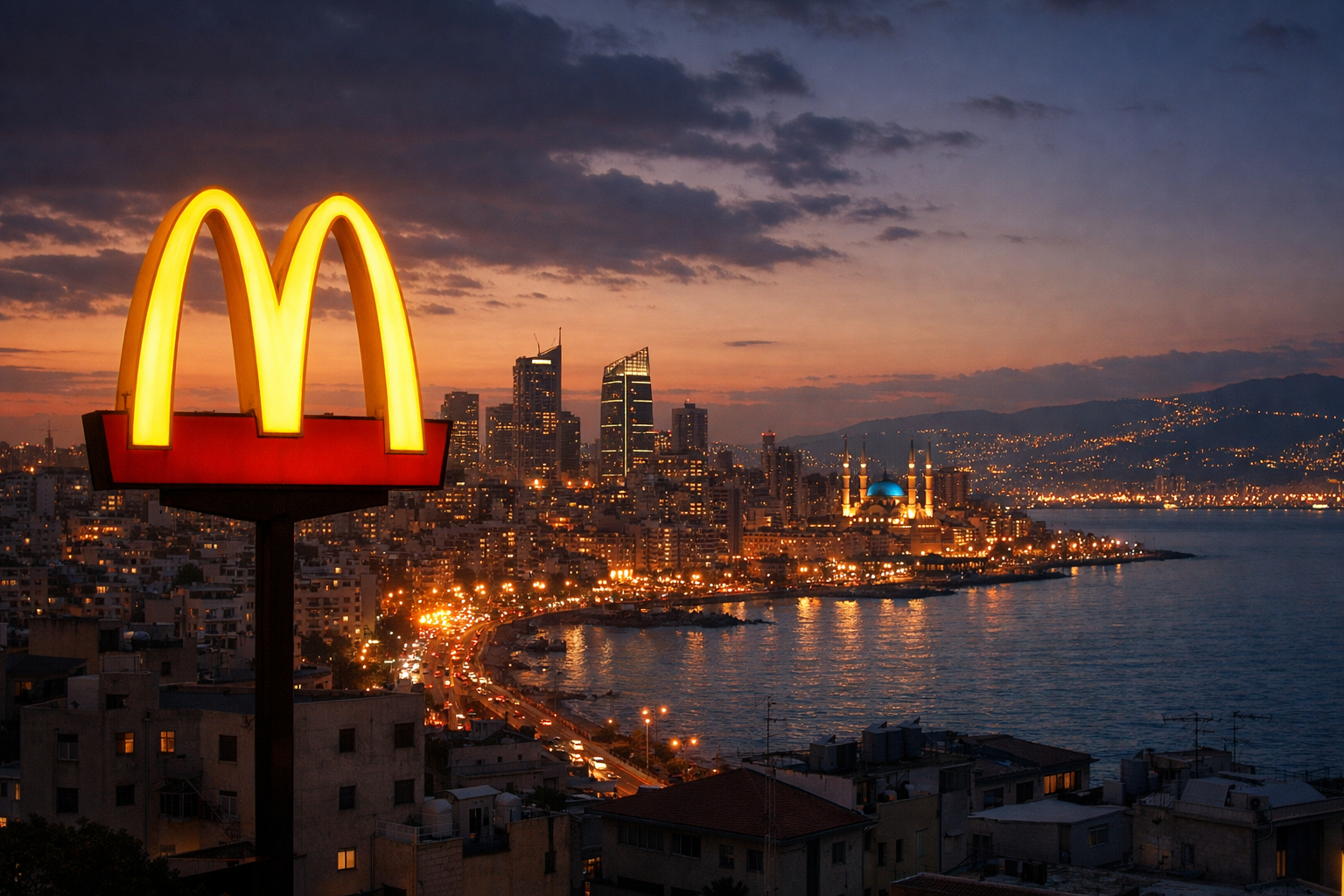
In 1996, the New York Times columnist Thomas Friedman proposed what he called the Golden Arches Theory of Conflict Prevention: no two countries with a McDonald’s had ever gone to war with each other. For decades the theory held. Then in 2022, Russia invaded Ukraine — and McDonald’s responded by withdrawing from Russia entirely, selling its 850 Russian restaurants, which were rebranded almost immediately as “Vkusno i tochka” (Tasty and That’s It). The theory, it turned out, had its own enforcement mechanism: start a war, lose your McDonald’s. Friedman was vindicated in a way he never anticipated.
Which brings us to Israel and Lebanon — another apparent exception to the theory that is, upon closer inspection, not an exception at all. Both countries have McDonald’s. Both have spent four decades in a state of more or less continuous conflict. The reconciliation is straightforward: Israel was never really at war with Lebanon. It was at war with Syria and multiple paramilitary groups, including Hezbollah, that were operating within Lebanese borders. Lebanon, the country, was to a great extent a bystander to its own destruction. The Golden Arches Theory was never broken. It simply didn’t apply.
That distinction is about to be tested for real.
April 18, 2026, marks the 43rd anniversary of one of the most consequential bombings in modern Middle Eastern history. On this date in 1983, a suicide bomber drove a van into the United States embassy in Beirut and killed 63 people. Six months later, on October 23, a truck bomb destroyed the US Marine barracks in the same city, killing 241 American servicemen in the single deadliest day for the US military since Iwo Jima. Both attacks were carried out by what would become Hezbollah.
What makes today’s anniversary remarkable is that the landscape looks nothing like 1983. Yesterday, Israel and Lebanon announced a 10-day ceasefire and opened direct peace negotiations. There is a genuine possibility that lasting peace between Israel and Lebanon is now achievable.
In 1983, the obstacles to lasting peace were formidable. Syria occupied Lebanese territory and had every interest in keeping Lebanon unstable. Iran was arming and directing a newly founded Hezbollah. The PLO was still a military force operating from Lebanese soil. And across the Arab world, the taboo of a peace deal with Israel was near-absolute — Egypt’s Camp David agreement, brokered by Jimmy Carter, had resulted in Cairo getting expelled from the Arab League.
Those conditions no longer exist.
Assad’s Syria is gone — his regime collapsed in late 2024, eliminating the external veto power that strangled Lebanese sovereignty for decades. Iran has been militarily degraded by weeks of direct conflict with the United States and Israel, leaving Hezbollah at the weakest it has been since its founding.
The road ahead may still be bumpy. Disarming Hezbollah will likely be easier said than done — the organization remains heavily armed with tens of thousands of fighters and deep roots in Lebanese Shia society.
But the geography of Hezbollah’s predicament has changed in ways that have no precedent. Pressed by the IDF from the south, challenged by a newly assertive Lebanese state, and now facing a post-Assad Syria to the east — the organization finds itself without the strategic depth it has always relied upon. The corridor through which Iran armed and sustained it for forty years is now closed. There is no longer anywhere obvious for Hezbollah to go. Except, perhaps, through the Golden Arches.
Whether an organization built for war can be undone by the promise of a Big Mac is the defining question of the new Middle East. And Syria itself is the next question. Damascus is a city in transition, its new government seeking legitimacy, international investment, and a place in the modern world. The logic of the Golden Arches — that states with enough of a stake in economic prosperity choose it over conflict — suggests that Syria’s trajectory now points toward integration rather than destabilization. There is no McDonald’s in Damascus yet. But if the peace holds, and if the region continues on its current course, it may only be a matter of time.