From the Royal House of David
What My Grandfather Knew About Jewish Survival
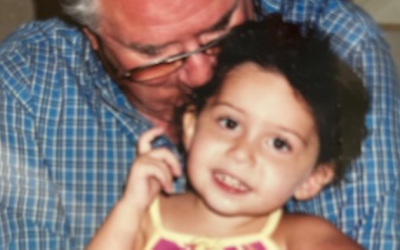
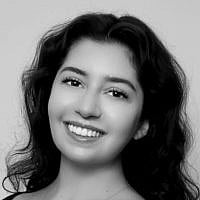
I was born in a tiny town in Arizona.
And when I say tiny, I mean reaaaally tiny. The streets were dirt, people rode horses, and outside my bedroom window, I could see the stars ever so clearly.
Our closest city—or true civilization—was about 45 minutes away.
And my synagogue?
It was an hour away from home.
I have so much gratitude for growing up surrounded by nature and simplicity—I really do. But as a Jewish child, growing up so far away from other Jewish people came with its own challenges.
My parents did everything they could to give me a Jewish upbringing despite how isolated we were, and I give them so much credit for that.
When I was very young, we lit Shabbat candles every Friday night. We celebrated all the holidays. For Hanukkah, we had blue and white lights that went around the entire house. For Passover, our seder plates were usually decorated with silly masks to represent the Ten Plagues.
We always had a Rosh Hashanah party to attend. We always went to services for Yom Kippur.
Just like Jewish kids across the country, I attended Hebrew school, had a bat mitzvah, and went to Jewish sleepaway camp.
So, right? I feel like that’s a pretty good Jewish childhood.
But still, I was often the only Jewish kid in my class.
And it did give me a sense of loneliness. There was always some sort of disconnect between my classmates and me.
They knew I was different, and I knew I was different—but I didn’t really understand how different until I got older.
That’s when I realized that I may have been the first—and possibly the only—Jew some of my classmates had ever met.
It was in college that I really started embracing my Jewish identity and actively getting involved with my community.
One of my proudest moments was when I advocated for Jewish inclusion in my sorority’s DEI initiatives, even giving a lengthy presentation during Jewish American Heritage Month.
Since then, I’ve journaled a lot about my experiences as a Jewish young woman in America. I’ve written articles. I’ve written a book (that’s not yet published). I’ve made Jewish content.
I went on Birthright after graduation. I had a religious Jewish mentor whom I’d meet with weekly. And I eventually worked professionally for a Jewish nonprofit.
And over the last three years, I’ve started lighting Shabbat candles again, making challah, going to Saturday services, and davening at home regularly.
Now, I’m trying to learn Hebrew.
But this journey hasn’t always been easy.
I’ve encountered a lot of people with a lot of opinions about what it means to be Jewish.
Even though there’s a Jewish joke that says there are three rabbis in a room and five opinions, the opinions I’ve been hearing in my Jewish circle seem to stem from a privileged bubble that needs to be popped.
For example, my friend once met this girl who, almost immediately, asked whether she spoke Hebrew. When my friend said she didn’t, the girl completely disengaged, which was especially funny considering she didn’t even speak Hebrew fluently herself.
Or one of my other friends started going to temple more regularly and even took weekly classes with rabbis—and someone she was dating told her she still wasn’t Jewish enough for him.
And experiences like that make me want to reemphasize something:
Not every Jew gets to grow up surrounded by Jewish community. And not every Jew has the same opportunities to learn, practice, or connect with Judaism on a spiritual/religious level.
But at the end of the day, we are all Jews.
Jews in the Diaspora preserved a lot on an individual level but not everything. And what was preserved is different for every Jew, as we are not a monolith.
My family doesn’t speak Hebrew. It wasn’t passed down to me or my parents. My grandparents did know some Yiddish, and my great-grandparents were fluent. But Hebrew in its authentic form? It was lost within my family after thousands of years of exile and persecution.
That doesn’t make me less Jewish.
And for some American Jews, English is the main language through which they learned to pray and connect with Hashem.
A Jew talking to Hashem in English should not be compared against a Jew talking to Hashem in Hebrew.
Both are Jews. Both are connected to Hashem.
I don’t have immediate family in Israel. I can’t just visit the homeland whenever I want. It takes planning and money that I don’t necessarily have as a young Jewish woman in my early twenties.
Just because I can’t have a Tel Aviv summer like another American Jew, again, doesn’t make them more Jewish than I.
In general, my relationship with religious Judaism has evolved—from being more secular to becoming more observant—but that doesn’t make me better or “more Jewish” than anyone else.
When I was younger, I was told that the Judean Temple in Jerusalem would only be rebuilt once Jews stopped dividing themselves from one another.
And as I’ve gotten older, I’ve thought about it more and more.
So much so that I’ve thought about my grandfather and his legacy.
My grandfather also settled down in Arizona, ironically in another remote part of the desert, where his nearest synagogue was also very far away.
While he wanted to build a shul for the Jewish community near him, he ran into a problem—similar to the one I’ve just highlighted in my own Jewish circle.
The Orthodox Jews didn’t want to pray alongside the Reform Jews. The Reform Jews didn’t want to worship exactly the way the Orthodox Jews did.
Everyone had different ideas about what the synagogue should look like, how services should be conducted, and what the “right” way to practice Judaism was.
And because everyone was so focused on what was right, no one could agree on how to build anything at all.
But my grandfather wasn’t as concerned with who was right.
He was concerned with what was best.
He understood that as the only Jews in the region, the last thing we could afford was to turn against one another. We could have different traditions, different levels of observance, different ways of davening—and still be one family, one people.
He told the community that we had to be willing to accommodate one another.
Because wouldn’t it be better to have a temple where we could all come together in remembrance of our peoplehood, celebrate our culture, connect with Hashem, and raise the next generation of Jewish children than to have nothing at all?
I understand there’s nuance to Jewish Law and to condense this question to a black-and-white “yes” or “no” may be too simple in our modern era.
However, I still think he had a point.
Because truly, what good is being right if, in the process, you lose your community, inevitably enabling assimilation?
Jewish continuity is already fragile, and in rural Arizona, the assimilation of minority individuals is not an abnormal phenomenon.
My grandfather understood that preserving Judaism wasn’t just about preserving religious rules. It was also about preserving the people who carry them.
Because without the Jewish Nation as a tribe, there would be no Judaism.
My grandfather united Jews across every religious, political, and economic spectrum by founding that shul in his rural Arizona community.
He served as the temple’s president through his final years, continuing to advocate for a place where Jews could come together despite their differences.
Although I had a strong Jewish foundation growing up, I still spent my childhood feeling far from my people. Now, in adulthood, I’m finding my way back.
However, I see a need for the broader Jewish world to make more room for the realities and complexities of Jewish life in the American Diaspora.
We can debate. We can question. We can disagree. We can practice differently.
But we have to hold each other close without judgment or a false sense of Jewish superiority.
Because no matter how differently the Diaspora shaped one Jew from another, we are still connected by thousands of years of history, tradition, memory, and survival.
And if we want that story to continue, we cannot let our differences become the very thing that drives us apart or keeps us from showing up for one another.
I’ll always advocate for Jews to reclaim traditions that weren’t passed down to them, but regardless…
No matter how religiously observant you are—or aren’t—I hope you’re proud of your heritage and carry it with you in whatever way feels most meaningful to you.
I hope you choose to live a Jewish life, because the life we have today was not promised to us.
It is a life our ancestors fought, sacrificed, and survived for us to have.
Related Topics
Related Posts