What Reservists Bring Back From War
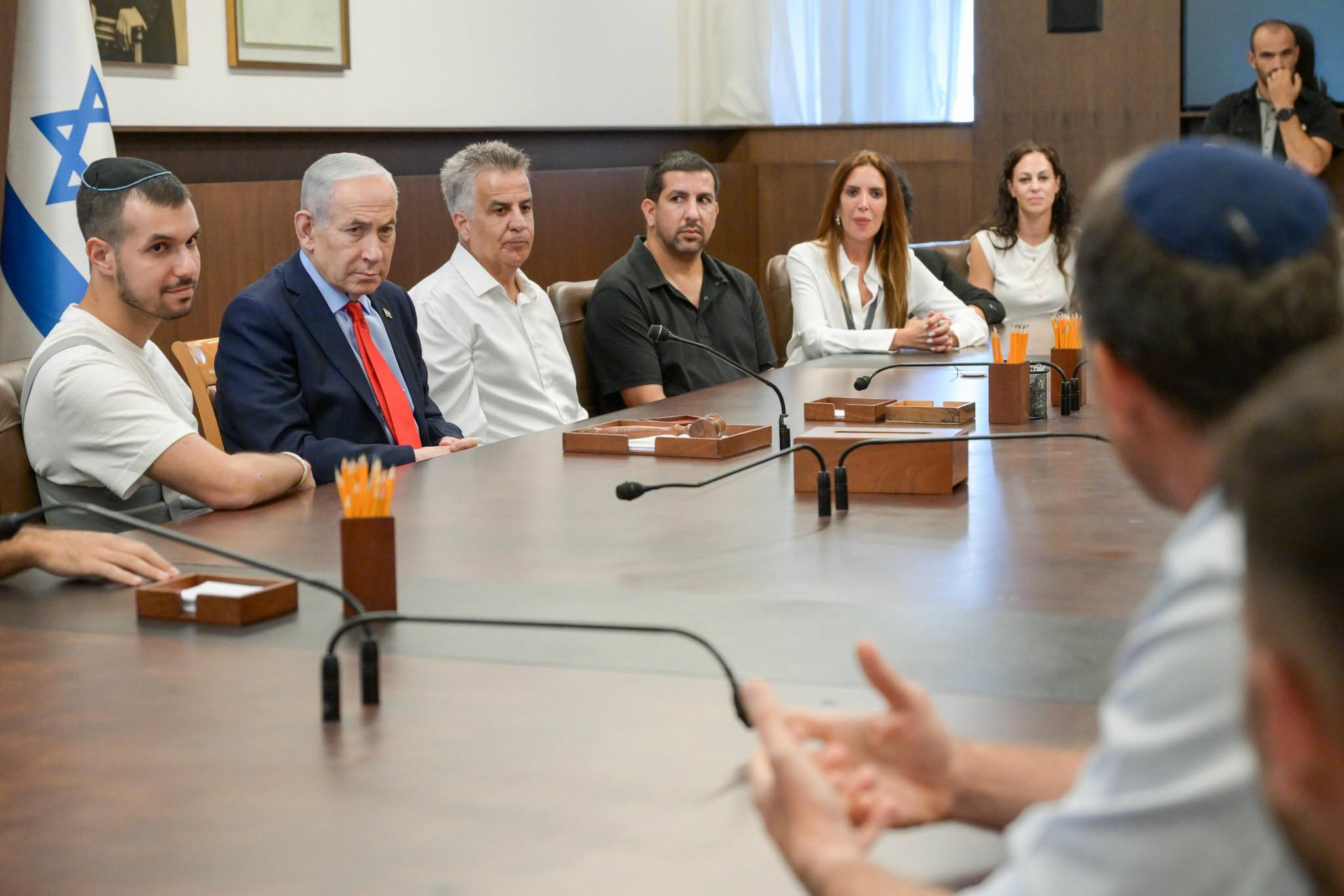
Alongside a group of reserve soldiers, and on behalf of “SOS Israel: Support Our Soldiers,” I had the privilege of discussing with Prime Minister Netanyahu the challenges facing reserve soldiers coming back from reserve duty. We shared with the Prime Minister a simple proposition, that when reservists return from war, their employers, family and friends should understand that the person coming home may not be the same person who left. They may return with new leadership skills, greater confidence and an extraordinary capacity to operate under pressure, but also carrying experiences and stresses that colleagues cannot see.
We have spent the past three years in awe of what reservists have given the country. Perhaps it is time to ask what they bring back with them.
Soldiers returning from reserve duty have gained life-changing experience, planning, managing and carrying out both short, intense missions and lengthy, complex operations.
The soldiers carrying out these missions have given more than even the reservists themselves may have thought possible before October 7. After October 7, the reservists have demonstrated that when needed and when given the opportunity, they could leverage their experience from civilian life to plan, lead and carry out complex operations. The reservists adapted their skills faster, and pushed themselves further than any project in their civilian lives would have demanded.
This experience can be leveraged to improve planning and project performance in the organizations where reservists work in civilian life. But returning to civilian life can also have a strange disconnect: after months of intense, mission-oriented responsibility, day-to-day work can suddenly feel mundane.
A friend working in a large corporation recently shared with me his personal frustrations. He had spent three months on reserve duty up north, taking part in countless planning sessions and briefings, each focused on a specific task or mission. Intensive months of planning missions, leading his soldiers, and watching talented individuals plan and manage their own tasks and missions.
The friend then returned to corporate life, where his young manager would ask him to join meetings because “a second opinion is always helpful,” and would task him with handling odds and ends. How does someone go from leading people through intense, mission-oriented operations to being invited into meetings because “a second opinion is always helpful”?
My friend expressed his frustration to his head of department. To his credit, the head of department recognized that he had on his team a colleague/reservist who had returned with new skills and experience, and moved him into a new role, directing teams and keeping them focused on their projects.
This is one aspect of the challenge facing reservists reintegrating to civilian life. Reservists may also return carrying experiences, memories and stresses that are far less visible. Some may reflect on the experiences they have encountered, and on the prospect of another round of reserve duty. The transition back to civilian life can be difficult, even when the need for support is not immediately apparent to colleagues, or even to the reservist himself. Spending time back at work carrying out tasks that feel mundane, can intensify the reflection and stress associated with reserve military duty, increasing the risk of a variety of stress syndromes.
When friends and colleagues recognize both the skills that the reservists bring home, but also the emotional burden that they may still be carrying, those friends and colleagues can respond in one of two ways: either by lowering expectations or simply continuing work routines as they were during the reservists’ absence, or, alternatively, by offering roles or assignments tailored to the acquired skills and abilities of the reservist, and by creating space for support when it is needed.
Choosing the latter course would allow the organization to benefit from those skills brought back by the reservist, while at the same time, giving the reservist a sense of mission, responsibility and connection to his or her work. If done well, this reintegration process is a win-win for the reservists, their colleagues and their employers.
Our meeting with the Prime Minister was arranged by the remarkable Yaarit Shoshan, Dr. Shimon Sabag, Sagit Bachner and the wider team of volunteers at SOS Israel, in preparation for SOS Israel’s upcoming exhibition. SOS Israel has undertaken to support soldiers coming back to civilian life, by providing varied and tailored assistance.
To address the challenge of readjusting reservists to civilian life, SOS Israel has developed two main projects. The first project gives reservists the opportunity to take part in “storytelling courses”. The course provides participants with the tools to tell their stories, and a platform and time to process their experiences and their feelings. Reservists returning home bring with them countless lived experiences. The memory of these experiences may remain buried, incubating, and after time break out in various forms of stress syndromes, as part of what is being labeled in Israel as the PTSD crisis.
Through its storytelling courses, SOS Israel provides the reservist with the opportunity to create a clear narrative around his or her experiences, giving the reservist an opportunity to work through experiences and feelings, hopefully developing a positive narrative the reservist can own, and, if they so choose, share with others.
This transformation of narrative echoes what Rabbi Jonathan Sacks described when reflecting on the Hebrew word for crisis — משבר, Mashber. The word means both a crisis and also a birthing stool, the place where new life is delivered. Through its storytelling courses, SOS Israel attempts to transform challenging experiences into opportunities for growth.
SOS Israel’s second major project is a traveling photography exhibition, featuring public figures posing alongside reservists, highlighting what reservists have given, what they may still carry with them, and what they have to offer.
The SOS Israel Exhibition, produced jointly with Mifal HaPais, opens on Thursday, September 3, 2026, at Warehouse 2, Jaffa Port. We hope that the Exhibition will prompt organizations to think differently about the reservists on their teams. We have spent the past three years watching the reservists give more: their time, their work, their families, and sometimes their lives. We should also ask what we can do when they come home. We can see them differently, give them opportunities worthy of what they have learned, and pay attention to what they may still be carrying. That is the win-win: a stronger reservist, a stronger workplace and, ultimately, a stronger Israel.