
What they told us about ‘The Purim’ in Iran
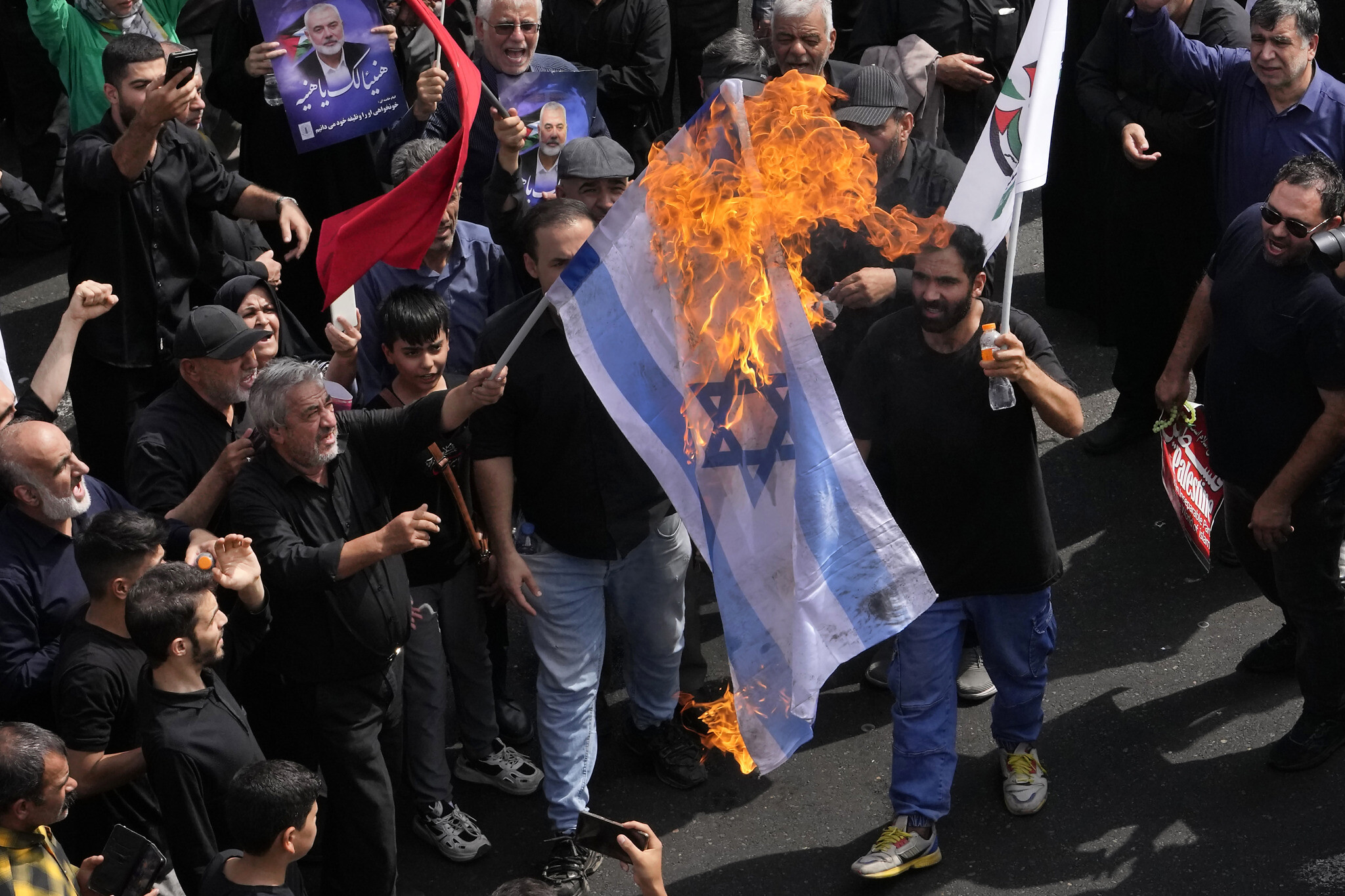
Bombardment by antisemitic propaganda is part of growing up in the Islamic Republic of Iran. Any Iranian child is likely to have had peculiar experiences on this matter during school. Igniting flags of Israel and the United States, as well as painting them on the ground so people would trample them, is routine. Beyond that, religious studies are mandatory throughout the 12 years of public education. Even in university, one basically has to pass a course about Islam every semester if one wants the undergraduate degree. These classes are essentially a mainstage for the regime to demonstrate its ideology to the citizens.
The textbooks of these courses are full of antisemitic theories, but teachers and professors often insist on some extra antisemitism on their own initiative. It is so typical that different schools and universities around the country usually use the same materials for this additional antisemitic education. Most of it is similar to any antisemitic plans in other Islamic countries, which introduced Jewish people as the eternal enemy of Islam and added some conspiracy theories they borrowed from the Western world.
But one thing is unique, with exclusive use for antisemitism inside Iran: The Purim! Or, as they told us, the Jewish celebration for massacring 75,000 Iranians. I clearly remember I was 15 when I heard about it for the first time. Our religious studies teacher (the official title of the course was “Religion and Life,” if you care) used class time to show us a lecture by Ali Akbar Rafipour, a media activist closely associated with the IRGC, who is definitely a name you will come across if you dig deep into Iran’s problems.
“Israel wants to massacre us again, as they did in cold blood during the Purim,” Rafipour claimed. He insisted that the events of Purim are real history and that they actually occurred. He even claimed that the ancient Persian tradition of spending the 13th day of spring (April 1st or 2nd) in nature, or Sizdah-bedar as Iranians say, is because it’s the anniversary of Purim!
Being a high school student in an Islamic theocracy certainly stokes your sense of curiosity. They try to shove answers into your mind, but these very efforts push you to scrutinize the answers they provide. First, I could see that Purim is not in the spring. Second, since my mother was a Persian literature teacher, I had already studied some Persian mythology, and I knew that nothing even close to Purim was mentioned in Persian sources. Also, I knew that the legend behind Sizdah-bedar has nothing to do with the Jews. Moreover, I was able to draw a border between historical events and folk tales. But still, pro-Islamic regime influencers quickly spread such declarations on social media. Usually, they attached a video of an Orthodox Jew saying something like, “Just like Purim, we will defeat Iranians again by Hashem’s support.”
The crucial point here is that the issue of Purim is different from other antisemitic propaganda. It overlaps with issues that actually matter to Iranian youths. Ayatollah Khomeini declared on various occasions that nationalism is against Islam, first Islam, then Iran. So, my generation embraced pre-Islamic Iran to oppose the dictatorship in our homeland, and Purim is about bloodshed in that era. Therefore, I sincerely advise the people of Israel to be careful about the words they use to describe Purim – anything they say is at risk of being used to contribute to the Islamic regime’s propaganda.