What to the Ashkenazi Jew is the Fourth of July?
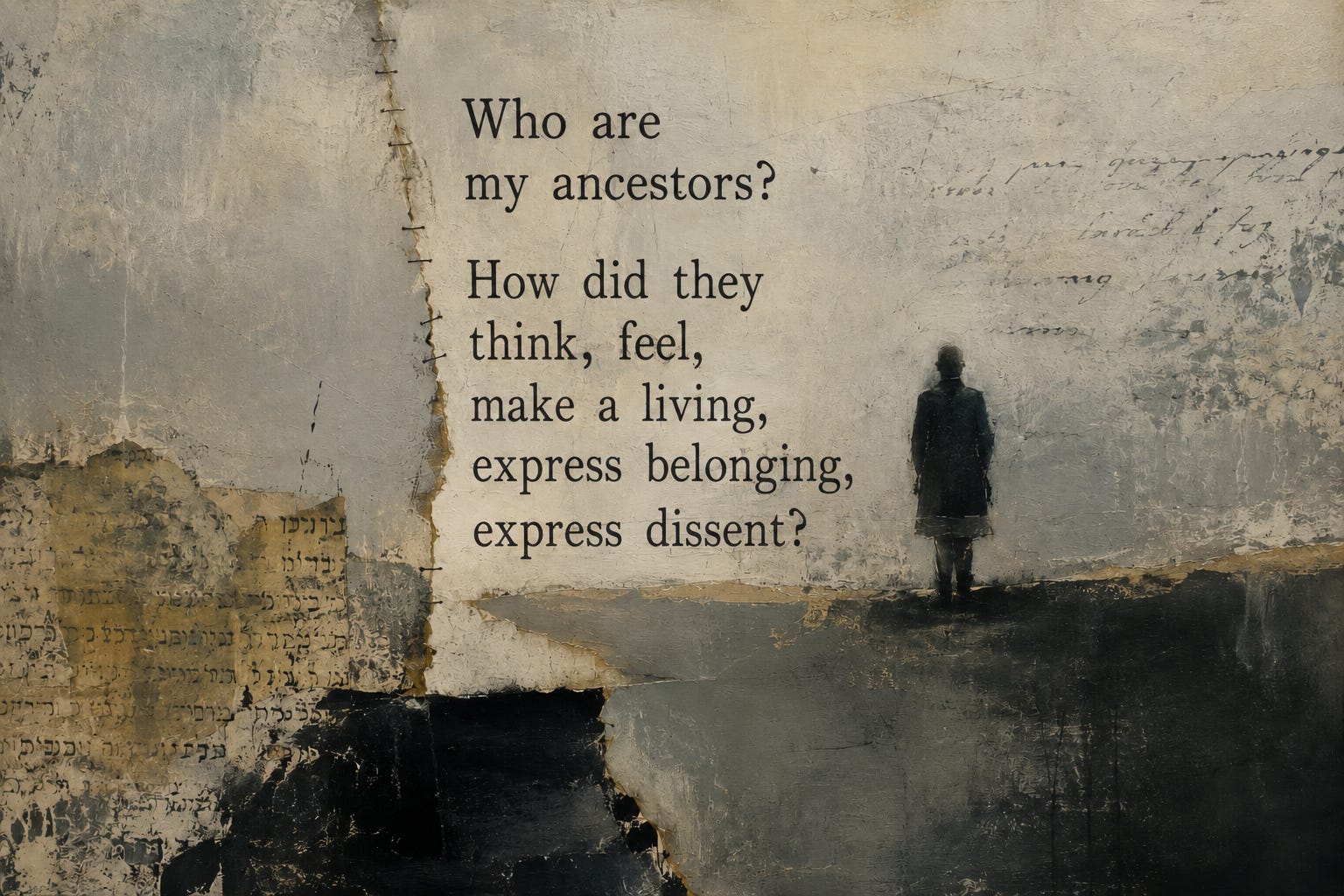
I am a fourth-generation American, and my ancestors are lost to Jewish history. They authored no books for me to discover; their names are not transcribed among the intellectual Jews of any time. I know, because I keep looking. I found the name Feldstein only once: at Auschwitz, compiled in the book of the dead.
I cannot locate my family origin beyond the broad, ever-shifting borders of “the Russian Empire.” Who were the Feldsteins? How did they think, feel, make a living, express belonging, express dissent? I cannot access the stories of the people that led to me; all I know is that I am an Ashkenazi Jew, and so I inherit the Jewish diaspora even though I cannot find my own ancestors inside of it.
Even my family’s American story evades the stereotypes of success. My mother was a first-generation college graduate, and both my parents were the first in their families to pursue graduate education. It’s the wrong generations of access. And still — my name is Zahava Michal Feldstein, which bears both a Yiddish of exile and a Hebrew of homeland, and restricts my ability to pass.
At bars, people ask, “Where are you from?”
“Atlanta,” I answer.
“No—but where are you really from?”
Am I white?
Unknowingly, they have prompted a writer who finds meaning through writing itself to explain what she is—and perhaps what she is not.
I experience white privilege in the sense that I will never be pulled over for Driving While Black. But when the man at the bar refuses to accept “Atlanta” as my answer, he is asking about inheritance. To him, my hair, my skin, and my name do not cohere. And once he learns that I am Jewish, I am already certain which question comes next.
“Are you a Zionist?”
I’m a pedagogue; let’s begin with a shared definition. “What do you mean by Zionism?”
“Well… do you support genocide?”
What does it mean to be “white” if I am repeatedly required to come out as a Jew? If coming out demands intellectual, emotional, and spiritual labor simply to establish my own belonging?
Critical race theory—which I deeply value—locates the origins of modern racial formation in colonial contact; when European empires wrote racial hierarchy into law to justify the institution of slavery and the theft of Indigenous land. Not only does Jewish history begin before that; “savage” and “barbarian” did not initially describe racialized hierarchies. In the texts themselves—the Doctrine of Discovery—these categories first marked the non-Christian.
Who, then, becomes the enduring object of a Christian gaze? I live in a Christian country where the White House press secretary wears a cross from the home of the presidential pulpit. Where Roe v. Wade was overturned even though my own Jewish tradition not only permits abortion in some circumstances, but can require it to save the life of the pregnant person.
So how do I describe my racial, ethnic, and cultural identity? I am Jewish. I am Ashkenazi. I inherit both proximity to whiteness and a history of a people that has suffered under its categories.
What to this Ashkenazi Jew is the Fourth of July?
I am an American citizen; but this country is not mine. I come from an archive that is fractured, a diaspora that survives through traumatic memory, and a family whose inheritance I continue trying to interpret even though it is lost.
Am I white?
Well, who is asking—and why?
_____
For more works exploring Jewish inheritance, interpretation, and the stories we inherit, visit Rabbi’s Daughter Rebellion. If you have leads on a historical book written by a Feldstein, please reach out to the author there! And if this piece made you think differently, send it to one person who’d argue with it.