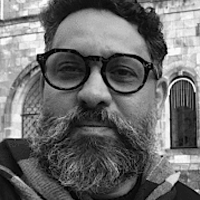
American Sar-el Volunteer
What Was It Like For An American To Experience the 12 Day Israel-Iran War?
WHAT WAS IT LIKE FOR AN AMERICAN TO EXPERIENCE THE 12 DAY ISRAEL-IRAN WAR?
Americans who are alive today have never experienced a war on their home turf. That is a luxury which I hope will continue.
But, unfortunately, Israelis experience war frequently and some might say constantly. So I thought that, with sufficient passage of time (6 months) to set aside emotions since the June 2025 Israel-Iran War, it would be a good time to reflect on what that experience was like for an American.
By way of background, I am a retired American civilian who, like many other Americans, volunteers on Israeli military bases to provide logistical support for the IDF through a program called Sar-el (“Service to Israel”). I have volunteered each of the past 23 years and so have been in Israel during times of war. In fact, the previous three times I volunteered all happened to coincide with an ongoing war against Israel. In May 2023, it was the short-lived war against Islamic Jihad in Gaza. And in November 2023 and September 2024, it was the ongoing war against Hamas in Gaza. So running to bomb shelters when the Code Red siren sounds was not something new for me.
But this war against Iran was different. Because of the great risk of Iranian ballistic missiles, the entire country of Israel was shut down. Businesses, schools, and even places of worship were closed. And public gatherings (marriage celebrations, political rallies, etc.) were curtailed. The roads were practically empty.
Israelis who were not serving in the military were basically confined to their homes in order to be near their “mamad” (safe room or bomb shelter). Those whose homes lacked a mamad took shelter with family or friends who had one, or in underground train stations and underground parking lots. The local news depicted families sleeping on train platforms, reminiscent of Londoners living through the WWII Blitz.
The day before the war began, my brother and I were part of a team of enthusiastic Sar-el volunteers which had just completed our first week of hard but rewarding labor on an IDF base near Gaza. We expected to return for a second week, but Friday June 13 brought news of the outbreak of war with Iran. Sar-el was forced to cancel its volunteer program, a wise decision since I later learned that my base was targeted by Iranian ballistic missiles.
Iranian missiles also targeted Ben Gurion Airport which was forced to close. Stranded in the country, the Sar-el volunteers had to fend for ourselves. A number of us took shelter in a Tel Aviv hotel which, in normal times, was the hangout for Sar-el volunteers. That hotel had a good basement bomb shelter (I’ve sheltered there before) and was only a couple of blocks from the U.S. Consulate Building. So when an Iranian missile landed near the Consulate, those volunteers felt the impact.
Other volunteers sheltered with friends and family throughout Israel.
In my case, at the outset of the war, my brother and I were staying with cousins in Pardes Hana. Unfortunately, our Pardes Hana cousins did not have a mamad in their home. Consequently, we (my two Pardes Hana cousins, my brother, and I) were invited to stay with cousins in nearby Binyamina. Our Binyamina cousins had a small mamad sized to hold the 4 of them. Now it was housing 8 people.
For the next 12 days, the 8 of us lived in very close quarters, glued to the YNET news on our phones. Israel has an ingenious two-stage missile warning system which operates through everyone’s phones. An initial buzz on your phone warns that a missile may be in your area in 10 minutes and so you should stay near your mamad. Ninety seconds before a missile may impact in your area, a Code Red siren goes off and you must seek shelter in the mamad immediately.
Israeli attacks on Iran primarily targeted Iranian military and nuclear facilities. In contrast, Iranian missiles primarily targeted Israeli civilian areas in order to spread terror among the Israeli population. And at the beginning of the war, most Iranian missiles arrived in Israel at night, to ensure that no one could sleep through the night due to the fact that civilians had to run to their bomb shelters so many times. For that reason, many Israelis simply slept in their bomb shelters because the missiles were so frequently launched at Israel.
Once the Code Red siren sounded, my family crammed into our small mamad. It was unairconditioned, crowded, dark, and sweaty. We sat there, listening to the overhead sound of Israeli interceptor missiles trying to explode incoming Iranian missiles before the latter reached their target. Every once in a while, an overhead explosion would be louder than usual. “That was a close one,” one of my cousins would observe. I felt like I was in a WWII movie about an American submarine being depth-charged in the depths of the Pacific by Japanese destroyers, silently looking upwards and hoping that the next explosion would not be so close.
Throughout, Israelis showed resiliency and also a caring for others. During one morning, my brother and I took a short walk outside, having felt like a prisoner confined to our cousins’ home. We consciously stayed close to the home in the event we received a 10 minute warning on our phones. For some reason, the 10 minute warning never came and instead the 90 second Code Red siren sounded. We ran towards our cousins’ home as fast as we could. Running parallel next to us were a father and his small son. The two of them reached their home which was closer than our cousins’ home. Running breathlessly, he silently motioned that we could use his mamad. We declined since we were only two houses away from our cousins at that point. Such is the caring of Israelis to invite complete strangers into their home to offer shelter during a missile attack.
By the 12th (and final) day of the war, no one in our home had been able to sleep through the night. We were all worn out from being confined to the house and its environs and rushing into the mamad at every Code Red warning. Even the back fire of a nearby truck had us jumping up to head for the mamad.
I was very appreciative that Israelis looked out for each other and for non-Israelis like my brother and me. For example, when my brother ran out of his prescription medicine, a local doctor asked no questions in signing new prescriptions for him. Learning that we were in the country to support the IDF, his only words were: “Thank you for your service to my country”.
And with the country is at a standstill, people tried to find ways to contribute to the greater good. For example, one of our Sar-el volunteers volunteered to work at a local kindergarten that had been moved to someone’s basement. Other volunteers joined many Israeli civilians who elected to work on farms in the Negev, picking fruits and vegetables in place of Thai workers who had been killed or fled the Oct. 7 Hamas attack.
When limited emergency flights out of Israel finally opened up, my brother and I were placed on one of the earliest ones, scheduled to fly out on what became the final day of the war. The Jewish Agency appreciated that we had come to Israel to volunteer in support of the IDF and so rewarded us with high priority on an early flight out.
The 12 day Israel-Iran War likely altered the dynamics of power in the Middle East, with Iran proven to be defenseless in the face of Israeli air attacks.
But on a more local level, what did I learn from having experienced this war first-hand? My greatest impression was how Israelis look out for each other, especially in times of war. I heard no complaining, no “woe is us” sentiments expressed. Instead, I heard a steadfast resilience to make it through this war in the confidence that Israel would be victorious (which it was). And since everyone has a friend or family member in the military, the support for the efforts of the IDF was universal. Of course, the longing for the release of the hostages was also universal.
I hope that Americans never have to experience war like Israelis so unfortunately do. But if they did, I would hope that Americans would show support for each other in the manner I witnessed Israelis do.
Related Topics
Related Posts