
When a Football Match Becomes a Morality Play
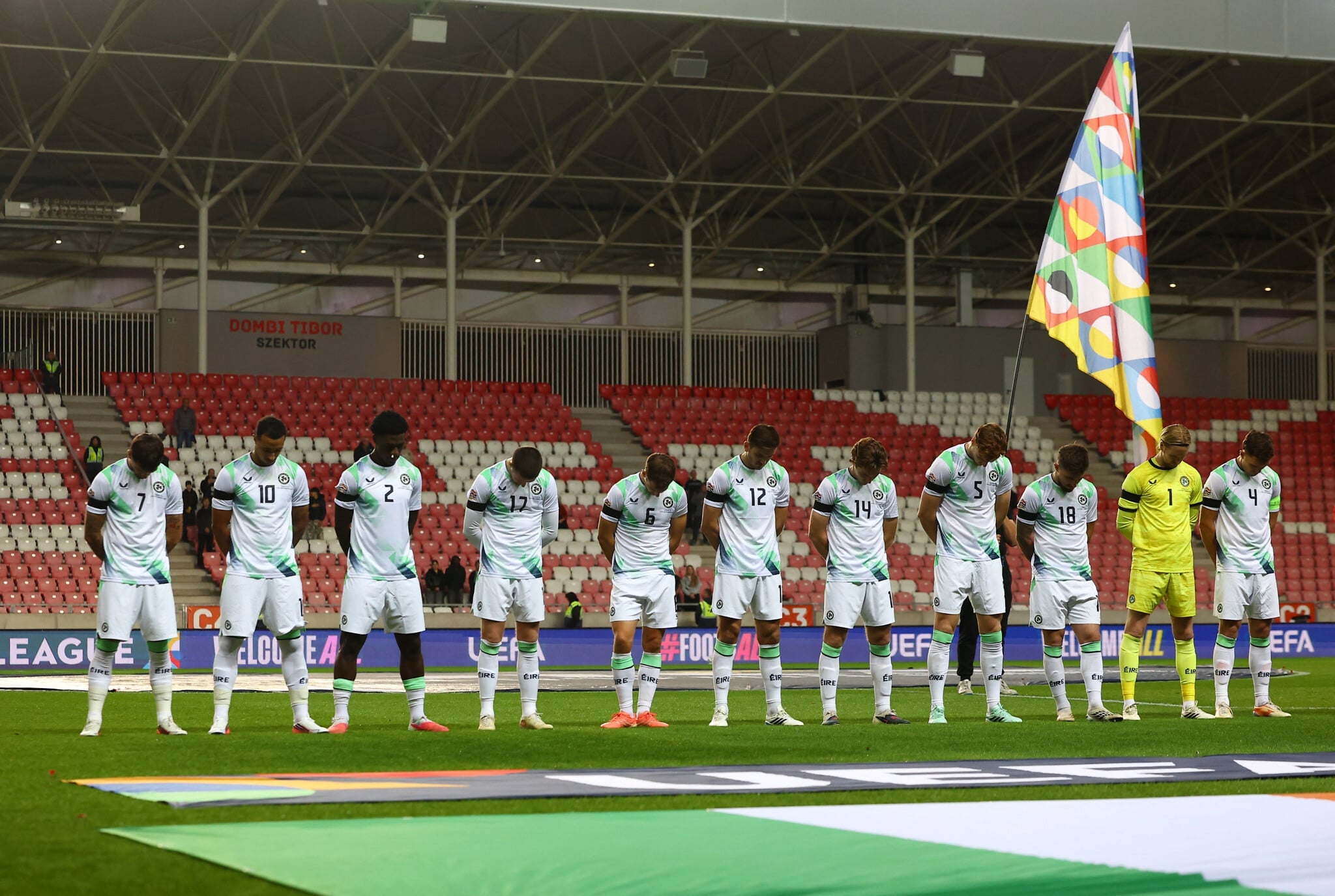
I have to be honest: I don’t share academia’s infatuation with reductive thinking. There is something particularly pernicious about taking the conceptual framework from one historical situation and simply copying and pasting it onto another. History is messy, nations are messy and people are messy, and yet we seem increasingly determined to squeeze all three into a handful of reassuringly simple categories.
The casting of the ‘shared experiences’ of Ireland and Palestine is hardly subtle. Britain and Israel are the colonialists; Ireland and Palestine are the colonised. Britain and Israel are the oppressors; Ireland and Palestine are the oppressed. Powerful and powerless, coloniser and colonised, resistance and domination. Once you accept that framework, almost everything else falls neatly into place. Irish identification with the Palestinians becomes not merely political solidarity but a recognition of supposedly shared historical experience. Israel, correspondingly, inherits the role once occupied by Britain: the colonial power against which resistance is not only understandable but morally righteous.
It’s an extraordinarily seductive way of understanding the world, and also, in my view, an extraordinarily reductive way of understanding history. As soon as Israel and Zionism are conceptualised through this colonial prism, I find myself struggling to understand how anybody gets there without some combination of maliciousness, ignorance or stupidity. Which, coincidentally, rather echoes the words of the Israel Football Association this week, which accused Ireland’s coach of “stupidity, ignorance and hypocrisy”.
Sunday night’s football match is the perfect example. Because once the historical roles have been assigned – Ireland and Palestine as the oppressed, Britain and Israel as the colonialists – something rather interesting happens when Ireland actually encounters Israel: the abstraction suddenly has people in it.
And the whole spectacle from the Irish team was so fucking performative. I mean performative literally, in the actual meaning of the word. The bowed heads during the national anthem, the refusal to shake hands, the black armbands, the captain approaching the Israeli captain with his hands conspicuously clasped behind his back, Jack Moylan taking off his armband after scoring and kissing it – these weren’t incidental expressions of discomfort. They were deliberately staged, highly visible symbolic acts intended to communicate a political and moral message. That’s what performative means.
Look carefully, too, at the way the whole saga was reported. The Irish players increasingly became the protagonists: placed under intolerable pressure, wrestling with their consciences, forced into an impossible situation and having to decide whether they could bring themselves to play. The Irish Times even described some players as having agreed to play “against their own instincts”, while another piece said the players should never have been burdened with making the decision in the first place. Their manager subsequently praised them for having “raised awareness worldwide” through their actions.
In other words, we ended up with almost the perfect dramatisation of precisely the framework I am talking about. Ireland becomes the morally troubled resister. The players become the reluctant participants, burdened by conscience and forced to engage with something morally intolerable. Israel isn’t simply another national football team whose country is fighting a horrific and hugely controversial war; it becomes the thing against which one’s humanity has to be publicly demonstrated.
Oppressor and oppressed, colonialist and colonised, powerful and powerless, good and evil. And then you perform your place within that story: bow your head, refuse the handshake, wear the armband.
None of which means people shouldn’t protest Israel’s actions in Gaza. Of course they can. Nor does it mean the players weren’t genuinely disturbed by what they believe is happening here. They may well be. But that’s precisely what makes it so seductive. The performance doesn’t require insincerity; in fact, it works best when everybody involved sincerely understands themselves to be occupying the morally righteous side of the story. Suddenly a football match isn’t a football match at all. It’s a morality play, complete with heroes, victims and villains. It’s fucked up, if you ask me.
But what about the Israelis?
Here’s the bit that seems to have been almost entirely lost in all of this: what about the Israeli football team? These are young men, footballers – not the Israeli government, not the cabinet, not the IDF high command and not the people making decisions about Gaza. They’re a national football team, including Arab Israelis, who turned up to play a game of football. Were they not entitled to be seen as human beings in any of this?
Because if we’re going to spend days talking about the emotional turmoil of the Irish players, the unbearable position they were supposedly placed in and the burden on their consciences, perhaps somebody might spare a thought for the people standing opposite them.
Israel was the “home” team on Sunday night, except their home game was in Hungary. Not Tel Aviv, not Haifa, not in front of tens of thousands of their own supporters, but Debrecen, in an almost empty stadium with only a small number of Israeli fans present. The national team cannot currently play its home internationals at home.
Imagine what the past few years of international football have actually been like for those players: airports, hotels, security, neutral grounds, protests and calls for them to be excluded from competitions. And now an opposing team whose players won’t even shake their hands. Did anybody wonder how they felt? Did anybody ask whether they were frightened, whether being an identifiable Israeli abroad at the moment ever makes them nervous, what the security arrangements around their team are like, or what it’s like representing your country when seemingly every match has become a referendum on everything your government has ever done – even on whether your country has a right to exist?
Apparently their individual humanity is beside the point, and that’s exactly what bothers me. If the argument is that individuals should not be reduced to the actions of governments, and that ordinary human beings deserve empathy regardless of nationality, then surely these young Israelis are precisely the people you should be hugging rather than shunning.
Instead, they became props in somebody else’s morality play. Stand opposite them and bow your head during their anthem. Don’t shake their hands. Wear the armband. Demonstrate visibly that you are on the right side. Then beat them 3-0. And much of the surrounding narrative becomes a story about the moral courage and anguish of the people who refused to shake their hands. There is something profoundly fucked up about that.
When people become symbols
And this is where, for me, the football match connects directly back to that colonial analogy. If you’ve already decided that Ireland and Palestine occupy one side of history while Britain and Israel occupy the other, then everybody entering the story risks inheriting the moral status of the category into which they’ve been placed.
The Irish footballer isn’t simply an Irish footballer anymore. He becomes, however unconsciously, the representative of a people who understand themselves through a history of colonial domination and therefore recognise something of themselves in the Palestinians. The Israeli footballer, meanwhile, inherits the other role: colonialist, oppressor, Israel.
Except look at the actual person standing there. He might be politically opposed to his government. He might be Arab or Jewish. He might have lost somebody since October 7. He might be frightened. He might simply be a 20-year-old footballer who has spent years dreaming about representing his country and now finds himself playing a “home” international hundreds of kilometres from home, in an almost empty stadium, while the players opposite him refuse to shake his hand.
Once you’ve decided in advance who represents the oppressor and who represents the oppressed, even the possibility that the Israeli standing in front of you might himself be vulnerable becomes remarkably difficult to see. And that’s the danger of reducing complicated histories to morality plays. The oppressor can also be vulnerable, the supposedly powerful can also be frightened, the citizen of a country can disagree profoundly with its government, and the person onto whom you’ve projected the actions of a state might have had absolutely nothing to do with those actions.
People contain contradictions. History contains contradictions. Israel certainly contains contradictions. Morality plays don’t: they need heroes, they need victims and they need villains.
By Sunday night, the young Israeli footballer standing on a pitch in Hungary was no longer really being treated as an individual at all. He’d become something much simpler. He was Israel. And perhaps that’s the most pathetic part of the whole fucking performance.