
When Conspiracy Goes Mainstream in Turkey
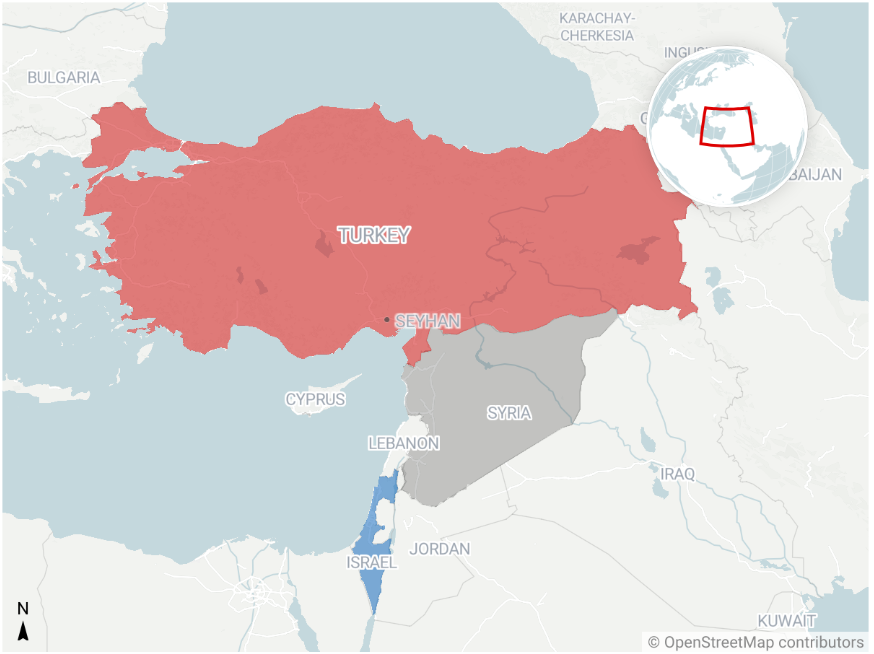
An opinion column published this week in Sabah, one of Turkey’s most influential daily newspapers, has drawn attention for its stark portrayal of global power, religion, and conspiracy — at a moment when the Middle East is entering another period of profound uncertainty.
Written by veteran columnist Haşmet Babaoğlu, the piece frames the world’s ruling elites not merely as political or economic actors, but as part of what it describes as a sinister and cohesive belief system.
“We are facing a horrific belief group… In fact, even a ‘lineage.’”
According to the column, this alleged elite is bound together by an intense form of religiosity:
“We cannot ignore that they are deeply bound to what they do and to one another through an intense sense of ‘religiosity.’”
The argument escalates sharply when it suggests that extreme crimes may function as a unifying ritual:
“Child abuse and (as we may eventually realize in horror) the issue of child sacrifice may be a form of ‘ritual’ for them. Think of it like a Babylonian religion…”
The text further claims that global capitalism itself is controlled by this structure:
“It is evident that the pinnacle of the capitalist social order is under the dominance of a certain elite ‘lineage.’”
It concludes by asserting that an internal struggle is underway:
“Now, a clique within them is purging another clique… a Roman/Vatican clique attempting to eliminate the Zionist clique.”
The column ends with a call for public vigilance:
“All the streets of the world must awaken… And Muslims, in particular, must remain vigilant.”
Why This Framing Matters Now
While clearly labeled as opinion, the column’s importance lies in its platform and timing.
Sabah is a mainstream, high-circulation newspaper. Columns published in its pages often resonate far beyond opinion sections, shaping how power, threat, and identity are discussed in the wider public sphere. This is especially consequential as Turkey navigates a fragile regional environment shaped by developments in Syria and Iran.
In Syria, unresolved power structures, ongoing security concerns, and shifting alliances continue to define the post-war landscape. Turkey remains deeply involved, particularly in the north, where military presence, refugee dynamics, and political influence intersect.
Iran, meanwhile, faces sustained internal pressure and external constraints while maintaining regional reach through alliances and proxies. Ankara’s relationship with Tehran remains pragmatic but cautious. In such an environment, narratives that frame global affairs as hidden civilizational struggles can find receptive audiences.
When Allegation Replaces Evidence
A closer reading of the column shows that many of its most severe accusations echo long-standing conspiratorial tropes, historically associated with antisemitic narratives — even when not stated explicitly.
Claims suggesting ritualized child abuse or sacrifice, for example, have no basis in Jewish theology or law and closely resemble medieval “blood libel” accusations that originated in Christian Europe. These allegations have been repeatedly disproven and are rejected by all mainstream religious scholarship.
At the same time, it is a documented reality that child abuse and exploitation occur across societies, including in Muslim-majority and Turkish contexts — particularly in conditions shaped by war, trafficking, or extremist groups. These crimes are universally condemned under Islamic law and are the result of breakdowns in governance, security, and accountability, not religious doctrine.
Similarly, the column’s invocation of “Babylonian” ritualism contradicts Jewish history. Judaism emerged in explicit opposition to pagan practices and categorically forbids human sacrifice. Ancient ritual violence, where it existed, predates both Judaism and Islam and belonged to pre-monotheistic cultures across multiple regions, including the ancient Near East and Central Asia.
The idea of a secret religious “lineage” controlling global capitalism also collapses under scrutiny. Modern capitalist systems developed primarily through European state power, colonial expansion, and later corporate structures. Elite family networks and patronage systems have existed in many societies — including the Ottoman Empire and modern Turkey — but these are structural political-economic phenomena, not evidence of religious or ethnic domination.
The Risk of Civilizational Framing
The column’s final appeal — that “Muslims, in particular, must remain vigilant” — shifts the focus from evidence and accountability to identity-based mobilization. In doing so, it risks redirecting public frustration away from tangible causes such as governance failures, corruption, and regional instability.
Historically, Muslim societies themselves have borne the heaviest costs of authoritarianism, conflict, and elite impunity. These outcomes were driven primarily by local and regional power structures, not by external religious groups acting in secret.
A Signal, Not a Diagnosis
Babaoğlu’s column should therefore be read less as a description of verifiable global dynamics and more as a signal of growing anxiety — about sovereignty, power, and moral order — at a time when the region faces real and immediate challenges.
As Syria’s future remains uncertain and Iran’s trajectory unresolved, Turkey stands at the intersection of competing pressures. In such moments, how power is described matters. Framing global events through metaphysical or conspiratorial lenses may resonate emotionally, but it ultimately obscures the concrete political and economic forces shaping outcomes on the ground.
Whether such narratives remain confined to opinion pages or increasingly shape broader expectations is a question that will be answered not by rhetoric, but by developments in the months ahead.