When Defense Drives Healing
How Israel’s military roots continue to inspire life-saving innovation and medical miracles
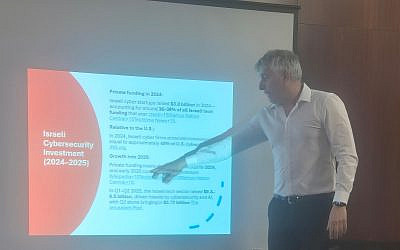
It is not every day you get to chair a conference where your jaw drops – not out of surprise, but out of deep admiration. That was me yesterday in Lisbon, Portugal, at a gathering on innovation and enterprise. The room was international. The curiosity was palpable. But it was one presentation that truly electrified the audience: Dr. Gavin Suss, associate professor and dean of the School of Design and Innovation at the College of Management Academic Studies in Rishon LeZion, Israel.
His topic was The Role of the IDF and the Israeli Military Industry in the Technological and Economic Development of Israel.
Now, I have followed Israel’s innovation story for years, but hearing it laid out so clearly and passionately—how necessity, defense, and national survival built a tech ecosystem – felt like listening to a symphony composed in code, courage, and commitment. The audience was spellbound. Many had little idea that behind the smartphones, chipsets, cybersecurity, and healthtech wonders they take for granted was a country the size of New Jersey, whose very survival demanded nothing less than technological miracles.
So when, just hours after Dr. Suss’s talk, I read about a new Israeli breakthrough – a bioengineered skin developed by Tel Aviv University and Sheba Medical Center to treat burn victims – something clicked. It was as if his presentation had set the perfect stage for this story of resilience, science, and healing.
This was not just another medical advancement. It was a wartime innovation born out of urgency. A testament to a nation that refuses to be defined by destruction but instead chooses to innovate the future of Israel.
Let me paint the picture.
In the wake of the horrors of October 7, 2023, when over 1,200 innocent Israelis were slaughtered by Hamas terrorists and thousands more wounded, Israel’s burn units were overwhelmed. Soldiers and civilians alike arrived with injuries that traditional treatments could not address fast enough. The old method of skin grafting, which involves harvesting healthy skin from the patient’s body, often is not viable in extensive burns. Lab-grown skin was another option, but it came with limitations: fragility, slow regeneration, and partial coverage.
Faced with this challenge, Israeli scientists did what Israelis often do, they got to work.
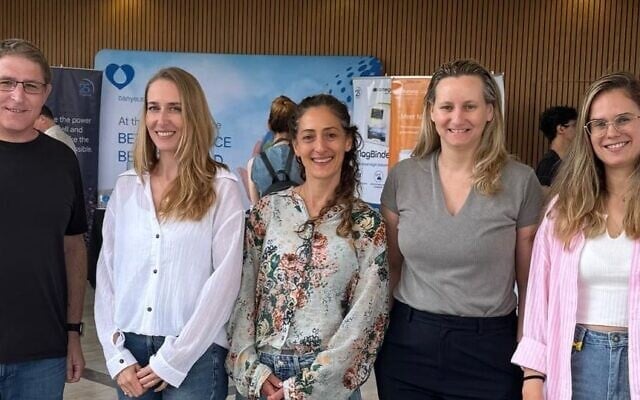
A coalition of researchers from Tel Aviv University and Sheba’s Green Skin Engineering Lab came together, merging chemistry, medicine, and nanotechnology. Their goal was to create artificial skin made entirely from a patient’s own cells, stronger, more flexible, and capable of healing wounds in half the time.
And they succeeded.
Using a process called electrospinning, they developed a nanofiber scaffold laced with peptides, short amino acid sequences that help skin cells grow and organize naturally. In lab trials, wounds treated with this graft closed in just four days, compared to the standard eight. Hair follicles began growing. The skin looked healthier, more functional.
A miracle, perhaps. But more precisely: Israeli innovation in motion.
And here is the part that moves me most – this was not a startup chasing a billion-dollar exit. It was not some commercial R&D division seeking patents. It was scientists responding to the cries of the wounded. Soldiers who had just returned from the battlefield. Civilians whose lives had been scorched by fire and terror.
This is what resilience and renewal looks like, not just rebuilding what was lost, but building something better in its place.
It reminds me of an old saying: necessity is the mother of invention. But in Israel, that necessity is not just about survival. It is about dignity. About human life. About refusing to let terror write the final chapter.
What makes Israel’s innovation model so powerful is that it is deeply personal. Every startup founder has a sibling or friend who served. Every engineer has lived through rocket sirens. Every breakthrough, it seems, is laced with memory and meaning.
So when Prof. Lihi Adler-Abramovich of Tel Aviv University calls the artificial skin a “first-of-its-kind,” she is not just speaking academically. She is speaking emotionally. It is a scientific breakthrough born from heartbreak.
And the collaboration behind it is just as inspiring – doctors, chemists, material scientists, and young PhD students working across institutions. No ego. No politics. Just purpose.
It is easy to forget, especially in today’s noisy world of sanctions, boycotts, and baseless war crimes accusations, that this is the real face of Israel: problem-solving, life-saving, relentlessly forward-looking.
I have often said that Israel’s enemies underestimate one thing, which is its will to heal. Yes, the IDF defends. Yes, the Iron Dome intercepts. But Israel’s real strength lies in what happens after. The rebuilding. The recovery. The relentless desire to turn pain into progress.
That is what I saw in Lisbon through Dr. Suss’s eyes. And that is what I read in the artificial skin study, a vision of a country that turns battlefield trauma into bedside healing.
So to the researchers, doctors, and innovators behind this effort: thank you. You are the quiet heroes behind the uniforms. You are the builders of what comes next. And to every young Israeli growing up in this moment – may this be your legacy.