When Ground Is No Longer Ground
When Ground Ceases to Be Ground
There are books that can be rejected only after they have been read. Eyal Weizman has written such a book.
https://www.penguin.co.uk/authors/305662/eyal-weizman
Ungrounding is not a comfortable text. Nor is it an innocent one. One may dispute its language, its frame, and its strongest claims. One may demand legal, military, historical, and moral precision. But one cannot do one thing: pretend that the question it raises does not exist.
This matters especially now, when Israel’s international position is being damaged not only by its enemies, but also by its own public theatre of humiliation, coercion, and strategic blindness. The recent images of detained flotilla activists, handled not as a security problem but as political trophies, were not a marginal embarrassment. They were a symptom. They showed how quickly state power can begin to perform itself before the world as if degradation were strength.
There is also another dome now. Not the Iron Dome that intercepts rockets, but an acoustic dome that prevents Israel from hearing what its own images have begun to say abroad. Under that dome, every criticism arrives as hostility, every humiliation of civilians as resolve, every diplomatic warning as proof of isolation, and every isolation as proof that the world never understood Israel in the first place. This is how a country stops hearing the difference between being threatened and becoming unreadable.
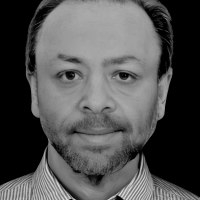
Weizman is not the Greta Thunberg of the Israeli-Palestinian conflict. He is not an activist arriving from outside with a ready-made verdict and a placard larger than reality. He is an architect, a scholar, and an Israeli who emerges from within the Israeli intellectual tradition. That is precisely why this question cannot be conveniently thrown outside the gate as enemy propaganda.
The question is this: what happens when ground ceases to be ground?
This is not about land as property, territory, map, or military operational space. Ground is something more basic. It is the condition in which life can still stand. A road by which one can return. A home that is not merely a temporary shelter. A cemetery where the dead have not been exiled a second time. A hospital where a wound may expect care. A school where a child does not learn only the difference between sky and threat.
When these conditions collapse, biological survival may remain. But the world — the one that turns survival into life — begins to disappear.
Jewish memory knows this mechanism. Not from seminars. Not from metaphors. From a history that happened in bodies, addresses, documents, transports, closed streets, and lost cemeteries. It knows that a people can be attacked not only by killing its members, but by making its world impossible to inhabit.
That knowledge does not authorize easy analogies.
Gaza is not the Holocaust. Palestinians are not the Jews of Europe. Israel is not Nazi Germany. Such comparisons usually destroy thought rather than deepen it. But the rejection of false analogy must not become a refusal to see.
This is where the difficulty begins.
Hamas is not a footnote to the destruction of Gaza. It is one of the architects of the ground that became so vulnerable to destruction. It placed war beneath the home, strategy beneath the street, command beneath shelter, death beneath ordinary life. Tunnels, rockets, weapons depots, hostages — all this was not placed in some empty space outside society, but inside the tissue of civilian life.
This was not only cynicism. It was a mechanism: civilian density as tactical cover, Palestinian suffering as political leverage, future ruin as propaganda capital. The genocidal character of Hamas lies not only in hatred of Jews and the desire to destroy Israel, but also in its willingness to consume Palestinian life as material for that war.
Hamas did not only attack Israel. Hamas prepared Gaza for catastrophe.
This does not make Palestinian civilians guilty. It makes their abandonment even more terrible.
No honest text about ungrounding can omit this. But Hamas’s cynicism cannot become a magic word that releases Israel from questions. A real enemy does not remove the obligation to distinguish. Military necessity may explain actions, but it does not automatically justify every scale of destruction or every future left behind.
Israel had the right to respond. Hamas committed atrocities on October 7. Jewish civilians were murdered, raped, abducted, and terrorized. No serious moral thought can erase this.
But Jewish memory must not become armor against seeing.
The Covenant does not turn land into an alibi. It makes land answerable. The more sacred ground becomes, the less it may be treated as a blank surface for force.
That is why Weizman’s question is dangerous. Not because it gives the final verdict — it does not. Not because it is beyond criticism — it is not. It is dangerous because it tests whether the language with which we defend life can still recognize life on the other side of its own fear.
The present international crisis of Israel is therefore not only diplomatic. It is architectural. Israel is losing not merely arguments, votes, or sympathy. It is losing the ability to make its own use of force appear connected to the preservation of a livable world. And once that connection breaks, every image of power becomes evidence against power itself.
What happens when ground ceases to be ground? What happens when a home is no longer a home, a road is no longer a road, a hospital is no longer a place where a wound expects care?
And what happens to us if we refuse to ask that question?
The point is not to abandon judgment. The point is to earn it.
For Jews, this question can never be someone else’s question only.
Yochanan Schimmelpfennig