I write what I see
When Horror Came With an Asterisk
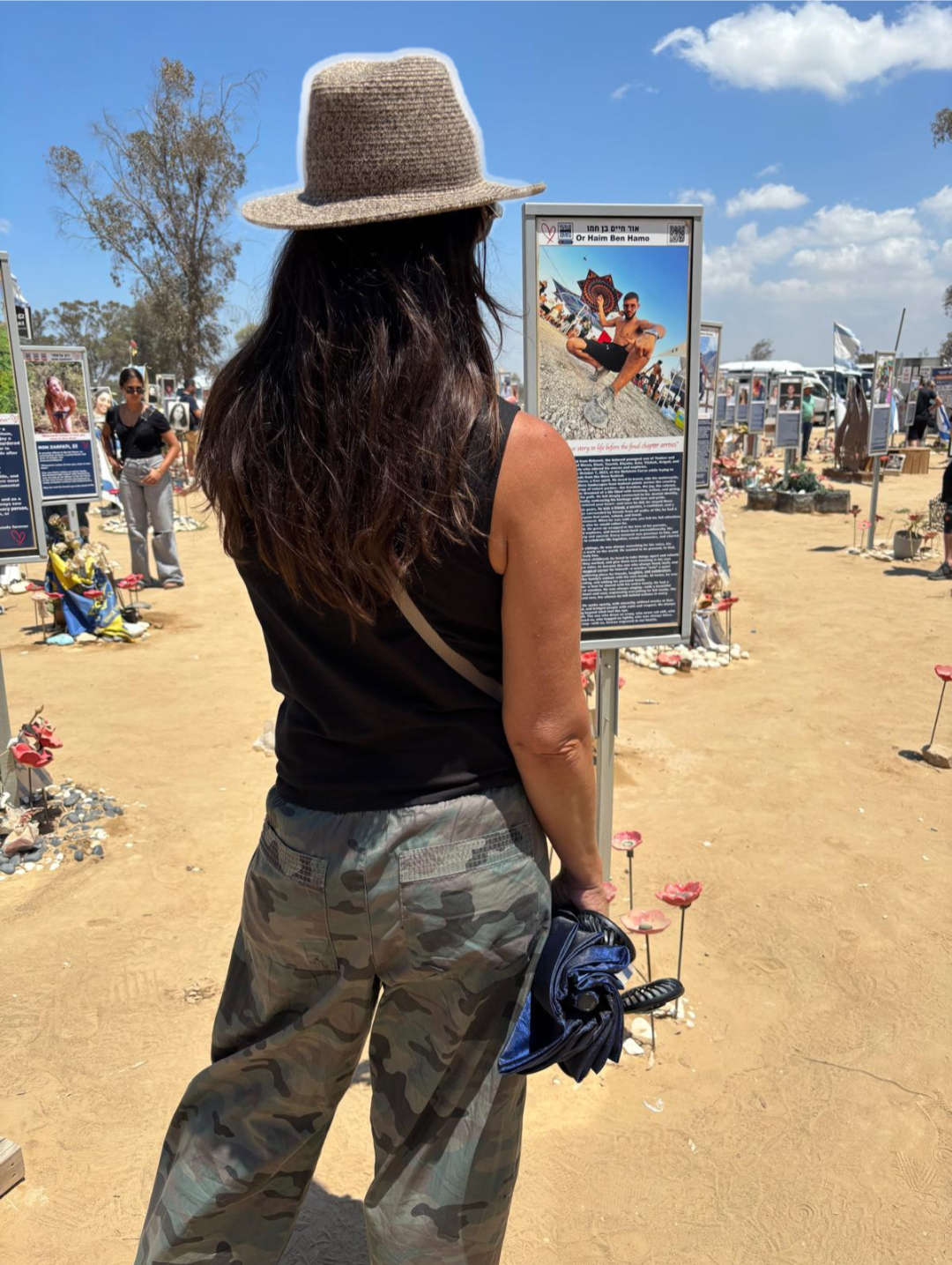
At the Nova memorial site, reading the story of someone I never knew, but whose absence had somehow become personal. (Photo courtesy of Levinsky)
The last ordinary thing I remember doing on October 7 was decorating cookies for a customer. My mind was in design-and-painting mode — color, icing, tiny details — while another part of me was already wandering towards the next day. October 8 was my birthday, and I was probably thinking about what I wanted to do, where I wanted to go, what small pleasure I might choose for myself.
Then the television changed its voice. It had nothing to do with the volume, only something in the voice itself. There is a particular sound a reporter makes when something has just happened and language has not yet caught up with it. I am not sure exactly what it is, perhaps some mixture of confusion, urgency and disbelief.
My parents were in the living room, half watching television and half looking at their own devices. I remember drifting towards them almost casually, half my body still belonging to the kitchen and to the cookies waiting to be iced. And then I saw Shani Louk.
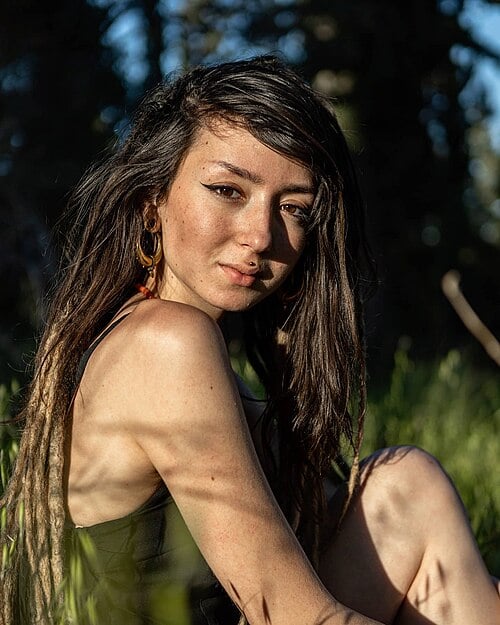
Even now, three years later, I can see the image with a clarity I wish I did not have. Her body lay in the back of a white pickup truck. Was she alive? Dead? At that moment, we didn’t know. I remember focusing on the unnatural way one of her legs was twisted, how exposed she was, and then on the faces of the men around her. That is what still gives me chills. They did not look horrified by what lay at their feet. They looked almost transported by it — triumphant, exhilarated, as though they had achieved something glorious. Perhaps that is why, in that moment, they ceased to look human to me. It was not only what had been done to Shani, but the bliss on the faces surrounding her, the sense that her humiliation had become part of their victory. Then came the cheering, and people coming close enough to spit on her. What disturbed me was not only the violence but the terrible obscenity of celebration around a young woman who, only hours earlier, had been dancing. Of course, I didn’t know that yet. I knew nothing yet about Nova.
For several seconds I could not understand what I was looking at. The mind does something strange when an image exceeds what it believes belongs in the present; it tries to send it somewhere else. Another century, perhaps. A brutal scene out of some older, darker world somehow dropped into a modern pickup truck. Perhaps a photograph from a pogrom or a page in a history book. Anywhere but here, anywhere but now, and certainly not while iced cookies were drying in the other room.
My parents said nothing. Then my father looked at the television and said, “I think this is the end of Israel.”
My father was not an alarmist. He had lived through Israel’s wars and had served as a field doctor. During the Yom Kippur War, he was among the doctors who volunteered to fly from England back to Israel to help in the war effort. Among the many surgeries he performed, there was one bullet he extracted from a soldier’s chest, and the soldier insisted on gifting it to my father. That bullet is now mine; I inherited it after my father died two years ago.
Thinking about him now, I have little doubt that if he had been physically able to do so, he would have been on the first plane back to Israel after October 7 to help again. That was my father, Dr. Leon Levinsky; he belonged to a generation for whom Israel’s survival had never been theoretical, and yet something about what we were seeing frightened him differently.
Looking back now, I think I understand why. It was not simply killing; we had seen killing before. Israelis have lived through wars, bombings, shootings and terror attacks, and we were certainly not so desensitized that killing had ceased to horrify us, but this felt different. This was degradation on a level I had never personally witnessed.
We have all seen the footage and photographs of the Holocaust and what human beings are capable of doing once another human being has first been stripped of humanity. But those images belonged, however horribly, to history. This was happening now.
On this particular day, the body itself had become part of the message. Shani had been stripped not only of life, but of privacy, dignity, even the stillness we ordinarily grant the dead. They had turned her into a spectacle, a trophy, something to be shown and shared.
That is the part I have never been able to shake. There are murders of such cruelty that language fails before them, and there have been atrocities throughout history, against countless peoples, whose horror should never be diminished through comparison. But there was something about seeing Shani that way — the killing joined to humiliation, the humiliation joined to celebration — that I could not absorb in the same way.
I had known terrorism before because my own family had known it. Three relatives of ours from the Ron family were killed in the Maxim restaurant bombing in Haifa, and Israelis had been targets of terrorism both at home and abroad. Israel had known buses torn apart, restaurants destroyed, funerals, rockets, shootings and wars. We were not strangers to terrible images, and yet this one felt different.
Then came more faces, among them Keshet Casarotti dancing at Nova. That young, blond, beautiful boy — and he did look like a boy to me — so alive. The image that circulated showed a young man simply moving through a world in which the next hour had not happened yet, and there is something unbearable about watching footage of someone when you know what they did not know: that they were already approaching that dividing line between before and after.
I began following Keshet’s mother afterwards. I read her words almost daily and often wrote words of support. I watched her grief turn into a calendar — another photograph, another memory, another birthday, another morning in which a mother wakes and has to remember all over again.
This is how October 7 lives in me, not primarily as a number, but as images: Shani in the truck, Keshet dancing, my father’s face, my cookies unfinished in another room.
But almost immediately, something else began happening: the explanation.
I remember reading Lucie Arnaz Luckinbill recounting her husband’s reaction in those first hours and days. What stayed with me was the idea that if Palestinians could do something so terrible, one had to imagine what they themselves must have suffered to become capable of it. I remember stopping there.
Shani’s body had barely disappeared from our screens, families were still searching for children who had vanished, parents did not yet know whether their sons and daughters were dead, hiding, wounded or being dragged across the border. Hostages were being taken into Gaza and paraded through the streets, children had been ripped from parents, parents had been murdered in front of their children, Israelis had been burned alive, raped and mutilated. Israel had not even buried its dead, and already the murdered were being asked to explain the people who murdered them.
At first, I thought it was simply one appalling reaction, but soon I began hearing variations of it everywhere: Yes, October 7 was horrific*. Yes, those people were murdered*. Yes, the hostages were taken*. Yes, Shani*. And after every asterisk came the qualification — occupation, Gaza, Israel, history, context. The asterisk had arrived.
And over the next three years, it did not remain confined to arguments about governments, borders or war. It seeped into Jewish life — onto campuses, into workplaces, into restaurants and into streets. Israelis suddenly found themselves treated not simply as people, but as something suspect because they were Israeli, while Jewish spaces required more security and ordinary Jews began making calculations about whether to wear a Star of David openly or tuck it away.
And while much of the world moved with astonishing speed from October 7 to judging Israel’s response, Israelis were still living inside the trauma of what had happened on their own soil. This was not another chapter of Jewish persecution in the Diaspora; it happened in the Jewish state itself, in homes, on roads, at a music festival, in the one place Jews had been taught to believe they would never again be defenseless in quite that way.
Yet alongside this came a strange new hierarchy of moral heroes: celebrity activists, professors, student leaders, cultural figures and even some young Jews whose devotion to the Palestinian cause seemed, at times, to leave almost no room for Israeli pain at all. People who spoke endlessly about humanity appeared capable of looking past mutilated bodies, hostages, burned homes and terrified families when acknowledging them complicated the story they had already chosen. What I find difficult to comprehend is not sympathy for Palestinians — compassion should never be objectionable — but a moral certainty so rigid that Jewish and Israeli suffering can be minimized, explained away or treated as an inconvenient obstacle to a cause. These became celebrated voices of conscience while Israelis, still traumatized by what had happened in their own bedrooms, communities and fields, increasingly found themselves cast only as the villains.
Perhaps what frightens me most, three years later, is the thought that this is part of the moral landscape my children are inheriting: one in which compassion can be proclaimed as universal while somehow becoming conditional the moment the victim is Israeli.
That, to me, is the strangest aftermath of all — the asterisk. Israeli suffering became conditional, Jewish fear became something to debate, and even identity itself seemed capable of becoming evidence against you. Grief now appeared to require a qualification, some explanation for why the horror could not simply be allowed to stand on its own.
I am not going to use this remembrance to argue every accusation made against Israel in the war that followed. That is another conversation. The Palestinian death toll, the conduct of the war, the decisions of governments and armies — all of that has been and will continue to be debated. But none of it travels backwards in time or climbs into that pickup truck and changes what I saw. None of it reaches October 7 before October 7 happened.
That morning came first, as did the murders, the kidnappings and the celebration around the broken body of a young woman.
And for me, there is something profoundly distorted about feeling that everything that came afterwards must first be added to the story before we are permitted simply to recoil from what happened that day. Some things should be allowed to horrify us before we ask which side the victim belonged to, and grief should not have to introduce itself politically. It should go without saying that the dead should not have to prove that they deserved our compassion.
Three years later, that may be what unsettles me almost as much as the image itself: not that the world saw what happened, but how quickly some people learned to place an asterisk beside it.
I still see Shani in that white truck, I still see my father staring at the television, I still see the cookies waiting in the other room, and I still remember that only minutes before, tomorrow had simply been my birthday.
Then October 7 happened.
And nothing that came afterwards can make it have happened any less.
Extra reading:
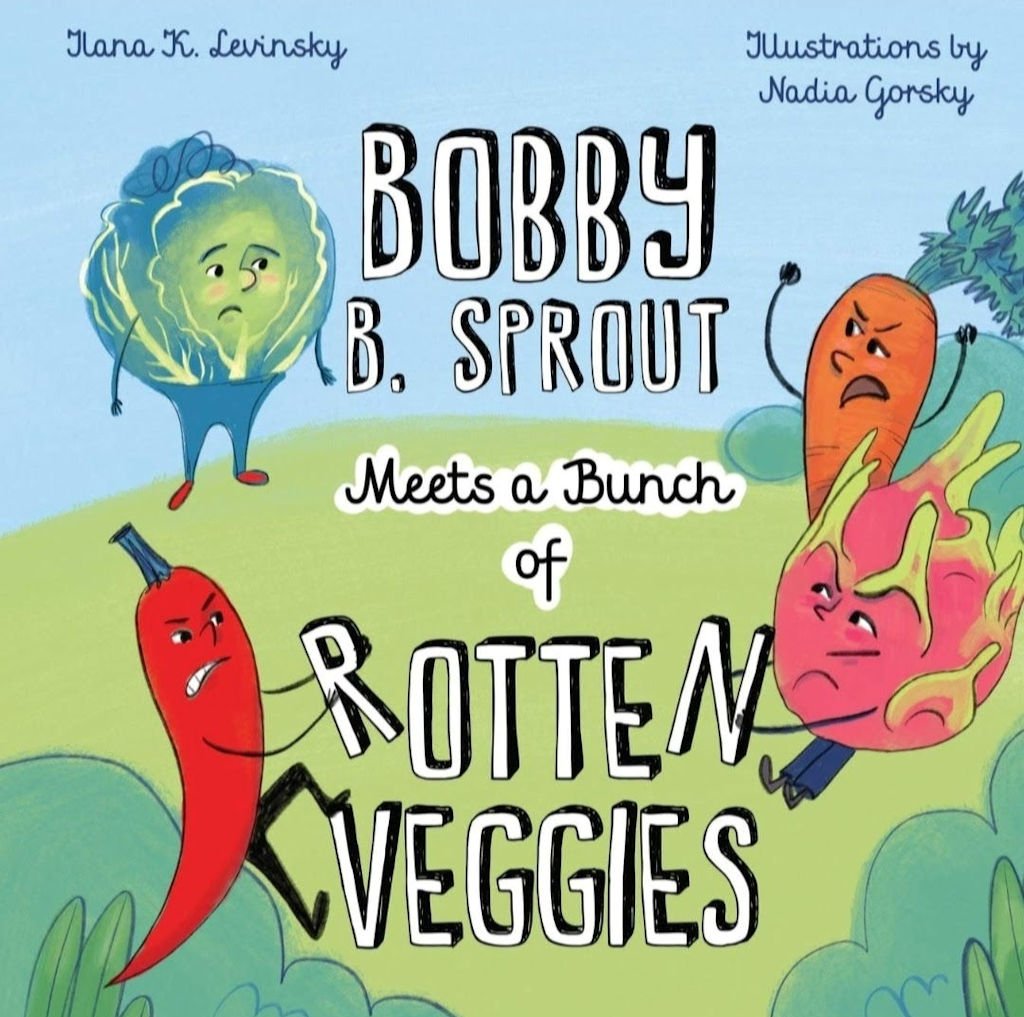
“Bobby B. Sprout Meets a Bunch of Rotten Veggies” follows a bright little Brussels sprout who sets off in search of adventure. But beyond his familiar veggie patch, Bobby discovers a world filled with preconceived notions and judgment. Through playful language and rich illustrations, this universal tale explores themes of prejudice, belonging, and bravery. Rooted in timeless values of resilience and self-worth—and echoing the Jewish experience of being “the other”—Bobby’s story encourages children to embrace their uniqueness and treat others with open hearts. A heartfelt read for ages 4–8, and a gentle reminder that being different can be your greatest strength.
Find your copy on Amazon.
Related Topics