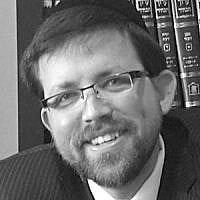
When Israel can’t recognize its own: Fallacies in making aliyah

After decades of public activism, demonstrations on behalf of Soviet Jewry, tireless advocacy for Israel, and his name being known by so many American Jews, Rabbi Avi Weiss of Riverdale had decided to make aliyah to Israel. Rabbi Weiss had recently shared a post about his aliyah process to Israel, which many found to be very moving, as it described the following scene:
When he arrived before the official responsible for verifying his Jewish status, Rabbi Weiss was asked as part of the aliyah process to provide a letter from a rabbi recognized by the State of Israel confirming that he was in fact Jewish and, as Rabbi Weiss writes, the following took place:
My wife Toby and I are in @Israel becoming citizens. At the Interior Ministry, the official reviewing our papers – a Jew who came from Ethiopia in 1991 – asked me for proof that I was Jewish. I showed him letters from our rabbi. As I did so, tears began to flow. I told him: “I remember the 1970s and ’80s, when we marched and protested so Ethiopian Jews could come home to Israel. Back then, many questioned whether Ethiopian Jews were Jewish at all. We insisted our Black brothers and sisters were as Jewish as any of us.” And now, 35 years later, here was a holy Ethiopian Jew confirming my Judaism. We had come full circle. Holding his hand, I sang: “Zeh hayom asah Hashem, nagilah ve’nismechah bo” – This is the day God has made; let us rejoice and be glad in it. Jews from East and West have returned home together. (9)
While the story is a meaningful anecdote of coming full circle, the ingathering of the exiles and the beauty of Israeli society, it also exposes a serious problem in Israel’s aliyah process, a system plagued by failures of bureaucracy from both directions.
On the one hand, it turns out that even a well-known American rabbi like Rabbi Avi Weiss, whose name has been known in the Jewish world for more than 60 years, has to knock on the doors of rabbis in New York asking them for letters confirming that he is Jewish. On the other hand, people such as Andry Kharzhanovsky, the Russian anti-Israel activist who spends day and night spreading anti-Israel content online, have successfully immigrated to Israel under the Law of Return, leaving many Israelis wondering about the logic behind the decision to allow him in.
Over the years, the bureaucratic rules guiding the aliyah process proof of Judaism have become increasingly complicated, and, in far too many cases, the bureaucracy itself has lost sight of the very purpose for which the State of Israel was founded: to establish a national home for the Jewish people in the Land of Israel. As a result, many people for whom Israel is self-evidently their natural home are delayed or even locked out by bureaucratic red tape, while others whom one would have assumed would never be permitted to make aliyah to Israel find themselves holding Israeli citizenship.
A few years ago, a Haredi friend from a Hasidic neighborhood in New Jersey contacted me. His son volunteered to serve in the IDF and has already been serving in the IDF for more than a year. Seeing his future in Israel, the young man decided to turn his volunteer service into permanent aliyah. The problem? Israel does not recognize his Jewish status.
How can the son of a well-known Haredi family from the United States, raised in an ultra-Orthodox town in New Jersey, educated exclusively in Haredi schools throughout his life, be unable to obtain official recognition as Jewish in Israel after serving for a full year in the IDF?
The answer is that, unlike many organized Jewish communities in Europe, where governmental and communal records are more centralized, Haredi neighborhoods in New York and New Jersey revolve around shteiblach and smaller synagogues. Those shteiblach (small Hasidic synagogues) are home to numerous rebbes of smaller Hasidic courts and independent Haredi rabbis, with whom the State of Israel has little or no institutional relationship.
In this case, the reason for the technical difficulty is understandable – the lack of a proper paper trail documenting Judaism, which is understandably common in less bureaucratically inclined Hasidic communities. But if Israel’s bureaucracy looks at a young man who grew up in a Haredi town in New Jersey, studied exclusively in Haredi institutions, and then volunteered to serve in the IDF and is not convinced the young man is Jewish, we have a problem. If Israeli bureaucracy looks at an American rabbi and public figure as well known as Rabbi Avi Weiss and cannot conclude that he is Jewish, then Israel can no longer see the forest for the trees. This is not to say that bureaucracy does not have a very important role when dealing with things as important as citizenship, certifying someone’s Judaism, and verifying someone’s identity; yet, when a letter from someone who might just vaguely know a person is accepted just because it has the right header means more than seeing a living person whose entire life gives thousands of clear indications of who they are and what people they are a part of, than bureaucracy has lost its meaning.
When the Jewish identity of immigrants is judged solely on paperwork, the Jewish state has lost the human factor in finding out who is Jewish and who is not. When ships carrying Jewish refugees reached the shores of the Land of Israel in the 1940s, the Jewish community had little difficulty recognizing who was Jewish and who was not. That does not mean bureaucracy is never necessary. It does mean, however, that the human element in determining who is Jewish and who should be admitted to the country has been largely lost — for better and for worse.
The time has come for the State of Israel to strengthen the role of human judgment in determining who is Jewish and who is not, who should be allowed into Israel and given citizenship with no delay, and who should have to go through the more elaborate vetting process. This is especially important as the established Jewish organized community structure continues to shrink and less centralized movements such as Chabad and Haredi communities in the Diaspora continue to grow.