"I'm the spokesman for the OK Boomer generation"
When Love Becomes Action
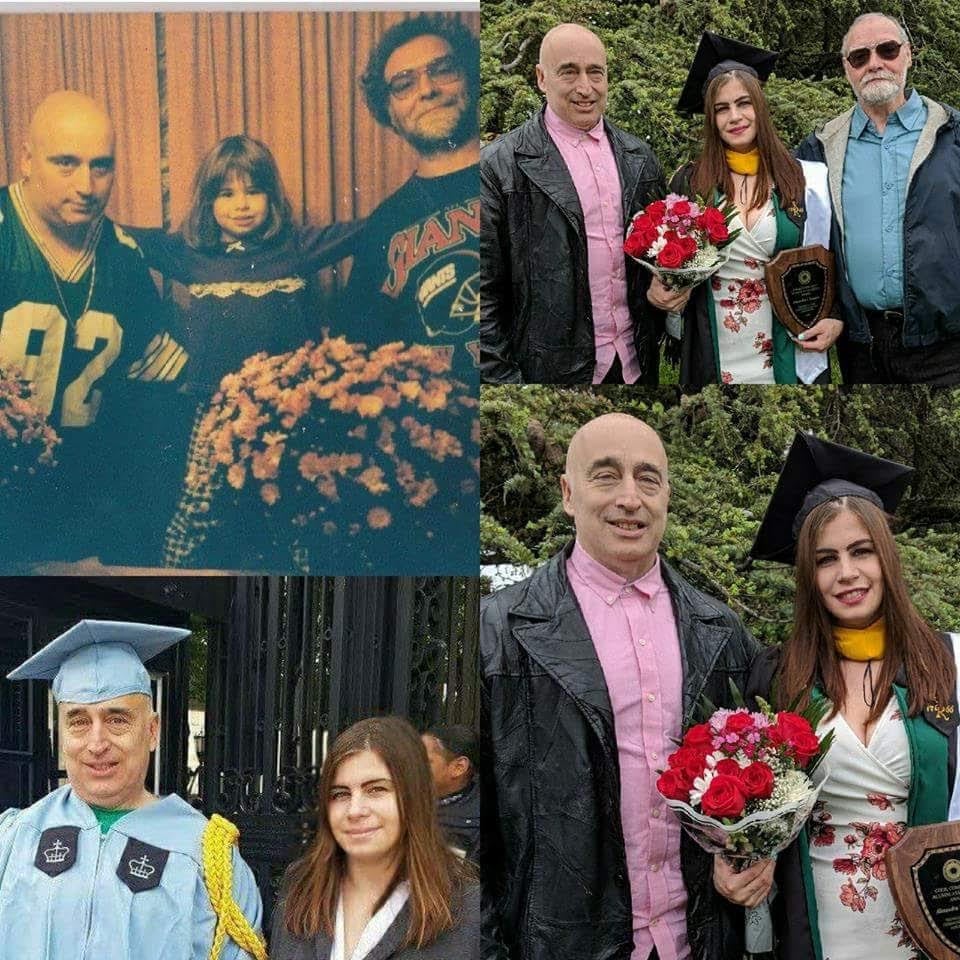
Photo: Tony Senatore: all rights reserved
On September 6th, my niece Alexandra got married. For the benefit of many here at Times of Israel who don’t know much about my life, I want to tell you something about myself and Ali—and about what she has meant to me.
Most families have that one well-meaning but slightly embarrassing uncle who shows up just often enough to become part of the family folklore. You know the type: “Don’t let Uncle Tony near the barbecue,” or “Don’t bring up politics when Uncle Tony is around.” In the Senatore family, there may be a little truth to that.
But my relationship with Alexandra has never been a typical uncle-niece relationship. In 1993, life unexpectedly placed me in the role of helping to raise my niece as my own daughter. It came more naturally than people might imagine because I had an uncle of my own—my Uncle Frank—who became a second father to me and gave me many of the things my own father could not. He taught me something I have never forgotten: family isn’t defined only by biology. Sometimes family is defined by the people who simply show up when they are needed.
There is another part of Alexandra’s story that I have never wanted to overlook. My sister was not in a position to raise her. But she chose to bring Alexandra into this world, knowing I would be there to raise her and give her the life and opportunities she deserved. She made a choice in the midst of difficult, uncertain circumstances, and that choice changed my life forever.
I think about that sometimes when I consider how many decisions we make in life without ever knowing what those decisions will ultimately become. In 1993, a little girl’s future was uncertain. Today, that little girl is an extraordinary woman, a wife, a registered dietitian, a daughter, a friend, and someone who has spent her own life making other people’s lives better.
I would never presume to tell another woman what decision she should make when she finds herself pregnant and struggling with circumstances that may feel overwhelming. Every situation is different, and every woman has her own story, her own fears, and her own difficult choices.
But if a woman reading this is facing that kind of uncertainty, I hope my family’s story—and especially Alexandra’s—might give her a moment of clarity. I hope she can see that sometimes a life whose future seems impossible to imagine can become a life of extraordinary beauty, purpose, and love.
I know what Alexandra’s life has meant to me. I know what she has meant to our family. And I know that there is a woman in the world today whose life exists because, in one of the most difficult moments imaginable, my sister chose to bring her into it.
For that, I will always be grateful.
When Uncle Frank was diagnosed with cancer, I was fortunate enough to care for him and, in some small way, return the kindness he had given me throughout my life. The circumstances that brought Alexandra into my care aren’t important. What matters is that my parents, our family friends Charles Killinger, Sheryl and Jim Brian, and I came together with one goal: to give this little girl every opportunity we could. We weren’t perfect. We made mistakes. But every decision we made was guided by love.
Looking back now, I realize something I didn’t understand then. The greatest purpose of my life wasn’t found in my career, my education, or any of my accomplishments. It was helping Alexandra become the woman she is today.
I’ve spent a great deal of my life studying philosophy, and I’ve always been fascinated by the wisdom of the Greeks. So, naturally, I can’t resist turning even a wedding into a philosophical discussion.
I didn’t raise Ali because I believed I had some Kantian duty to do so. I didn’t wake up every morning and remind myself that I was morally obligated to care for her. I raised her because I loved her.
And that, to me, is where Aristotle’s virtue ethics speaks more truthfully about what happened. Aristotle believed that virtue isn’t simply knowing what is right. It is becoming the kind of person for whom doing the right thing becomes natural. I didn’t have to think about whether I was obligated to protect Ali, care for her, or help her succeed. I loved her. And because I loved her, I did what I believed was right. That love became action.
My understanding of that love has also been shaped by something else that has been an ongoing part of my life: exploring Christianity and the Bible. I have spent years wrestling with questions about faith, morality, God, and what it means to live a good life. I don’t pretend to have all the answers, and my faith has been more of a journey than a destination. But one idea in Christianity has always resonated deeply with me: love is not merely a feeling. Love calls us to action.
The Bible repeatedly connects love with how we treat others—with compassion, sacrifice, forgiveness, service, and putting someone else’s needs ahead of our own. That idea became very real to me when Alexandra came into my life. Whatever doubts or questions I may have had about Christianity, I never had to question whether this little girl needed someone to love her, protect her, and give her a chance to become the person she was capable of becoming.
In that sense, raising Ali became part of my own spiritual journey. I didn’t see it as some grand religious obligation. I came to believe that perhaps one way we discover what love really means is by being given someone to love.
My understanding of what happened with Alexandra has also been deepened by my exploration of Judaism and the Hebrew Bible. One idea I find especially powerful in the Jewish tradition is chesed—a kind of loving-kindness expressed not simply through feelings or words, but through what we actually do for another person. The Hebrew Bible repeatedly calls us to care for the vulnerable, protect those who need protection, and extend ourselves for others’ good.
That idea resonates deeply with me because, looking back, I realize that raising Ali was an expression of chesed. She didn’t need me to have the perfect answer to every problem. She needed someone who would show up, take responsibility, protect her, encourage her, and give her the opportunity to flourish.
That idea feels profoundly human. Whether we approach it through Aristotle’s virtue ethics, Christianity’s understanding of love, or the Jewish tradition of chesed, they all point to something remarkably similar: our character is revealed by how we treat the people entrusted to our care.
I think that may be one of the great lessons of philosophy and of the Bible. Love is not merely something we say we feel. It becomes real when it costs us something—our time, our comfort, our resources, sometimes even our own plans for our lives.
I didn’t think about any of that in 1993. I was simply trying to do what was right for a little girl who needed me. But looking back now, I can see that in caring for Ali, I was living out something that philosophers and religious traditions have been trying to teach us for thousands of years: that a good life is ultimately measured not only by what we accomplish for ourselves, but by what we are willing to do for someone else.
And over the years, I watched that same quality develop in Ali.
Even as a young girl, she was remarkably determined. Once she decided she wanted something, there was very little that could stand in her way. She discovered early that she loved cooking and pursued that passion at the Culinary Institute of America before working in several outstanding restaurants throughout New York City.
But what has always impressed me most about Ali isn’t simply that she can prepare an incredible meal. It’s that she has always wanted to make other people’s lives better. That eventually led her to Rutgers University, where she earned the education necessary to become a registered dietitian. It was the perfect combination of her passion for food and her desire to help people.
I saw that firsthand when my father was battling cancer. Ali used her nutrition knowledge to improve his quality of life. I didn’t read about it. I witnessed it. And she did the same for many of my friends in the music industry who were struggling with health issues.
Time after time, I watched her treat people with compassion, patience, encouragement, and genuine concern. She didn’t simply turn her knowledge into a career. She turned it into a way of caring for people.
And today, something happened that I never thought I would be ready to say.
At sixty-four, I finally feel comfortable letting go of my role as the overprotective parent. Not because I love Ali any less, but because I know she has found someone who will love her, stand beside her, and protect her just as fiercely as I always have.
Watching Alexandra grow from a little girl into the extraordinary woman she is today has been the greatest privilege of my life. When I think back to 1993, I could never have imagined where that unexpected journey would lead us. I certainly never imagined that the little girl I helped raise would one day become the woman standing before me this past Sunday.
She has made every sacrifice, every worry, every sleepless night, and every challenge worthwhile. I have spent much of my life trying to protect her from the world. Today, I realize she no longer needs me to.
A part of me will probably always see the little girl she once was. But I can finally step back with confidence and watch her begin this next chapter of her life.
I could not be prouder of her. I love her more than words can express. And if helping her become the woman she is today was the greatest responsibility of my life, watching her begin this next chapter may be its greatest reward.
Congratulations, Ali.
And to the man who is now lucky enough to call her his wife: take good care of my girl.
Because I’m finally letting her go.
Mostly.
— Uncle Tony
Related Topics
Related Posts