
CEO of Time to Stand Up for Israel
When Narratives Become Weapons Against the Truth
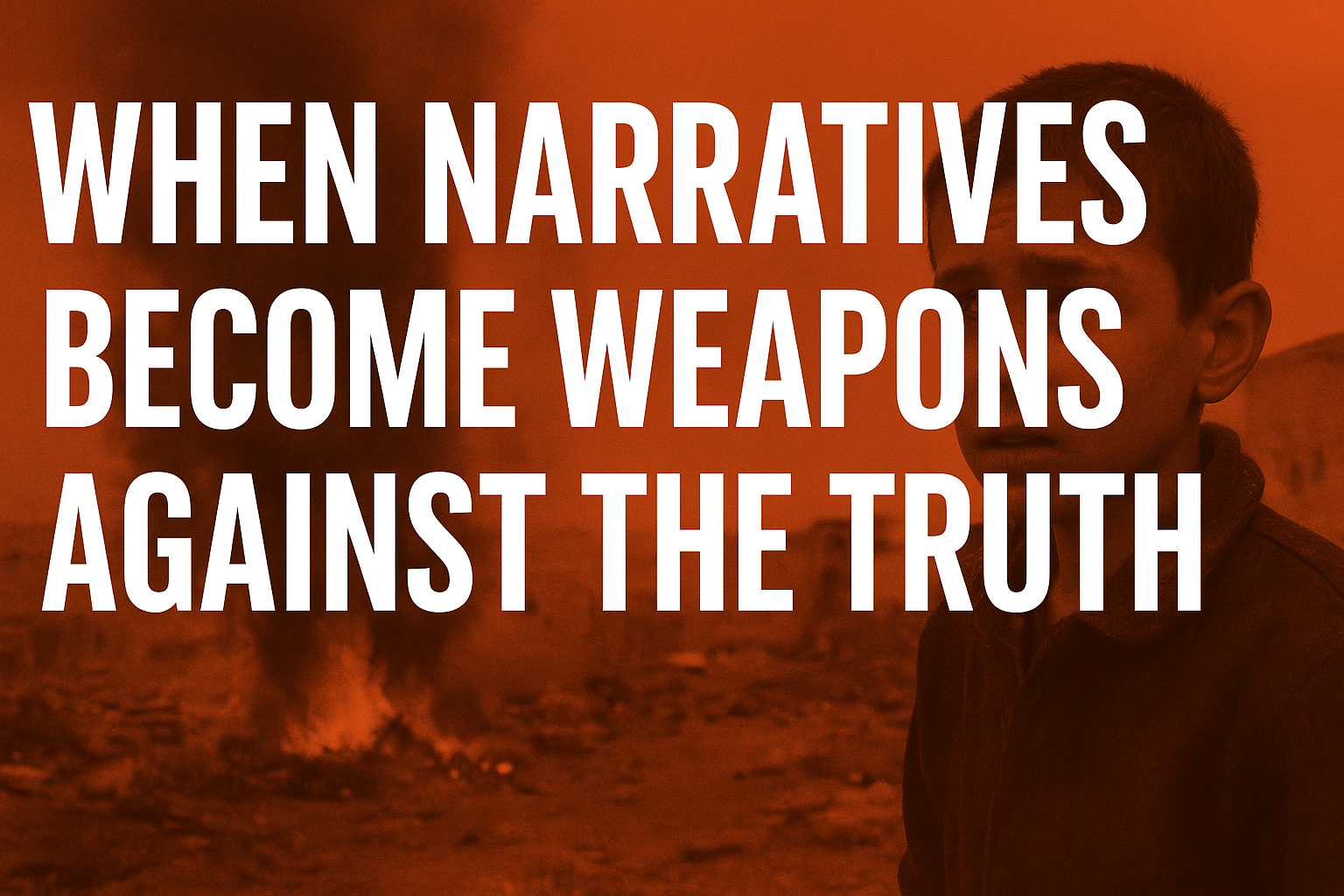
Photo Credits: Sabine Sterk (AI)
When Narratives Become Weapons Against the Truth
A powerful conviction in a certain narrative can be so strong that it blinds people to reality. Even the most educated, worldly, and intelligent individuals can fall victim to it. Once a person accepts a story as the truth, facts that contradict it feel like an attack and are quickly rejected.
Psychologists call this confirmation bias: the human tendency to seek out, interpret, and remember information in a way that supports what we already believe, while ignoring or dismissing anything that challenges it. It is not a flaw of the uneducated, it’s a flaw of human nature. And when this bias enters politics, history, or war, it becomes dangerous.
How It Works in Real Life
We’ve all seen it in small ways. A football fan swears their team is the best, ignoring losses and blaming the referee. A health enthusiast insists a certain diet works, dismissing studies showing otherwise. These examples are harmless enough.
But apply the same mindset to geopolitics—specifically the Israeli-Palestinian conflict—and it becomes a weapon. Many people, fed a steady diet of “Israel the oppressor” headlines, have internalized a narrative so deeply that every image or report is filtered through that lens.
The Israel Narrative Trap
This bias explains why certain facts get ignored:
- Fact: In 2005, Israel pulled every soldier and settler out of Gaza.
- Narrative distortion: Gaza is still “occupied.”
- Fact: Arab citizens of Israel vote, serve in parliament, sit on the Supreme Court, and run hospitals.
- Narrative distortion: Israel is an “apartheid state.”
- Fact: Hamas openly states its goal is Israel’s destruction, not peaceful coexistence.
- Narrative distortion: Hamas is merely “resisting occupation.”
It’s not that the truth isn’t available, it’s that it’s screened out by the filter of a pre-existing belief.
Hamas’s Mastery of Media Manipulation
Hamas has learned that in the 21st century, wars are won or lost on social media as much as on the battlefield. They know exactly how to feed the global confirmation bias against Israel.
In recent months, Hamas has released videos of starving hostages, carefully edited to strip out context, designed to provoke maximum outrage against Israel while concealing that Hamas is responsible for their captivity and suffering.
They’ve also pushed fake or staged images of starving children, knowing these will be shared millions of times before anyone can fact-check them. By the time corrections are issued, if at all, the emotional damage is done.
And it works. The same people who refuse to believe reports of Hamas atrocities, such as the October 7 massacre, will instantly believe and share anything that paints Israel as a monster.
The World’s Perverse Rewards
Instead of challenging this manipulation, some Western governments practically reward it. France and the United Kingdom recently announced recognition of a Palestinian state a nd handing Hamas a political victory in the middle of its terror campaign. It’s the equivalent of rewarding a kidnapper while their hostages are still in the basement.
This sends a dangerous message: violence and propaganda pay off. It tells Hamas and groups like it, “If you can keep the world angry at Israel long enough, you’ll get what you want.”
Historical Echoes
History has seen this movie before:
- In the 1930s, some Western intellectuals dismissed reports of Stalin’s engineered famine in Ukraine because it didn’t fit their idealized view of Soviet communism.
- During the early years of World War II, Nazi propaganda films convinced many Germans that they were fighting a defensive war, even as their army invaded multiple countries.
- In Rwanda, early reporting during the 1994 genocide downplayed the slaughter because it didn’t fit the narrative of Africa as a “peacekeeping success story.”
In each case, clinging to a false narrative prolonged injustice and cost lives.
Breaking the Narrative Lock
Breaking free from the narrative trap requires intellectual humility, the courage to admit we might be wrong. It means:
- Looking for what’s missing in a story, not just what’s there.
- Comparing multiple sources, including those you disagree with.
- Pausing before sharing any emotionally charged image or headline.
Truth in the Middle East is rarely simple. But one thing is certain: no lasting peace will come from indulging lies just because they fit a comfortable narrative.
The Real Stakes
Confirmation bias is not just an academic concept, it’s a weapon in modern warfare. For Israel, the stakes are not abstract. Every distorted headline, every fake image, every half-truth that spreads unchecked strengthens those who aim for its destruction.
Israel fights two wars: one with rockets, and one with narratives. Losing the latter can be just as deadly as losing the former, because a world convinced of a lie will eventually act on it.
That is why it is a moral obligation, not just an intellectual exercise, to challenge falsehoods. Whether you’re pro-Israel, neutral, or simply care about truth, you must resist being trapped by a single narrative. Because in the end, narratives can kill and facts can save lives.
Related Topics
Related Posts