When Purpose Calls: Stories from Israel’s Shlav Bet
What drives a man to risk everything for something bigger than himself?
The question hit me unexpectedly during a routine Saturday night drive. I was behind the wheel of a military vehicle, heading out with a fellow soldier named Yisroel to collect pizzas for our base’s Melave Malka celebration. What started as a simple errand became one of the most profound conversations I’ve had about sacrifice, purpose, and what it truly means to answer a calling that’s bigger than yourself.
The Man Who Lost Everything to Stand for Something
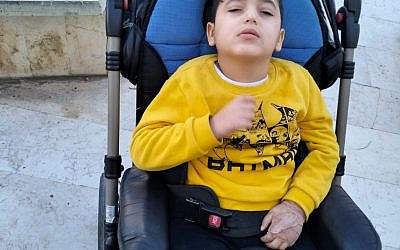
Yisroel’s story begins like many Israeli success stories – a thriving contracting business, twenty-five employees, a growing family. But it also begins with complexity: four children at home, including an eight-year-old special needs child confined to a wheelchair, communicating only through specialized technology. Between running his business and volunteering as a MADA medic, Yisroel had built a life of meaning and contribution.
Then October 7th changed everything.
Faced with employees he knew were celebrating the horrific attacks against his people, Yisroel made a choice that would cost him financially but preserve his soul. He let all twenty-five Arab workers go and shut down his business rather than compromise his values.
But shutting down wasn’t enough. Yisroel threw himself into emergency response work, driving MADA ambulances until exhaustion forced supervisors to pull him off duty. Undeterred, he switched to motorcycle emergency response, racing across the country to answer calls for help.
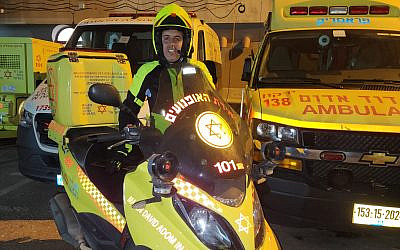
During one of these emergency runs, tragedy struck. A major accident left him with a breathing tube, multiple surgeries, and months of grueling recovery. Most people would have seen this as a sign to step back, to focus on healing and rebuilding what was lost.
Yisroel saw it differently.
The Restless Heart
As he recovered, Yisroel gradually rebuilt his business using Israeli and foreign workers. The work was there, his family was provided for, his health was returning. By any reasonable measure, he had already given enough – lost enough – for his principles.
Yet something felt incomplete.
That’s when he made perhaps his most surprising decision: at significant personal and financial cost, he joined the IDF’s shlav bet program for older volunteers. Today, his business operates at just ten percent of pre-war levels because he can’t compete with contractors who still employ Arab workers. He wants protective equipment for his dangerous service near Gaza but can’t afford it. His wife won’t let him purchase the gear they can’t afford.
And yet, there he was that Saturday night, discussing his next training rotation with the enthusiasm most people reserve for vacation plans.
“That’s what purpose looks like when it’s bigger than yourself,” I found myself thinking.
An Unexpected Brotherhood
The shlav bet program has become home to an unlikely community. Our WhatsApp group includes hundreds of members – different ages, backgrounds, levels of religious observance – but about ninety-five percent from the Charedi community. These aren’t eighteen-year-olds with few responsibilities. These are established men with young families, mortgages, businesses, and deep community ties.
Yet they’re fighting to get in. Men over fifty who are told “no” keep calling and pushing until they’re eventually accepted.
The sacrifices are staggering. I serve alongside fathers who’ve left basic training for eighteen hours to attend their sons’ weddings, then returned immediately to complete training. There’s a twenty-seven-year-old who left his wife and three-week-old baby for three straight weeks of service. Our commander missed saying goodbye to his son who moved abroad to study.
Perhaps most heartbreaking is the soldier whose family disowned him entirely. When he asked his parents and in-laws to help watch his grandchildren during training, their response was devastating: “We no longer have a son, and you no longer have grandchildren. You are on your own.”
These men risk their livelihoods, their businesses, sometimes their families – all for the chance to serve.
Moments of Transformation
Two experiences during basic training revealed something profound about the nature of change and purpose.
The first was a conversation with a Charedi soldier who helped me understand a completely different perspective on service. When I asked him directly why he was joining if he didn’t believe in the army, his response surprised me.
He explained that he was taught that learning Torah was their form of national service – their equivalent to others doing sherut. He had spent years learning full-time in yeshiva. But here’s where his thinking diverged from many in his community: while most viewed yeshiva learning as a permanent exemption (patur) from military service, he saw it as a deferment.
As long as he was truly learning full-time, he was fulfilling his obligation to the country. But now that his life circumstances had changed and he wasn’t in yeshiva full-time, he believed he had a moral obligation to serve in a different way. The shlav bet program allowed him to continue learning while also serving militarily.
Despite enormous social pressure and potential ostracism from his community, this man in his early thirties understood something crucial: at each stage of life, we have different ways to fulfill our purpose.
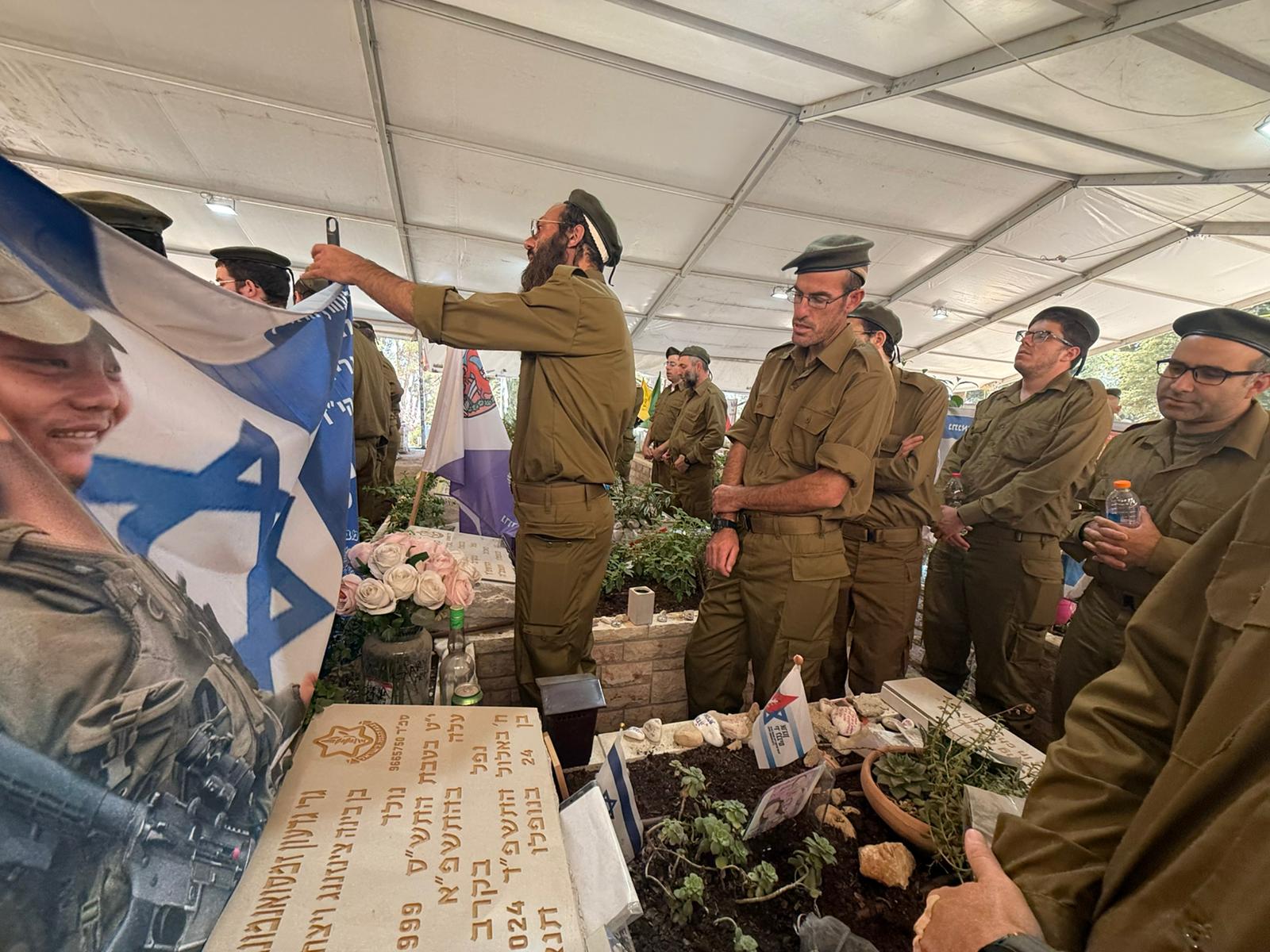
The second transformative moment came during our unit’s visit to Yad Vashem and Har Herzl – a rite of passage for every Israeli soldier. We spent time among the graves of soldiers who had fallen in the current war, listening as members of our own unit shared memories of friends buried there.
But what struck me most deeply was watching three Charedi men – complete with long payis, tzitzit, and large black kippot – standing over the grave of a fallen soldier they’d just heard about. After listening to his story, they turned to each other and said something that encapsulated everything: “We had it wrong all along. These are the real tzadikim of Israel.”
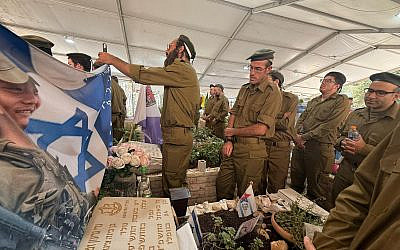
In that moment, these men realized that being a person of purpose isn’t limited to learning in study halls – it’s about taking action in the world. They understood that true righteousness sometimes requires stepping outside comfortable boundaries.
As I watched this profound moment of recognition, the only thing I could think of was that line from Rocky 4: “If I can change, and you can change, we all can change!”
Why We Serve
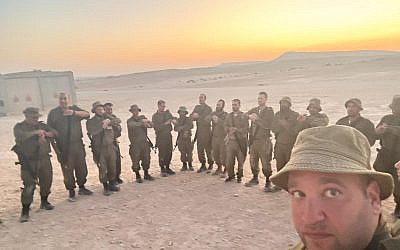
We serve at a logistics base near Gaza, providing security for personnel and supplies moving in and out of the combat zone. This allows younger combat soldiers to join their units instead of pulling guard duty. The army accommodates our religious needs – kosher food, a mikveh built by our Chabad members, a proper shul for prayer.
People often ask what men like us are doing in the army. The practical answer is simple: we replace younger soldiers with families, giving them extra breaks or Shabbos leave. Many use this service as preparation for more advanced training and combat roles.
But there’s a deeper logic at work.
The Mathematics of Change
Individual transformation creates communal revolution. This isn’t just philosophical – it’s mathematical.
It begins with “I” – the personal question of purpose. What can I do? How can I contribute? What am I called to change? Think about Yisroel, sacrificing his livelihood rather than compromise his values, then joining the army despite financial hardship. Consider that Charedi soldier, going against enormous social pressure because his understanding of service evolved with his life circumstances.
Then comes “you” – the inspirational effect. When someone witnesses authentic purpose-driven action, it plants seeds of possibility. Yisroel’s sacrifice inspired conversations in his community. That Charedi soldier’s decision gave others permission to question their assumptions. I’m proud to say that at least one person joined our program because of my example, and another has signed up for the next training cycle.
Finally, “we” – the communal transformation. This isn’t about everyone making identical choices, but about expanding our collective understanding of what service and purpose can look like. It’s about communities becoming more flexible, more inclusive, more willing to honor different forms of contribution.
Beyond Military Service
The shlav bet program is just one example of this dynamic. Across Israel, people are finding new ways to contribute: collecting challot for soldiers, organizing supply drives for bases, supporting military families, creating networks of care and support.
The common thread isn’t the specific action – it’s the recognition that purpose expands beyond our immediate circles and comfort zones.
The Destination We Share
These have been difficult years for Israel and the Jewish people. It’s easy to focus on divisions, arguments, and seemingly impossible challenges. Political disagreements, social tensions, and strategic debates can make us forget our shared destination.
But stories like Yisroel’s remind us of what we’re working toward together: a society where people can live according to their values, where different communities can contribute in their own ways, where individual purpose aligns with collective needs.
Whether we’re debating policy details or arguing about community obligations, we share fundamental goals: protecting our people, bringing home those who’ve been taken from us, and building a society strong enough to weather any storm.
When Purpose Calls
Purpose rarely arrives with fanfare. More often, it emerges in quiet moments – a conversation during a pizza run, a decision to close a profitable business, a realization standing at a soldier’s grave.
The question isn’t whether we’ll face moments that call us beyond ourselves. We will. The question is whether we’ll recognize those moments when they arrive, and whether we’ll have the courage to answer.
Sometimes the answer requires tremendous sacrifice. Sometimes it means going against social expectations. Sometimes it means rebuilding everything from scratch.
But when individual purposes align toward communal needs, something powerful happens. Our efforts multiply. Our hope expands. Our strength grows.
That’s what I witnessed in a simple drive for pizza on a Saturday night – and it’s what gives me hope for all the Saturday nights to come.
—
To read and learn more about these soldiers and our unit, please visit www.smilesforchayalim.com.