When Silence Is Louder Than Words
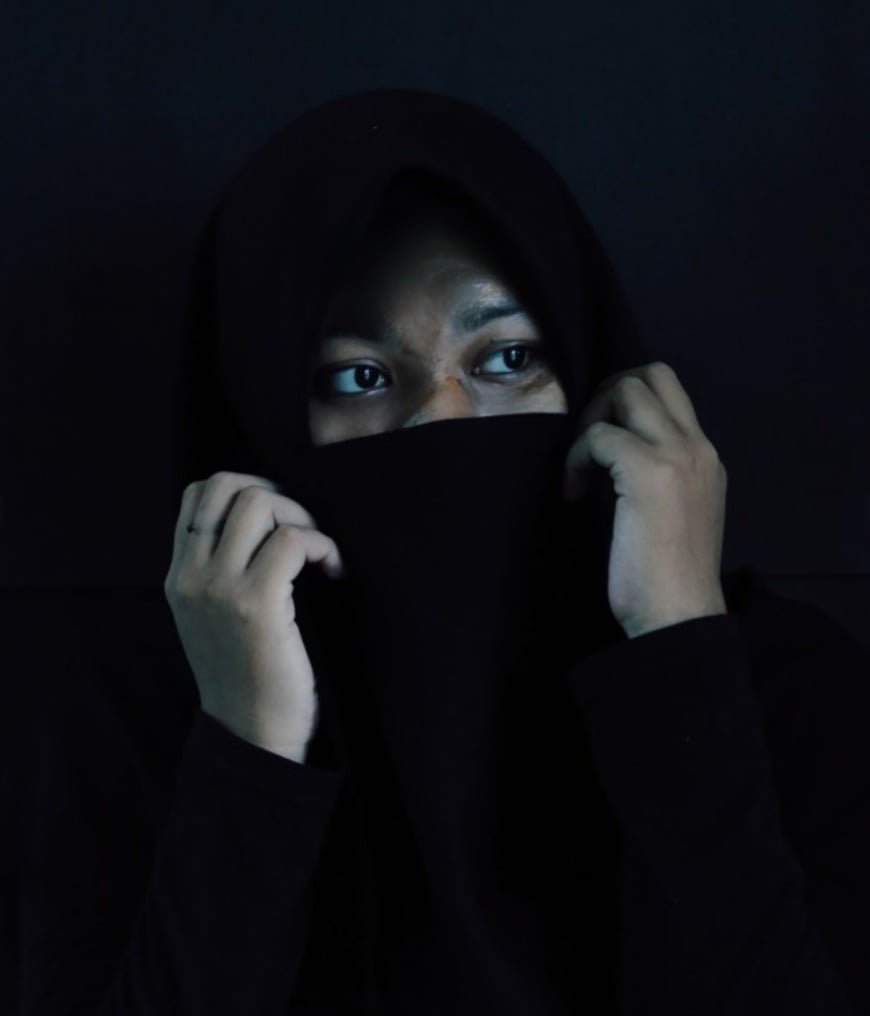
This Shabbat, Jews around the world will read parshat Vayishlach, recounting the tragic story of Dina’s kidnapping and rape by the local chieftain’s son, Shchem.
As a victims’ advocate, I hear Dina’s story echo with the voices of the many survivors I’ve been privileged to support. Over the last two years, I’ve noticed fresh perspectives as we’ve collectively witnessed increasing depths of depravity.
The text alludes to deep pain and anger. The voices we hear, such as Shechem and Dina’s brothers, stand in sharp contrast to the important voices that are missing.
Many early commentators and contemporary scholars discuss Dina’s notably absent voice throughout the parsha. Her thoughts, feelings, and wishes are never a focus or even mentioned.
In our advocacy work at Magen, we frequently talk about the importance of amplifying survivors’ voices. Too often, survivors are talked around, about, through and over. For me, and I imagine for many of us who hold values of equality, equity, and victim empowerment, reading the story of Dina’s assault without ever hearing from Dina herself is jarring and difficult to process.
However, as with every story brought down in TaNaCH, we also need to remember the context and time period in which these events occurred. Women’s voices are rarely heard directly in the Torah, and with that in mind, it is difficult to know whether Dina’s silence is a reflection of that reality or something deeper.
But several commentators highlight another silence, that of Dina’s father, Yaakov. When he was informed of his daughter’s rape and public degradation, he barely responded, even after his sons returned home, negotiated with Chamor (Shechem’s father), and then sprang into (highly debated, violent) action. The pasuk says “ve-hecherish”, a term which implies a complete and total silence (1).
Looking for the missing voices
I originally researched this topic in the months following October 7th, spending a lot of time reading commentators and perspectives on Yaakov’s silence. One thought stood out to me at that precise and defining moment in our history.
Yaakov’s silence and seeming uncertainty, so contradictory to a fatherly instinct, may be a reflection of Dina’s silence. It suggests that Dina’s voice was not omitted from the Torah, rather it is not shared because she was, in fact, silent.
This kind of silence is not simply a lack of sound, a lack of a voice. It is a void, a deep chasm in which pain and loneliness reside. It is a living, breathing bottomless pit of anguish.
Their silence was neither apathy nor ambivalence.
It was a silence of horror and terror.
The silence of trauma.
For Dina, the trauma of a deep violation. For Yaakov, the secondary trauma of bearing witness to her pain and violation.
In Judith Herman’s book Trauma and Recovery, she talks about the silent reactions of so many survivors to sexual abuse and atrocities, and the witness and bystander instinct to keep quiet.
“The ordinary response to atrocities is to banish them from consciousness. Certain violations of the social compact are too terrible to utter out loud; this is the meaning of the word ‘unspeakable’”.
Rabbi Akiva Tatz often discusses the spiritual, kabbalistic nature of silence and speech, where some Jewish concepts are so spiritually profound that we cannot say them aloud. For example, on Yom Kippur, the holiest day of the year, various names of God are mentioned, names that carry such deep spiritual depth that we are told not to say or even whisper them, rather to scan them with our eyes. When something is so deep, so “huge”, it cannot be contained in the physical confines of the human language. Its enormity negates speech.
Rabbi Tatz continues that in the case of massive emotional, spiritual, psychological pain the “treatment” lies in “containing” the enormity with words. He writes- “…if the pain is expressed in words, it may begin to shrink to the proportions of the words. Once it has been spoken out, brought down into the world, the pain lessens. That which was beyond expression has been expressed; that which was beyond measure has been given at least some semblance of measure, some limits.” (2) And that, he explains, is the power of speaking up, and of therapy.
The Jewish people are not strangers to pain or destruction. Ours is not the first generation to experience horrific trauma and violations… but ours IS the first to experience such trauma and violations armed with knowledge and understanding of the massive impact and effects of trauma.
Pushing back at the silence
When I read the commentaries discussing this silence, it resonated deeply. I know this silence. I spend my life pushing back against these walls of silence as they threaten to close in on the abuse survivors whom I am honored to know.
The global Jewish community was horrified by this silence and ambivalence (at best) after the rampant sexual violence by Hamas terrorists on and since October 7th — especially from organizations that purport to stand with victims. For sexual abuse survivors within the Jewish community, this silence was intensely triggering; it closely resembled what they have been subjected to for years by their own families and/or communities.
With those deep triggers came some hope — maybe this trauma will catalyze change for global Jewish communities, an awareness and appreciation of the need to call out sexual violence wherever and however it presents. Maybe, now that we’ve been collectively confronted from outside by the anguish of silencing, could this translate into action and change from within?
Tragically, I have not seen this shift. I hear daily from victims who are struggling to find even one ally to stand with them. I hear their devastation, and I wait desperately for our communities to see this as an issue worthy of tackling, a “mainstream” problem that affects even the best schools, synagogues and families. I hold onto hope that this shift will come.
This week, when you read the parsha, I encourage you to think about this silence, of Dina and Yaakov, and of so many thousands of sexual abuse survivors who are unable to speak. Acknowledge the human instinct to remain silent in the face of trauma of monstrous proportions… and then begin to address that trauma by speaking it out loud.
This is our call to action: do not stay silent.
We must be a voice for those who can’t speak.
We must bear witness to the victims when they are ready to speak.
We must help ourselves and each other heal through the power of human connection, verbalized and shared.
This Shabbat, I will think about Dina and Yaakov, and about trauma that spans millennia and seems too big for words.
And I will pray that God gives us the wisdom and sensitivity to collectively speak, listen, hold, and heal.
—
Sources:
מדרש שכל טוב, בראשית ל״ד:ה׳:ד׳
“The Thinking Jewish Teenager’s Guide to Life,” by Rabbi Akiva Tatz.
—
An earlier version of this article appeared in Hebrew in the גלויה online magazine.