When Silence Is Safer Than Speaking
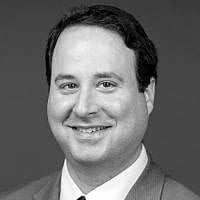
Peter Samuelson, Founder, people4peace.net

As a Hollywood producer, I’ve spent much of my career around artists, actors, musicians, and storytellers. One thing I’ve learned is that there are moments when speaking up comes at a cost. Publicists advise caution, studios worry about backlash, and friends quietly suggest that perhaps this isn’t the right time to weigh in. In today’s cultural climate, silence is often the safest option.
That is why I found Boy George’s new song, We Will Dance Again, so refreshing.
He didn’t have to write it. He certainly didn’t have to release it. Yet he chose to honor the victims of October 7 and stand publicly with the Jewish people at a time when too many public figures have decided that saying nothing is the better career move. Whether you agree with every lyric is beside the point. His willingness to show empathy when empathy itself has become controversial is an act of courage that deserves recognition.
His song also reminded me of something that has been troubling me for quite some time. We are living through an era in which people seem more interested in winning arguments than understanding one another. Social media rewards certainty, outrage, and slogans, while curiosity and nuance are treated as weaknesses. The result is that complex issues are reduced to thirty-second videos and catchy chants that are repeated by millions of people who often know very little about the history behind them.
That is particularly true when it comes to Israel and the disturbing resurgence of antisemitism. We have become very good at measuring the problem. Every year we see more surveys, more polling, more statistics, and more reports documenting rising antisemitism. Those numbers are important, but they tell us only what people believe. They tell us very little about why they believe it or, more importantly, how those beliefs can be changed.
That question has become the driving force behind People4Peace’s newest initiative. Together with psychologists Dr. Joel Weinberger and Dr. Drew Westen, we are pursuing research that moves beyond traditional polling to understand the conscious and unconscious associations people hold about Jews, Israel, and Zionism. The ultimate goal is not simply to document prejudice, but to discover which stories, messages, and narratives actually reduce it.
As my colleague, Professor Joel Weinberger, recently observed, we have become very good at “screaming fire,” but far less effective at learning how to put it out. That insight struck me because it captures exactly where we are today. We know hatred is growing. We know misinformation is spreading. What we have not done nearly enough is apply the same scientific rigor to understanding how hearts and minds can be changed.
Perhaps that begins by asking better questions.
Can someone believe passionately in Israel’s right to exist while disagreeing with the policies of its government? Absolutely. Democracies are built on disagreement, accountability, and debate. Why has antisemitism become acceptable in places where it was once universally condemned? Why do so many young people embrace slogans they cannot define? Where else in the Middle East do Muslim citizens vote, serve in parliament, become judges, attend world-class universities, and proudly defend the country they call home?
These are not political questions. They are questions that deserve thoughtful, evidence-based answers.
If Boy George’s song teaches us anything, it is that courage is contagious. When someone is willing to speak with honesty and compassion, it creates space for others to do the same. At People4Peace, that is exactly the space we hope to create. Not one built on slogans or outrage, but one grounded in evidence, empathy, and the belief that people can still change their minds when we appeal to their shared humanity.
Related Topics
Related Posts