
Retired Board-Certified Clinical Psychologist/Author
When Something Shatters: The Three Paths Forward
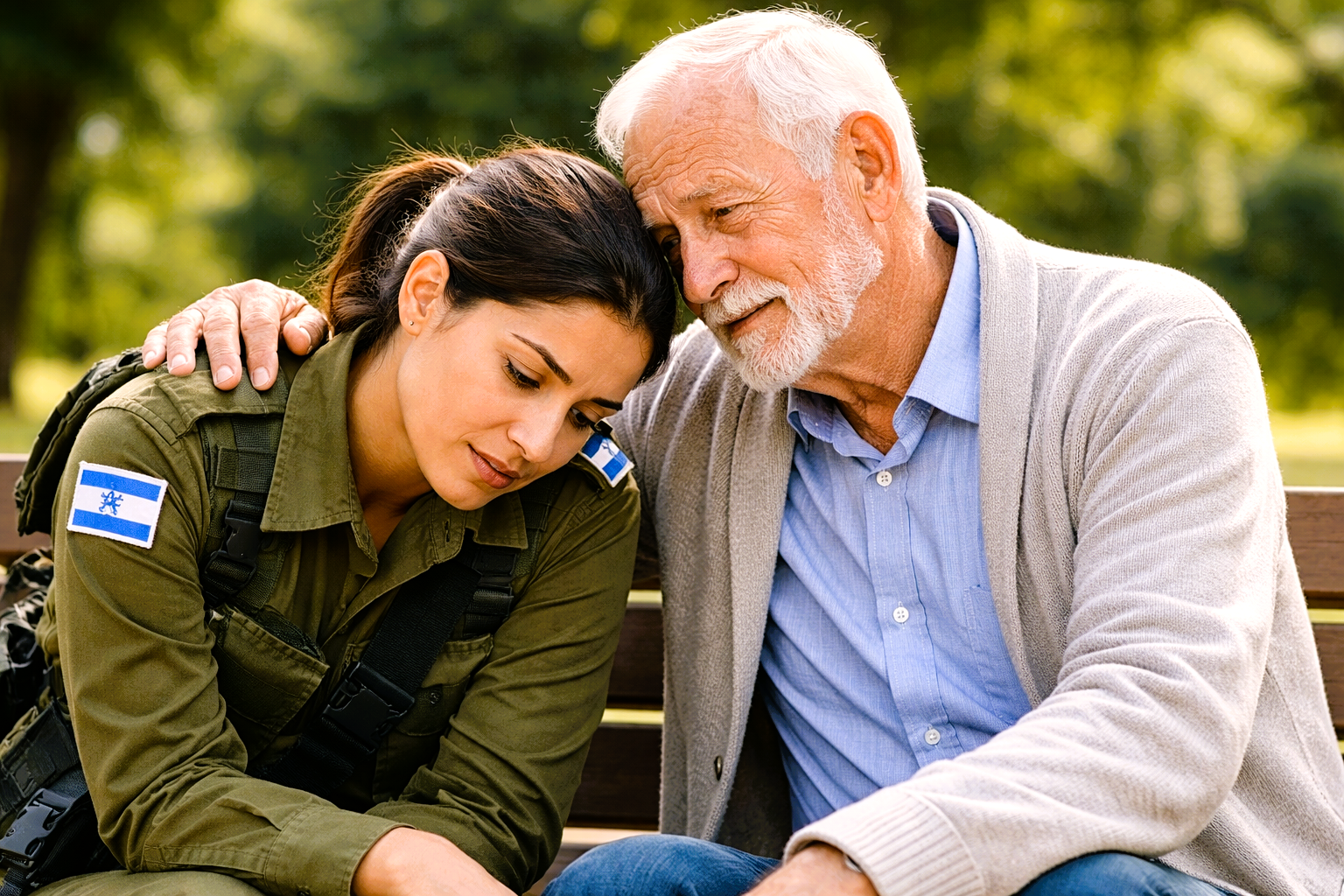
When Something Shatters: The Three Paths Forward
By Dr. Ivan Gulas,
What determines whether adversity breaks us, leaves us unchanged, or makes us more than we were — and what we can actually do about it.
Consider anything that has been subjected to a force greater than it was built to absorb. A home. A bus. A relationship. A sense of self. When something shatters — truly shatters, not merely bends — there are only three possible outcomes once the acute event has passed.It can be put back together worse than it was. It can be restored to roughly what it was. Or, under the right conditions, it can be reconstructed into something stronger, more nuanced, and more capable than the original.
This is not optimism. It is logic. And it applies as fully to the human psyche under extreme stress as it does to anything else that has been broken and rebuilt. The question is not whether recovery is possible. The question is: what determines which of the three outcomes is most likely? And — critically — what can a person actually do to shift the odds toward the better ones?
The answer begins not at the moment of crisis, but well before it.
Before the Shattering: The Inoculation We Do Not Know We Are Getting
There is a medical analogy that illuminates something important about psychological preparation. A vaccine does not protect by eliminating exposure to a pathogen. It protects by introducing a manageable version of the challenge, so the immune system can learn, adapt, and develop the specific capacity to respond. The dose is calibrated. The system is stretched, but not overwhelmed. And the result is a degree of immunity that did not exist before.
Something closely analogous happens with psychological adversity.
Every difficult experience that a person has navigated — not avoided, but genuinely moved through — leaves a residue. The single most powerful source of a person’s belief in their own capacity to cope with what life presents is not encouragement, not insight, not even good information. It is the lived memory of having coped before.
The mechanism is straightforward. When someone faces a challenge, feels the full weight of it, and finds their way through, they accumulate something that cannot be given to them by reassurance or praise: direct evidence, from their own life, that they are capable. Each such experience is a deposit. And when the next crisis arrives — particularly a larger one — the person does not arrive empty-handed.
This has an important and often overlooked corollary. The person who has been protected from all difficulty, whose path has been smoothed by well-meaning others, whose challenges have always been resolved before they became genuinely demanding — that person arrives at a major crisis without the psychological immune system that navigated difficulty builds. Not because they are weak, but because they have not had the calibrated exposures that build strength.
The implication is not that suffering is good or that hardship should be sought. It is that the smaller difficulties of an ordinary life, when met with genuine effort and genuine support, are not merely obstacles. They are preparation.
At the Moment of Crisis: The Distortion of Helplessness
When a genuinely overwhelming event arrives — the missile sirens that do not stop, the phone call that changes everything, the diagnosis, the sudden rupture of what seemed stable — one of its most consistent psychological effects is a feeling of complete helplessness. The world has contracted to the threat. Agency feels like an illusion.
This feeling is real. It is also, in almost all circumstances, an overstatement of the actual situation.
Total helplessness — the condition in which a person genuinely has no available action, no internal resource, no human connection to draw on — is rarer than it feels in the acute moment. Trauma narrows perception. It focuses attention on the threat and temporarily occludes awareness of the spectrum of choices that still exists, even within the constraints of a dangerous or devastating situation.
And yet — even within the most severe external constraint, a spectrum of internal and external actions remains available. This is not a sentimental claim. It is something clinical observation across decades consistently confirms. The freedom to choose one’s response, however small the response, is rarely fully extinguished. Even within circumstances no one would choose, exercising the smallest available action begins to dissolve the paralysis that helplessness creates.
This matters enormously, because helplessness is not merely an emotion. Left unaddressed, it becomes a behavioral pattern. The person who feels they can do nothing gradually stops trying to do anything. The reconstruction that follows happens passively, by default, without intentional shaping.
And this is the central finding, the one on which everything else in this framework turns: passive reconstruction reliably produces the worse outcome, or at best the unchanged one. Active reconstruction — even modestly active, even in the smallest available ways — is what shifts the odds toward something better than what was there before.
The first practical task in the acute phase of any crisis is therefore not to eliminate the feeling of helplessness — that may not be possible — but to identify the smallest available action that interrupts it. A phone call. A decision made. A thought deliberately redirected. A request for help. The action itself matters less than the act of acting, which begins to restore the sense that one is a participant in one’s own experience rather than merely a subject of it.
The Reconstruction: What Determines Which Outcome We Get
Once the acute phase has passed — and even while it is still ongoing — the conditions of reconstruction begin to take shape. Several factors consistently shift the odds, and they tend to operate together rather than in isolation.
The first is the quality of human contact available to the person. Not the quantity. As I argued in an earlier piece in this series on social support and resilience, one deeply trusted relationship is more protective than a broad but shallow network. What matters is whether the person has someone with whom they can be genuinely honest about what they are carrying — someone who will stay present rather than rush to reassurance or resolution. The reconstruction needs a witness. Not a fixer. A witness.
The second factor is whether the person is actively trying to make sense of what has happened, even when sense is in short supply. People who construct even a partial narrative around their experience — not a justification, but a story that places it within the larger context of their life — fare consistently better than those who do not. This does not require the crisis to make sense. It requires the person to be working at it, rather than simply enduring it. The working is itself protective.
The third factor is the one that is most often missed, and it is a question of timing rather than substance. Reconstruction that happens entirely on its own — in the absence of any reflection, any conversation, any professional guidance when warranted — tends to calcify. The patterns of response that form in the acute phase, if left unexamined, can become the default architecture of a person’s inner life going forward. They are not permanent; clinical work routinely demonstrates that they can be revised. But the longer they remain in place undisturbed, the more effort is required to revise them. Time alone does not heal. Time plus conditions heals.
And the fourth factor, which underlies all the others, is the history of mastery the person brings to the moment. The deposits made in earlier difficulties pay forward. A person who arrives at a major crisis carrying the earned knowledge that they have survived hard things before is not the same as a person arriving without that history. The former has evidence. The latter must build confidence from scratch, in the worst possible conditions for doing so. This is not destiny — it is a starting position, and starting positions can be improved with the right support, even now.
A Word About Timing
One of the more painful realities of how recovery actually unfolds is that the window immediately following a crisis is not the time when people are most likely to seek help. It is, paradoxically, the time when the shock of acute events, the mobilization of survival instincts, the demands of practical necessity, and the cultural expectation of stoicism combine to make reaching outward feel either impossible or unnecessary.
And yet it is precisely this period — when the reconstruction is beginning, when the patterns are still fluid, when the outcome has not yet been determined — that intervention carries the greatest potential impact.
This is not an argument for forcing help on people who are not ready to receive it. It is an argument for lowering the threshold at which help is sought, and for those around a person in crisis to make their presence known early rather than waiting to be asked. The person in the acute phase of helplessness is often the last one to recognize that the window is open.
What This Means, Practically
For anyone currently living through the kind of sustained stress that leaves a mark — the ongoing threat, the waiting, the losses large and small that accumulate over months or years of difficulty — the framework above is not merely a philosophical observation. It points toward specific things that can be done, often within a single day, that move the reconstruction from passive to active.
The first is to identify the one person — and one is enough — with whom complete honesty about the present moment is possible, and to make contact with them this week. Not to be fixed. Not to be reassured. To be witnessed. If no such person currently exists in the immediate circle, the task becomes finding one: a clinician, a member of clergy, a peer who has walked similar ground. The reconstruction does not happen in isolation, and the search for the witness is itself the first active step.
The second is to write — for no audience but oneself — a single paragraph about what this experience has cost, and what, if anything, it has revealed that was not previously known. It need not be polished. It need not be hopeful. It needs only to be true. The act of putting language to the experience, however briefly, is the beginning of meaning-making — and people who do this kind of work, in whatever form, tend to reconstruct better than those who do not.
The third is to lower the threshold at which help is asked for, by exactly one notch from wherever it currently sits. If help would normally be sought when things become unbearable, ask when they become difficult. If when difficult, ask when uncertain. The threshold itself, not the situation, is what most often determines whether help arrives in time to matter.
And the fourth is to take seriously the deposits already made. The earlier difficulties navigated, the prior losses survived, the previous reconstructions carried out — sometimes without recognizing them as such — are not behind the person facing a new crisis. They are with them. The confidence built in earlier struggles is not erased by a new one. It is exactly what they bring to it.
The Outcome Is Not Predetermined
Three outcomes are possible after something shatters. Worse. The same. Better. Which one arrives is shaped, in significant measure, by what the person does — and what those around them do — during the long stretch when the reconstruction is still being formed.
The conditions that make the better outcome most likely are, for most people in most situations, within reach. Not easily. Not painlessly. But within reach.
That is not a promise. It is a finding. And it is the reason this work is worth doing at all.
Related Topics