
Welcome to the Ongoing Situation
When the Future Flew Over Beaufort Castle
Israel captured a medieval fortress only to be reminded that war no longer obeys medieval rules
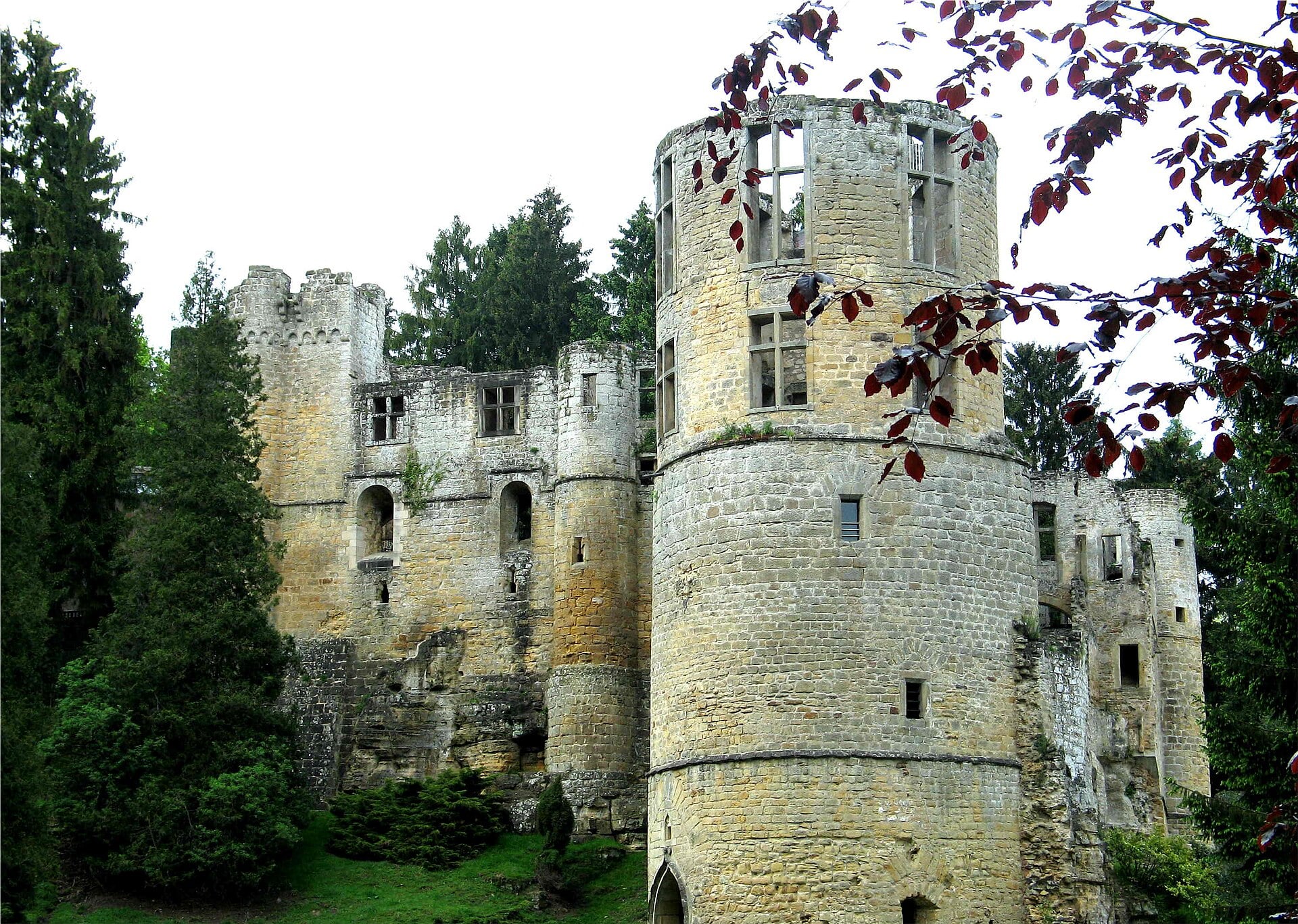
Beaufort Castle. (Photo by Reniarf at Luxembourgish/Wikipedia)
Beaufort Castle is exactly the kind of place humans like to fight over.
Perched high above southern Lebanon on a rocky ridge overlooking the Litani River, it possesses all the qualities that have inspired military ambitions for nearly a thousand years. It is elevated. It is fortified. It dominates the surrounding landscape. It looks important in just about every sense of the word.
The Crusaders wanted it. The Mamluks wanted it. The Ottomans controlled it. The PLO turned it into a stronghold. Israel fought for it. Hezbollah fought around it.
For centuries, people have climbed that mountain believing some version of the same thing: that whoever controls the height controls the future.
This week, Israeli forces captured Beaufort Castle once again.
The photographs were striking. Ancient stone walls. Israeli flags fluttering against a dramatic Lebanese skyline. Soldiers standing atop a fortress that seems to belong as much to mythology as to military history.
The images felt familiar, even comforting.
There is something about a castle that we tend to romanticize.
Humans understand castles.
We understand walls. We understand hills. We understand the logic of the high ground. We instinctively grasp why a fortress overlooking a valley might matter.
What we do not understand nearly as well are drones.
Almost immediately after the capture of Beaufort, an Israeli soldier was killed in a Hezbollah drone strike.
And in that jarring juxtaposition lies the real story.
Not because the loss of one soldier diminishes the military significance of the operation. Nor because castles no longer matter. Military terrain still matters, and soldiers still fight and die over geography.
But the contrast reveals something larger about the age we are living through.
Israel captured a medieval fortress while confronting a form of warfare that would have been unimaginable to the people who built it.
For most of human history, geography was power.
Military history is, in many ways, the story of men killing one another for slightly better positions on the landscape.
The hill.
The ridge.
The mountain pass.
The fortress.
The high ground.
Again and again, civilizations invested enormous resources in controlling physical terrain because physical terrain determined survival. If you held the castle, you could see the enemy coming. If you held the mountain, you could defend the valley. If you controlled the pass, you controlled the trade route.
The landscape itself was a weapon.
Beaufort Castle is almost a perfect symbol of that world.
It is a military objective so iconic that it feels like something a screenwriter would invent. A stone fortress on a mountain. A position whose strategic value is immediately obvious even to someone who has never read a military history book.
A drone, by contrast, is almost offensively unromantic.
There is no glorious charge. No dramatic conquest. No iconic photograph.
A drone does not care about your fortress.
It does not need to climb the mountain.
It does not need to storm the walls.
It simply arrives.
The future of warfare increasingly belongs to machines that ignore the geographical logic that shaped thousands of years of military thinking.
Yet our emotional understanding of war remains trapped in older stories.
We still tell ourselves tales about hills and fortresses because those are stories that make sense to us.
The photographs from Beaufort look like history.
The drone strike looks like technology.
One belongs to mythology.
The other belongs to software.
Perhaps this tension is especially pronounced in Israel.
Israeli national memory is profoundly geographical.
Our history is organized around places.
Masada.
Tel Hai.
Ammunition Hill.
The Golan Heights.
The Western Wall.
Entire chapters of our national story are attached to specific pieces of terrain.
Schoolchildren visit them. Soldiers swear oaths near them. Politicians invoke them. Lyrics center around them.
In many ways, Israeli identity is mapped onto the landscape itself.
But modern warfare is steadily eroding the relationship between geography and security.
The enemy no longer needs to occupy your hill to threaten you.
He does not need your fortress.
He may not even need your border.
Increasingly, all he needs is a signal, a coordinate, a machine assembled from commercially available parts and guided by software.
The battlefield is becoming less physical even as the consequences remain devastatingly physical.
This does not mean places like Beaufort no longer matter.
Quite the opposite.
They matter because they remind us how much has changed.
The castle survives because it embodies a military logic that governed human civilization for centuries. A logic built on stone, elevation, and visibility.
The drone represents a different logic entirely.
One built on mobility, connectivity, and reach.
This week, both occupied the same story.
An ancient fortress reclaimed.
A soldier killed by a flying machine.
The past and future meeting on the same Lebanese hillside.
Perhaps that is why the images from Beaufort feel so haunting.
Not because they show us a return to an old war.
But because they reveal the growing gap between the wars we know how to imagine and the wars we are actually fighting.
For nearly a thousand years, Beaufort Castle has survived invasions, empires, occupations, and battles because generation after generation believed the same fundamental truth: that height creates safety.
That stone creates security.
That controlling the hill means controlling the battle.
Yet the defining image of this week may not be the Israeli flag flying above a medieval fortress.
It may be the realization that even after capturing the castle, the soldiers standing on it remained vulnerable to a machine small enough to fit in the trunk of a car.
We are still fighting over the geography of the past while learning, often painfully, the warfare of the future.
Related Topics