
Where is the October 7 inquiry?
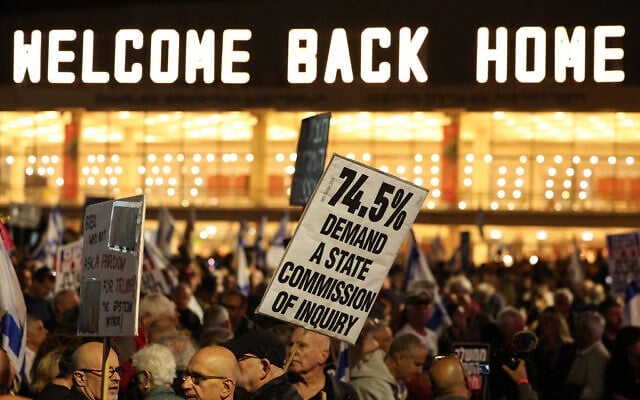
There was always going to be a reckoning after October 7, but what we are witnessing instead now, with the government continuing to refuse to establish a state commission of inquiry into the events of the day over two years later, is an avoidance strategy so transparent it borders on theatrical. Why, after the deadliest day in the entire history of the State of Israel, is the nation still being offered half measures instead of a tangible investigation?
The government insists that it is in the process of preparing a ‘serious’ investigation, pointing to a ministerial panel – led by Yariv Levin, the infamous architect of the judicial overhaul – to propose the mandate of its proposed ‘independent’ commission. Independence, though, cannot simply be conferred by decree, least of all when those compiling the inquiry were the very stewards of the national systems that collapsed when Hamas terrorists invaded and overran southern Israel.
All but one member of the panel was sitting at the cabinet table on October 7, which, in any other functioning democracy, would be immediately disqualifying. What the government has done instead, though, is proudly present it as the pinnacle of responsible governance.
This week, the High Court reminded the country that accountability is not the property of the executive. Instead, it belongs to the public and them only. This is the same public that has buried its dead and watched poll after poll showing a clear majority demanding a state commission of inquiry: not a cabinet-led review; not a government-appointed forum or anything of the sort; but a genuine commission, appointed by the president of the Supreme Court, with the power to drag sunlight into every previously dark corner of the intelligence and decision-making failures that preceded the massacre.
And here lies the heart of the matter: A state commission would be answerable to the truth, rather than to political survival. It would decide its own scope of investigation, call its own witnesses, and follow the evidence wherever it should lead. That is precisely why the government fears it so intensely.
For two years the coalition has waged an ideological war against the judiciary, attempting to redraw the balance of power that has anchored Israeli democracy for decades. To hand the same judiciary control over the most consequential inquiry in a generation would be to concede the very argument it has been prosecuting since January 2023 – for this government, at least. It is no coincidence that the very same ministers who once sought to weaken the courts are now the ones demanding the authority to define the limits of an investigation into their own conduct.
There is an uncomfortable counter-narrative that the coalition continues to cultivate here: that the protests against the judicial overhaul, and the reservists’ warnings of refusal, weakened the country and thus encouraged Hamas. This is true to some extent: why fight a country at its best when you can fight it divided?
This argument, though, has never been substantiated heavily enough to the point at which it becomes strong enough to enhance the argument in any considerable way. It is, nevertheless, invoked as a sort of moral counterweight to the government’s own failures. But a state commission would test this claim too, and perhaps this too is inconvenient.
The High Court order is not an act of judicial aggression, but more an act of democratic hygiene. If Israel is to continue to survive as it should, it must confront the full, uncurated, not solely government-approved, truth; this government must articulate, in writing and under scrutiny, why it believes the most powerful investigative tool available to the state should be withheld at the moment it has been most needed for the last generation.
The government has been given the date of January 4 to provide the court with its justification. A country that cannot investigate itself honestly cannot rebuild its own confidence, and the longer Israel’s government chooses to resist and deliberate from that truth, the clearer it becomes that the inquiry it fears is the very inquiry that Israel needs most.