99.6% Ashkenazi + .4% Viking = 100% Zionist
Where is the United Nations?
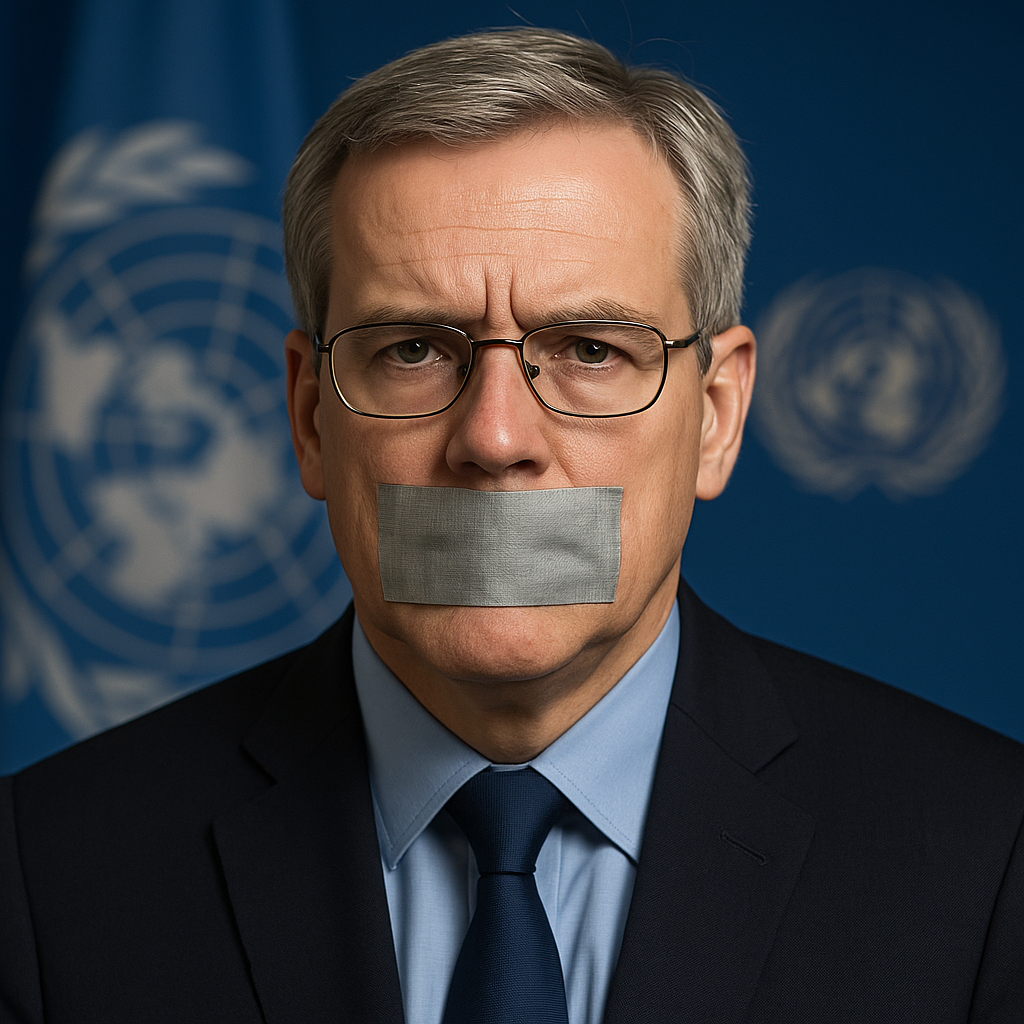
The Silence of the U.N.
In the wake of the October 7th massacre, images of scorched homes, bullet-riddled bodies, and blood-soaked baby cribs rightly horrified the world. But beneath the smoke and ash lay another brutal truth — one too disturbing for even many supporters of Israel to fully digest: the systematic use of sexual violence by Hamas, weaponized against Israeli women, men, and hostages.
This wasn’t a crime of opportunity. It was a tactic.
And for months, the global institutions that claim to stand for women’s rights, justice, and the laws of war — most notably, the United Nations — said nothing.
Nothing.
No urgent investigation. No special sessions. No blue-ribbon panels. Not even a generic statement of concern.
Only in March 2024 — nearly five months after the atrocities — did the UN’s Special Representative on Sexual Violence in Conflict, Pramila Patten, issue a formal report acknowledging what Israeli survivors, first responders, and forensic teams had been saying since day one: that conflict-related sexual violence had likely occurred on October 7.
Even then, the language was cautious, bordering on evasive. The report stated only that there were “reasonable grounds” to believe sexual violence occurred and “patterns indicative” of such abuse. No one was named. No perpetrators were called out. No war crimes were declared.
For an institution that prides itself on “naming and shaming,” the UN somehow forgot how to do either.
This diplomatic delicacy stood in stark contrast to the horrifying testimonies collected by Israel’s Dinah Project, a group of legal and gender experts. Their latest report, published this week, draws on 15 returned hostages, 17 additional eyewitnesses, and 27 first responders, alongside photo and video evidence and forensic documentation. Their conclusion is blunt and undeniable: Hamas used sexual violence deliberately, systematically, and tactically—as a weapon of war.
One female hostage reported being beaten and sexually assaulted at gunpoint, her leg chained with iron for three weeks, her menstrual cycle tracked. Others were threatened with rape via “forced marriage,” groped, harassed, and psychologically terrorized with the constant threat of sexual domination. These weren’t isolated incidents — they were coordinated strategies.
So again: where was the global response?
The UN Women agency, whose sole mission is to advocate for the protection and rights of women and girls worldwide, waited more than 150 days before issuing a generic condemnation of the October 7 attacks. And when they finally did post something in March, it was swiftly deleted without explanation — a symbolic erasure that spoke volumes.
During those months of silence, Hamas denied everything. Feminist groups looked away. The “international community” buried its head in the diplomatic sand.
Let’s not pretend this is about caution or due process. This is about a long-standing, institutionalized bias that runs through the United Nations like a fault line — a bias that grants moral immunity to Israel’s enemies while holding Israel to impossible double standards.
We’ve seen it before:
- The obsessive passage of anti-Israel resolutions in the General Assembly.
- The grotesque election of countries like Iran and Libya to UN human rights panels.
- The silence after Israeli athletes were massacred at Munich.
- The denial of Jewish heritage in Jerusalem by UNESCO.
- And now — perhaps most shamefully — the slow, reluctant acknowledgment of sexual violence against Israeli women and men.
This is not merely hypocrisy. It is complicity.
The victims of October 7 deserve more than our grief. They deserve justice. And justice begins with truth — not the truth we find convenient, or the truth that fits a narrative, but the truth that demands we look at evil without filters or excuses.
So where is the global feminist outcry? Where are the protest signs that say, “Believe Israeli Women”? Where are the marches, the speeches, the hashtags?
Where is the United Nations?
The Dinah Project has done its job. Survivors have done theirs. The evidence is overwhelming. The horror is documented.
Now it’s your turn, UN.
Start with a clear, unambiguous condemnation of Hamas’ sexual atrocities — not five months late, not buried in bureaucratic language, and not diluted by false equivalence.
Just say it.
We’re waiting.
Related Posts