
CEO, Sabra Ventures Ranch
Who Are We When the Sirens Stop?
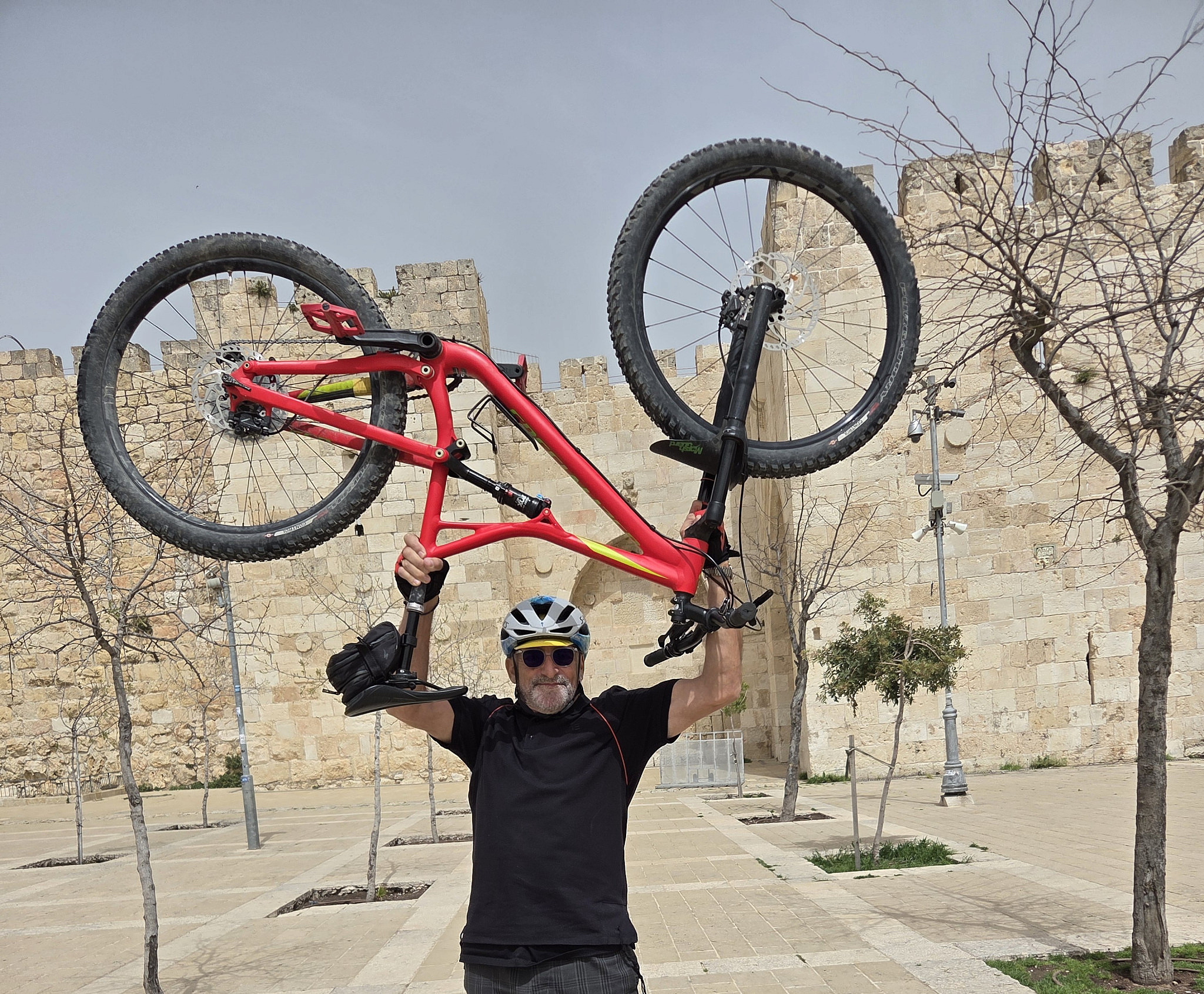
The usually bustling Old City Yaffa Gate square, eerily quiet under the constant barrages of ballistic missile fire.
“And then, suddenly, the sirens stop. Though the ballistic mid-air explosions didn’t get the memo right away.”
For almost two months, life in Israel was measured differently.
Not by meetings or milestones, but by seconds — the distance to shelter, the sound of alerts, the quiet calculations everyone now makes automatically: Where is the protected space? Who is with me? Who hasn’t answered their phone or WhatsApp message?
And yet, life did not really stop.
Schools closed. Airports shut down. Travel plans disappeared overnight. But cafés opened whenever possible. Businesses continued. Zoom meetings carried on — sometimes interrupted once, sometimes many times. Conversations paused mid-sentence, laptops closed, people moved quickly to shelter, and minutes later the meeting resumed.
It became strangely normal.
While we did our best to maintain family and life stability, observe two major holidays, and conduct local and global business as usual, a war made all this rather cumbersome if not difficult.
This was not life on pause. It was life lived in fragments — emails between alerts, strategy discussions between sirens, parents working while tracking their children’s locations. Entrepreneurs pitched investors after stepping out of safe rooms. Ordinary life persisted, repeatedly interrupted but never surrendered.
Perhaps that is one of Israel’s defining traits: we do not wait for stability to live. We live within instability.
War clarifies priorities with uncomfortable efficiency. Family matters. People matter. Purpose matters. Much of what once felt urgent quietly fades into background noise.
And then, suddenly, the sirens stop. Though the ballistic mid-air explosions didn’t get the memo right away.
Flights now resume. Meetings continue less interrupted. Calendars refill. The language of survival gives way again to the language of growth, planning, and opportunity.
Yet many Israelis feel something difficult to articulate: relief mixed with unease.
Because the challenge is not restarting life. Life never truly stopped.
The real challenge is learning how to live without constant urgency. Or the impending potential resumption of conflicts.
During wartime, society moves in unusual alignment. Differences feel smaller. Arguments soften. Political identities matter less when vulnerability is shared. A collective we emerges almost effortlessly.
As routine returns, attention spreads outward again. Individual ambitions reappear. Old disagreements slowly resurface. The unity forged under existential pressure loosens — not because something failed, but because this is human nature.
Still, the transition carries a quiet psychological cost.
War provides meaning through necessity. Peace requires us to choose meaning deliberately.
Many reservists describe an unexpected feeling upon returning home — not only exhaustion, but loss. In uniform, purpose was unquestioned. Every action mattered. Returning to ordinary life, even productive and successful life, can feel strangely smaller.
The same is true across Israeli society. Business leaders resume growth plans. Educators reopen classrooms. Families rebuild routines. We are not simply resuming where we left off; we are integrating experiences that reshaped us while life continued moving forward.
Israel rarely returns to “normal.” Each crisis leaves behind invisible architecture: deeper bonds, sharper awareness, quieter faith.
After trauma, societies can harden or mature. Israel’s story, again and again, has been one of adaptation — carrying memory forward while continuing to build.
Across conversations with founders, reservists, spiritual leaders, young parents, and grandparents, a shared realization emerges. The war revealed not only vulnerability, but responsibility toward one another. Strangers became extended family. Communities reorganized overnight. Acts of kindness often appeared faster than fear. Though, seasoned old Israelis who have been through numerous wars will tell you over coffee, “this is child’s play,” while rockets are exploding overhead. I’m not sure if that’s just a generational perspective or something deeply prophetic.
Anyone can rise when alarms sound. The harder task is preserving that same level humanity when life becomes predictable again. Like fighting tooth and nail to be the first to the next red light in Jerusalem traffic. Bruh, you’re not Max Verstappen in an F1 Red Bull, you’re driving a ten year-old Hyundai. (Sorry, my pet annoyance).
The sirens created focus. Silence demands character.
A few thoughts/questions:
Can we lead our organizations with the humility learned during interruption?
Raise our children with gratitude born from uncertainty?
Disagree passionately without forgetting our shared destiny?
A nation reveals itself not only under fire, but afterward — when cafés are simply cafés again, when meetings proceed uninterrupted, when ordinary days return.
The world often views Israel through moments of conflict. The deeper story is what happens between wars: how our society keeps building under pressure, leading innovation globally, and that we remain committed to creating and sustaining lifesaving technologies.
The sirens stopping is not the end of resilience. It is the beginning of responsibility.
Resilience in crisis is instinctive.
Resilience in peace is intentional.
Who are we when the sirens stop?
The answer will not appear in headlines or history books. It will be written in ordinary choices — workplaces rebuilt with purpose, communities sustained by empathy, families who understand that time together is never guaranteed.
This Facebook post I made the other day resonated with a lot folks:
A reflection:
This past week held powerful contrasts.
War, missile sirens, rocket explosions and the robust events of high holidays.
Meetings with spiritual leaders, heads of state, entrepreneurs, and technology innovators — all meaningful, important conversations about the future.
And yet, the most profound moments were quieter.
Time around the table with our children.
Holding our newborn grandchildren.
Watching a new generation begin while the world wrestles with uncertainty.
Leadership happens in boardrooms.
Meaning happens at home.
In a week defined by history, the greatest reminder was simple:
What we are building ultimately exists for those we are building it for.
When the sirens stop, we continue becoming who we are — individually, collectively, and as a people who have carried this story of powerful resilience forward for generations.
Chazak, chazak, v’nitchazeyk.
Related Topics
Related Posts