
Writing on Jewish life, relationships, trauma, and resilience
Who Should Israelis Root for in the World Cup?
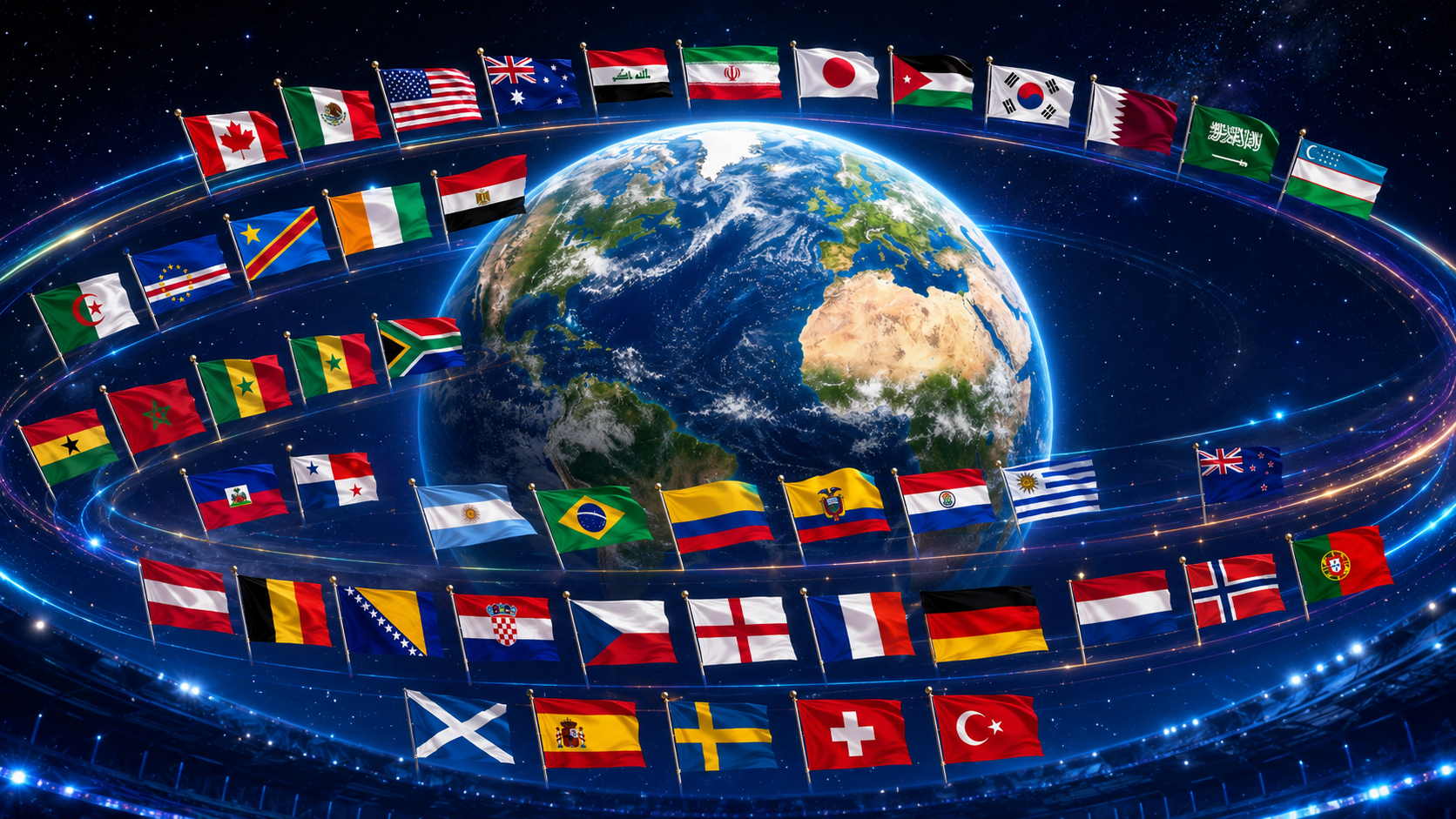
Illustrative: AI image created by the author.
Israel is not in the World Cup this year, which gives Israeli fans a rare and strangely liberating opportunity: they can watch without heartbreak arriving in the 87th minute.
No calculators. No goal-difference anxiety. No “mathematically still alive” delusions. No heroic loss that everyone insists was actually encouraging.
Just football.
But that does not mean Israelis will watch as neutrals.
Neutrality has never been one of the region’s strongest instincts. Israelis can turn a parking dispute into a seminar on justice and a hummus recommendation into a matter of national identity. So, of course, when the World Cup begins, many will still need a team.
The question is not only who deserves their borrowed loyalty.
It is also how they should cheer.
The Easy Answer: Argentina
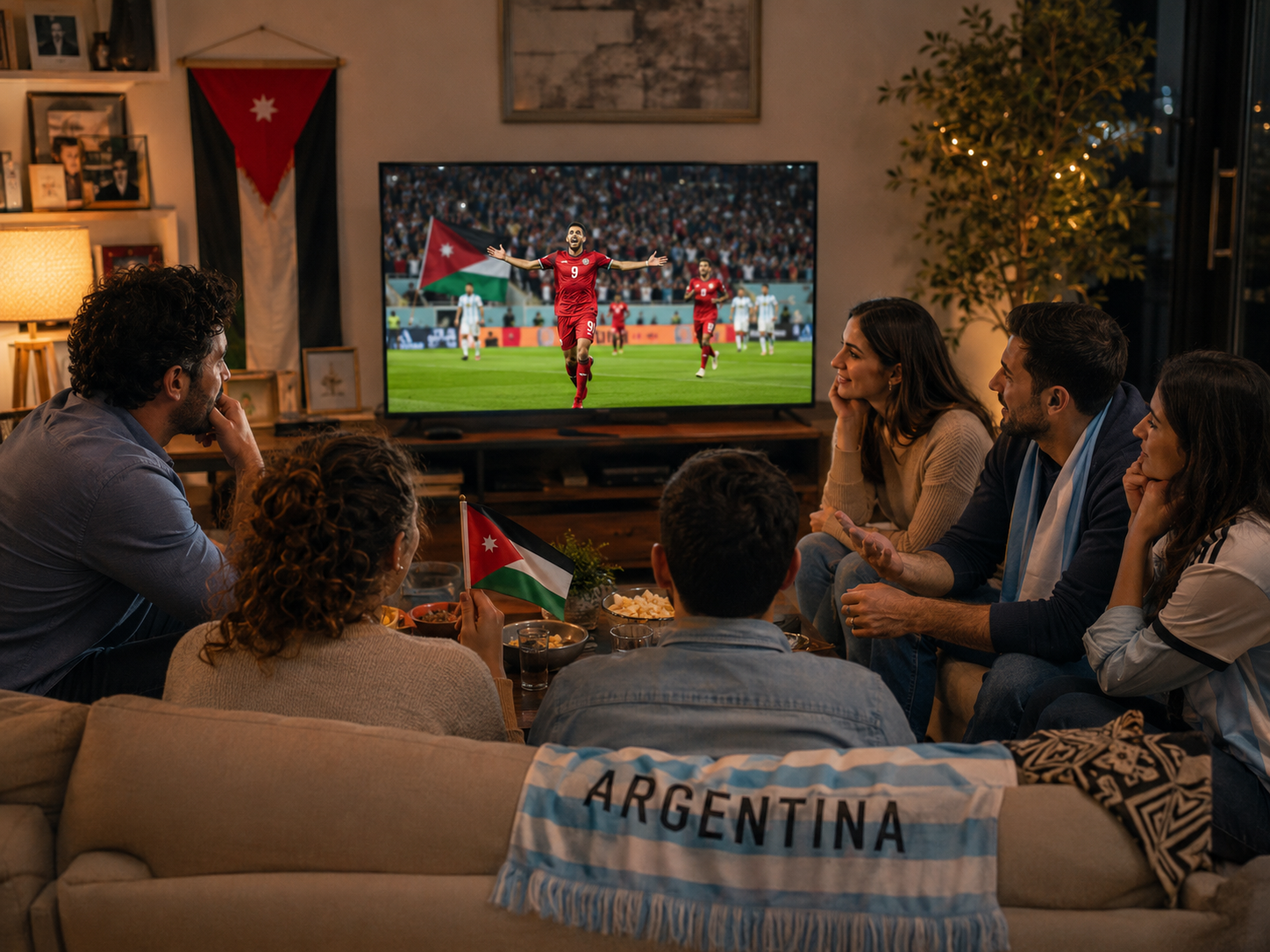
The obvious answer is Argentina, because half of Israel seems to have loved Argentina since before they loved football.
For many Israeli fans, Argentina is not just a team. It is childhood, blue-and-white stripes, Maradona mythology, Messi poetry, and the belief that beauty can still appear in a hard world. Argentina is always a defensible Israeli choice. They play with emotion, drama, family dysfunction, and occasional genius.
In other words, they are practically Middle Eastern.
According to FIFA’s current match schedule, Argentina opens against Algeria on June 16 in Kansas City and later faces Jordan on June 27 in Dallas. For Israeli fans looking for drama, poetry, and emotional whiplash, Argentina remains a safe and slightly irrational choice — which is to say, a very familiar one.
The Usual Powers
Then there are the traditional European powers: France, Spain, England, the Netherlands, Portugal, and Germany.
Israelis will find reasons to root for and against all of them. Some will choose based on club loyalties. Some will choose based on politics. Some will choose based on which country was kindest to them on vacation. Some will root against England simply because English fans seem to believe suffering is a national credential.
But this year, maybe Israelis should resist the easiest choices.
Maybe they should begin with the newcomers.
Four Newcomers Worth Watching
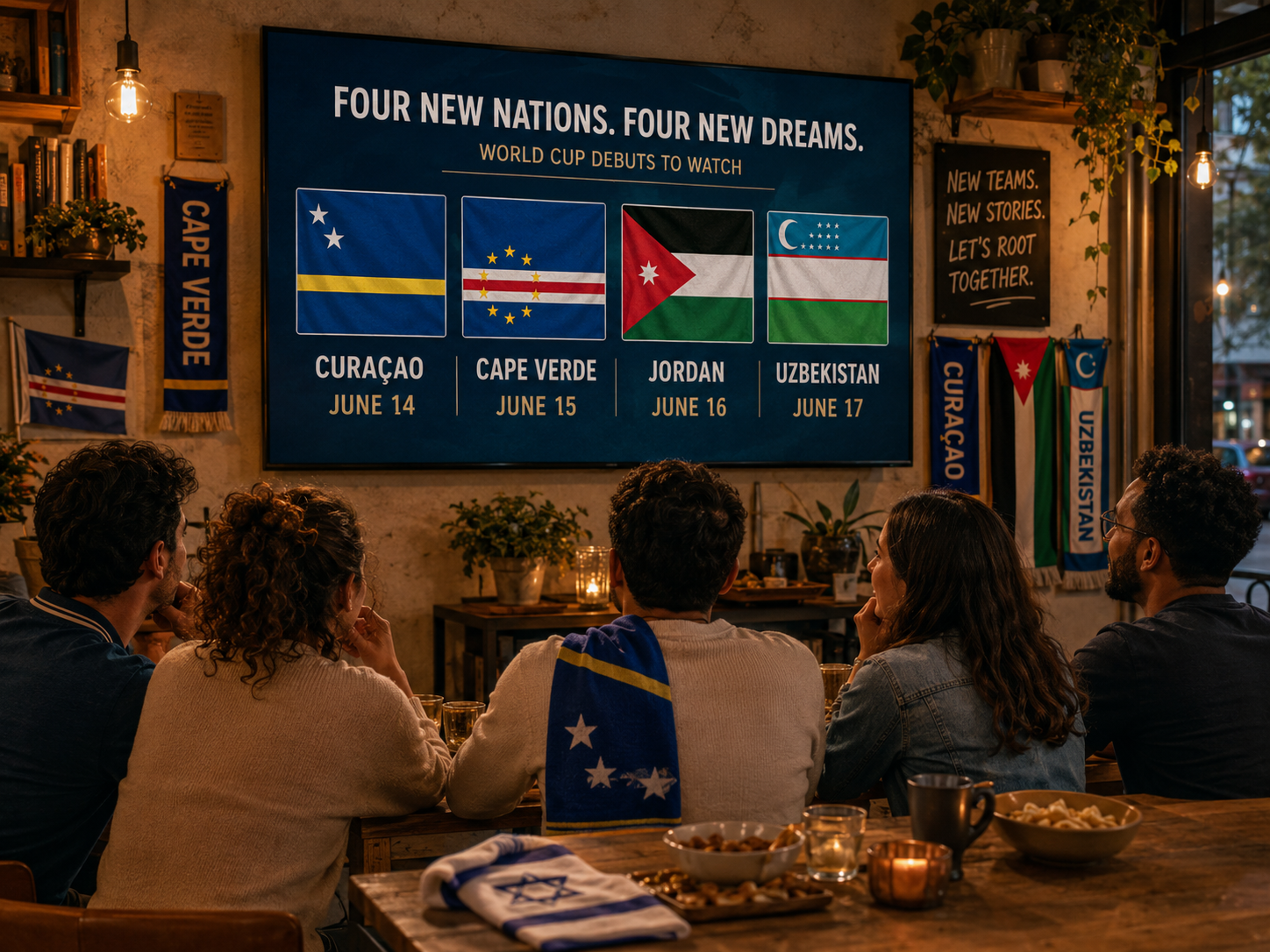
Cape Verde. Curaçao. Jordan. Uzbekistan.
Four countries stepping onto the World Cup stage for the first time. Four sets of players hearing their anthems at a tournament they once watched from far away. That schedule gives Israeli fans a useful World Cup roadmap: four underdogs, four first appearances, four invitations to widen the heart.
Their first matches arrive quickly. Curaçao opens against Germany on June 14 in Houston. Cape Verde plays Spain on June 15 in Atlanta. Jordan faces Austria on June 16 in the San Francisco Bay Area. Uzbekistan meets Colombia on June 17 in Mexico City.
That schedule gives Israeli fans a useful World Cup roadmap: four underdogs, four first appearances, four chances in the first week to root for possibility.
There is something deeply resonant in that story for a small country like Israel.
Israelis know what it means to be small on a large stage. They know what it means to carry a flag others argue about more than they understand. They know the ache of wanting to be seen not as a symbol, not as a headline, and not as a problem to be solved, but as a people with faces, songs, jokes, grief, talent, and dreams.
Cape Verde and the Poetry of Possibility
Cape Verde is easy to love.
A small island nation arriving with joy, rhythm, and the kind of national pride that feels expansive rather than menacing. Rooting for Cape Verde is rooting for the poetry of possibility.
There is something beautiful about a country arriving at the World Cup not weighed down by expectation, but lifted by surprise. For Israelis who know what it means to be counted out, Cape Verde offers a reminder that small places can still make large claims on the imagination.
Curaçao and Layered Identity
Curaçao, too, offers the pleasure of the unexpected.
A small Caribbean nation connected to a wider Dutch football world arrives not as a favorite, but as a reminder that identity is often layered, diasporic, and more interesting than borders suggest.
Israelis should understand that. Israel is a country of accents, grandparents, migrations, borrowed recipes, remembered languages, and multiple homelands living inside one national story.
Rooting for Curaçao is rooting for the idea that identity does not have to be simple to be strong.
Uzbekistan and a Jewish Echo
Uzbekistan deserves attention as well.
For Israelis, there is something moving about a Central Asian nation stepping into football’s biggest arena, especially one with its own deep Jewish history. Bukharian Jews are part of Israel’s story. Their food, music, family networks, and memory live throughout the country.
An Uzbek goal in the World Cup may not be an Israeli goal, but some Israeli living rooms will feel its echo.
Jordan, the Complicated Neighbor
And then there is Jordan.
This one is more complicated, which is exactly why Israelis should consider it.
Jordan is Israel’s neighbor. Not an abstract neighbor and not a country remembered only during regional summits, but a real one. A country with which Israel has a peace treaty, a long and difficult border, shared security concerns, environmental challenges, tensions, misunderstandings, and human beings on both sides who will still be there when the tournament ends.
Jordan’s first match, against Austria on June 16, should be one of the tournament’s quiet tests of emotional imagination for Israeli viewers. Later, on June 27, Jordan faces Argentina — a match that may divide Israeli living rooms between romance and neighborliness.
To root for Jordan is not to become naïve. It is not to ignore disagreements or pretend that the Middle East has become a summer camp. It is simply to recognize that neighbors reaching the world stage matters.
There is a hopeful kind of realism that says Israel should be safe, and the people next door should have reasons for pride that do not come from war.
Imagine Israeli children watching Jordan play and asking about Amman instead of only about threats. Imagine a few hours in which a neighbor is not a diplomatic problem, but a football team trying to survive extra time.
There is a mature kind of patriotism that can cheer for a neighbor without feeling diminished.
That is worth something.
The Iran Question
No Israeli is obligated to cheer for Iran. Given the regime’s threats, sponsorship of terror, and obsessive hostility toward Israel, many understandably will not.
But Israelis and Jews know what it means to ask the world to distinguish between a government and a people. That distinction should hold here too. Israelis can oppose the Islamic Republic with absolute clarity without wishing humiliation on Iranian players or fans.
That is not weakness. It is moral discipline.
If America Meets Iran on July 4
There is also the possibility of something even more charged: the United States against Iran on July 4.
It is not guaranteed. The bracket would have to cooperate. But the possibility alone is almost too symbolic to ignore. The Round of 16 begins on July 4, America’s Independence Day, during the country’s 250th birthday celebration. If the United States and Iran were to meet on that stage, the match would instantly become one of the most politically loaded sporting events in modern memory.
For Israelis, the symbolism would be impossible to miss.
The United States is Israel’s most important ally. Iran is Israel’s most dangerous regional adversary. A July 4 match between them would not feel like a distant sports story. It would compress alliance, threat, gratitude, fear, and history into ninety minutes.
Many Israelis would understandably root for the United States. That would not be only about football. It would be about alliance, gratitude, shared security interests, and the emotional reality of living under threat from the Iranian regime and its proxies.
But even then, the distinction must hold: opposing the Islamic Republic is not the same as dehumanizing Iranian players or Iranian people.
Root for America, if that is where the heart goes. Root for the ally. Root for the country that has stood with Israel in moments when standing with Israel has come at a cost.
But do not root for humiliation.
Do not forget that Iranian athletes also live under a regime that controls, uses, and punishes its own people. Do not forget the courage of Iranians who have risked their lives for freedom. Do not forget that the people in the stands, on the field, and watching quietly at home are not the same as those who threaten Israel from podiums.
That distinction is not sentimental.
It is strategic, Jewish, democratic, and humane.
Sport Is Never Just Sport
A World Cup does not need to turn every match into a referendum on Gaza, antisemitism, Islamophobia, immigration, Western hypocrisy, or the failures of international institutions.
But pretending the tournament is untouched by those realities would also be dishonest.
This World Cup is taking place amid immigration crackdowns, visa disputes, security fears, and geopolitical tensions. Some fans may find it harder to attend than others. Some teams will carry burdens far heavier than tactics. Some countries will be treated as security risks before their players have even touched the ball.
Israelis should pay attention to that.
They know what it feels like when sport becomes political because Israeli and Jewish athletes are often made political by others. Israeli athletes are booed, boycotted, isolated, or forced to compete under security shadows that other nations rarely have to consider. Israelis know the loneliness of being told that participation itself is controversial.
That experience should not make them indifferent to others.
It should make them more precise.
There is also the money.
The World Cup is a festival of flags, songs, tears, and impossible goals, but it is also one of the most powerful economic machines in global culture. By some estimates, the 2026 tournament is a multibillion-dollar event to stage and support, with a much larger marketplace surrounding media rights, sponsorships, hospitality, tourism, merchandise, advertising, and fan travel.
That matters because money shapes who gets close to the dream. Some people will watch from stadium seats that cost more than a family vacation. Many more will watch from couches, cafés, army bases, hospital rooms, refugee shelters, and crowded apartments where the emotional price of the match is not measured in dollars. FIFA may own the balance sheet, but the World Cup also belongs to everyone who gathers around a screen and lets a stranger’s goal briefly feel personal.
Maybe that is part of the moral discipline of watching, too: to remember that this tournament is both communion and commerce. It sells belonging at stadium prices and broadcasts it at planetary scale.
A Practical Rooting Guide
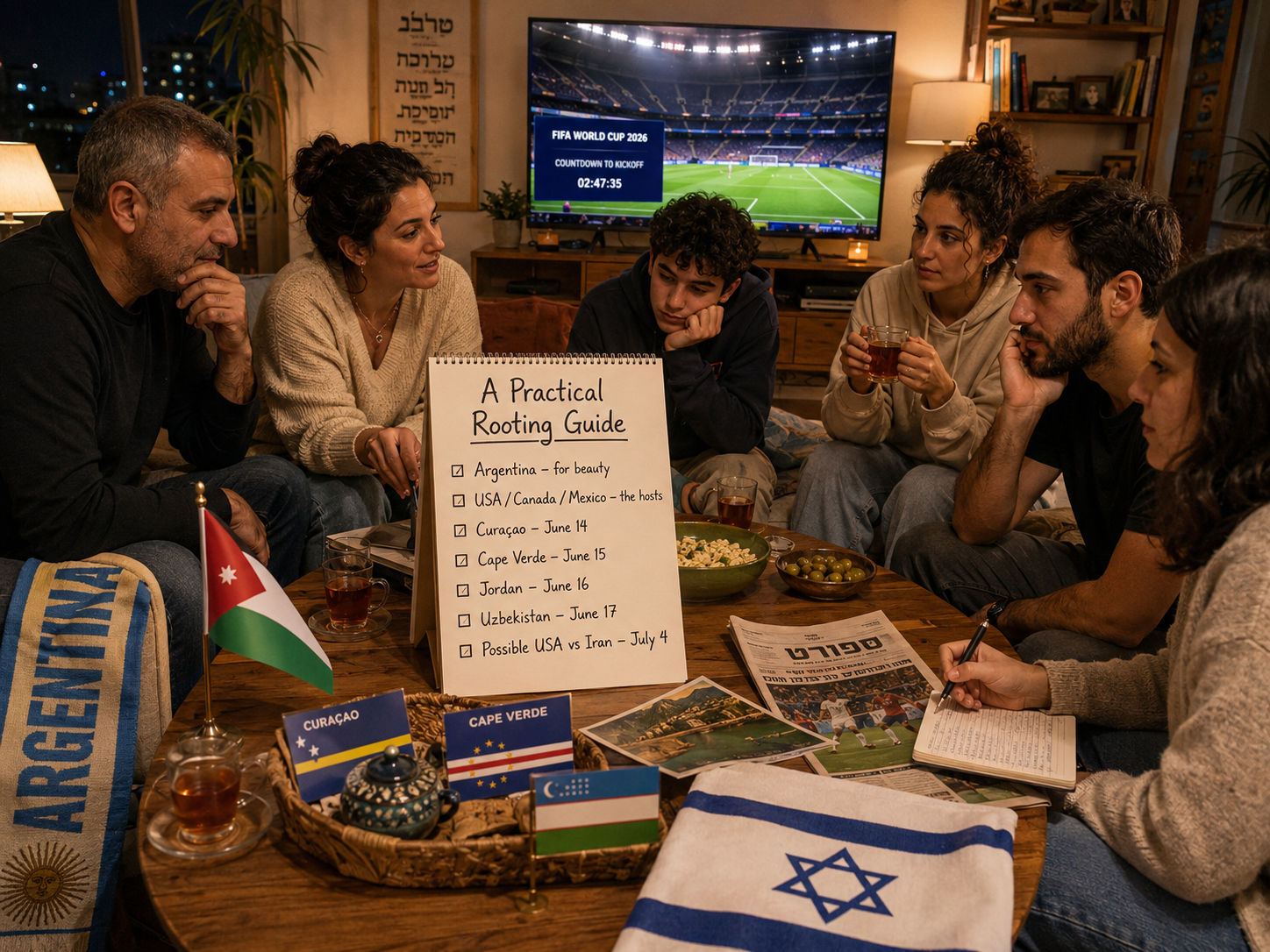
So who should Israelis root for?
Root for Argentina if beauty is needed.
Root for the United States, Canada, or Mexico if the hope is that the hosts can prove hospitality still matters in a divided continent.
Root for Cape Verde on June 15, Curaçao on June 14, Jordan on June 16, and Uzbekistan on June 17 if the World Cup is at its best when it opens the gates wider.
Root for teams that play with imagination, courage, and joy.
Root for the underdog that refuses to notice it is supposed to lose.
Root for the player who carries a small country on his back and still tries the impossible pass.
Root for the United States if the bracket delivers the possible July 4 showdown with Iran — especially on America’s 250th birthday, when the symbolism would be impossible to separate from the scoreline. But root with discipline: against the regime, against its threats, against its proxies, and against its cruelty — not against the humanity of Iranian players or ordinary Iranian fans.
Root for any player who refuses hatred.
Root for any fan who can love their country without despising someone else’s. Root for those who remember the hostages, the refugees, the dead, the displaced, and every family that wants its children home safely.
Root against antisemitism. Root against racism. Root against the casual cruelty that turns human beings into slogans.
The Invitation
Maybe, most of all, root for the possibility that for a few minutes at a time, the world can remember how to play.
Not because football will save anyone.
It will not.
But because a world that can still gather around a field, argue about a referee, admire a perfect pass, and cry over a goal scored by someone else’s child has not yet surrendered completely to despair.
Israelis do not have a team in this World Cup.
Maybe that is the invitation.
To watch widely. To cheer generously. To hold loyalties honestly. To remember that being a small nation does not require a small heart.
And when the underdog scores, whoever they are, Israeli fans may know better than most why impossible dreams still matter.
See the most recent FIFA World Cup schedule here.
Related Topics
Related Posts