Why a Jewish Voice Changes the Conversation
This column is part of a series exploring whether Gaza can be rebuilt in a way that produces lasting stability rather than recurring war. Inspired by Jonathan Feldstein’s provocative question—“Is Jesus the solution for Gaza?”—the series examines what moral reconstruction, trauma healing, and dignity-centered development might mean for Israeli security, Palestinian life, and the future of the region.
Why a Jewish Voice Changes the Conversation
There is a reason this argument did not begin with a Christian leader.
Had a pastor, missionary, or church official declared that Gaza “needs Jesus,” the conversation would have ended before it began. The language would have been dismissed—rightly—as religious intrusion, cultural arrogance, or evangelism masquerading as policy.
This argument gains legitimacy not despite the fact that it comes from a Jewish Israeli, but precisely because it does.
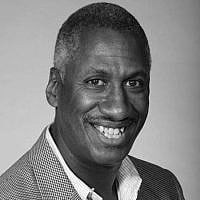
That is why Jonathan Feldstein’s role matters.
Why the Messenger Matters
In conflicts shaped by identity, the messenger is never neutral.
When moral language enters a war zone, it is immediately scrutinized for motive: Who is speaking? On whose behalf? To what end?
Here, who speaks determines whether the argument is even heard.
Structural legitimacy is not symbolic. It determines whether an idea is granted a hearing at all, who is allowed to participate in it, and whether humanitarian action is perceived as repair or intrusion. Feldstein’s voice changes those conditions.
As a Jewish Israeli, he is not advancing Christian power, influence, or conversion. He is not attempting to redefine Jewish theology, nor to dilute Jewish identity. He is speaking from within the Jewish moral universe—one shaped by covenant, responsibility, dignity, and the sanctity of life.
That positioning matters because it removes the most immediate and corrosive suspicion: that Jesus-language here is a tool of Christian dominance.
It is not.
It is a moral resource invoked by a Jew for pragmatic, ethical reasons.
Naming the Discomfort
For many Jews, invoking Jesus at all raises understandable historical and theological discomfort. That discomfort is not trivial. It is rooted in centuries of persecution, coercion, and misuse of Christian power against Jewish communities.
Feldstein does not ignore that history. He navigates it.
His argument does not ask Jews to reinterpret Jesus theologically, nor to cross religious boundaries. It asks whether the ethical teachings associated with Jesus—teachings already rooted in Jewish Scripture—can function as a shared moral language in a shattered society.
That is a different question, and a more serious one.
Jesus as a Shared Moral Figure, Not a Christian Claim
Feldstein’s argument does something unusual and disarming.
He does not present Jesus as a theological boundary dividing Christians from Jews or Muslims. He presents Jesus as a shared moral figure whose ethical vision resonates across traditions.
For Jews, the moral vision attributed to Jesus—love of neighbor, care for the vulnerable, restraint in the use of power—is deeply grounded in Hebrew Scripture.
For Muslims, Jesus (Isa) is honored as a prophet whose life exemplifies mercy, compassion, and moral clarity.
In Feldstein’s framing, Jesus functions less as a boundary of belief than as a bridge of ethical recognition.
That reframing lowers defenses rather than raising them.
Why This Matters in a Muslim Context
Gaza is overwhelmingly Muslim. Any external moral framework imposed from the outside—especially one perceived as Western or Christian—would fail immediately.
Feldstein understands this.
By making the case as a Jew, he signals that this is not about religious competition or cultural replacement. It is about moral repair in a traumatized society, using values that are already intelligible, respected, and recognizable within the region’s religious landscape.
Legitimacy in Gaza cannot be imported. It must be recognizable.
A Jewish voice invoking Jesus as an ethical figure—rather than a Christian authority—creates space for that recognition.
Why This Matters for Christians, Too
Feldstein’s role also places an important constraint on Christians.
By framing Jesus as a moral resource rather than a conversion goal, he implicitly demands restraint. Christians who engage Gaza under this framework are not authorized to persuade, pressure, or proselytize. They are authorized only to serve.
This is not optional.
Under this framework, Christian organizations do not merely choose restraint—they are judged by it.
The posture shifts from “we bring truth” to “we bring presence,” from authority to accountability. In that sense, Feldstein’s framing protects Gaza not only from religious coercion, but from well-intentioned harm.
Why This Matters for Israel
For Israel, the significance of a Jewish voice cannot be overstated.
Israel’s security environment is shaped not only by material threats, but by narratives—how actions are interpreted, weaponized, and remembered. A moral reconstruction effort framed as Christian intervention would be immediately suspect and destabilizing.
A moral reconstruction effort articulated by a Jewish Israeli, grounded in shared ethical values and enforced non-coercion, operates differently.
It reduces suspicion.
It blunts extremist propaganda.
It reframes humanitarian engagement as dignity-centered rather than ideological.
Legitimacy reduces recruitment pressure in ways force alone cannot.
A Gaza rebuilt through coercion would be dangerous.
A Gaza rebuilt through humiliation would be volatile.
A Gaza rebuilt through dignity has a chance—no guarantees, but a chance—of becoming less hostile over time.
The Deeper Point
Feldstein’s role reveals a deeper truth about moral leadership in conflict.
Those most capable of naming moral repair are often those who do not stand to gain from it institutionally. A Jewish Israeli invoking Jesus as a moral framework gains no religious advantage. He risks misunderstanding from all sides.
That risk—of being misunderstood by all sides—is precisely what signals moral seriousness rather than opportunism.
What Comes Next
If Feldstein’s voice creates legitimacy, the argument must now turn to capacity.
That is where the argument must turn next: to the real power—and real limits—of Christian humanitarian networks, and why they matter not as ideology, but as infrastructure.