Why this liberal New Yorker made aliyah
I’m perhaps not the typical American Zionist who decided to make aliyah. Since I was a wee high schooler, I was extremely left-wing and generally leftist. I devoted myself to learning about the suffering of various minorities around the world, and I was a fierce feminist. Naturally, the friends I gravitated toward in college shared my values.
When October 7 happened, I slowly but surely began to understand the deep current of antisemitism that had seeped into liberal elite universities. I couldn’t understand how certain ideas had taken root in people I had considered intelligent and compassionate. Most of all, I couldn’t understand how people I had called friends could cheer on, justify, or minimize the suffering and atrocities experienced by Israelis.
I had never spent much time in Israel. In fact, before making aliyah, I had spent only five days of my life there. But Israel had always been present in my life. I went to Jewish day school, where all my Hebrew teachers were Israeli and many of my classmates had family there. Even half of my own family lived there. And my grandfather’s story was deeply tied to the country.
My grandfather lost seven siblings, his mother, his first wife and two children in the Holocaust. After the war, he was denied entry to the United States because of a lung condition he had developed in the camps, under the discriminatory immigration policies then in place. He eventually chose to move to Germany. But he and my grandmother were both buried in Israel, and before that, they developed a deep connection to the land.
All of this meant that, despite having spent so little time there myself, I felt tethered to Israel, both as a place, and as an idea. So when many of the people my age in New York began treating Zionism as a cardinal sin, I applied to a master’s program in Security and Diplomacy at Tel Aviv University. I decided that if I was going to have strong opinions about Israel and the conflict, I wanted to actually understand what I was talking about. I wanted to become an expert in the subject, to understand what was happening, what had caused it, and why so many people saw the same events so differently. So, despite my parents begging me not to, I decided to move to Tel Aviv.
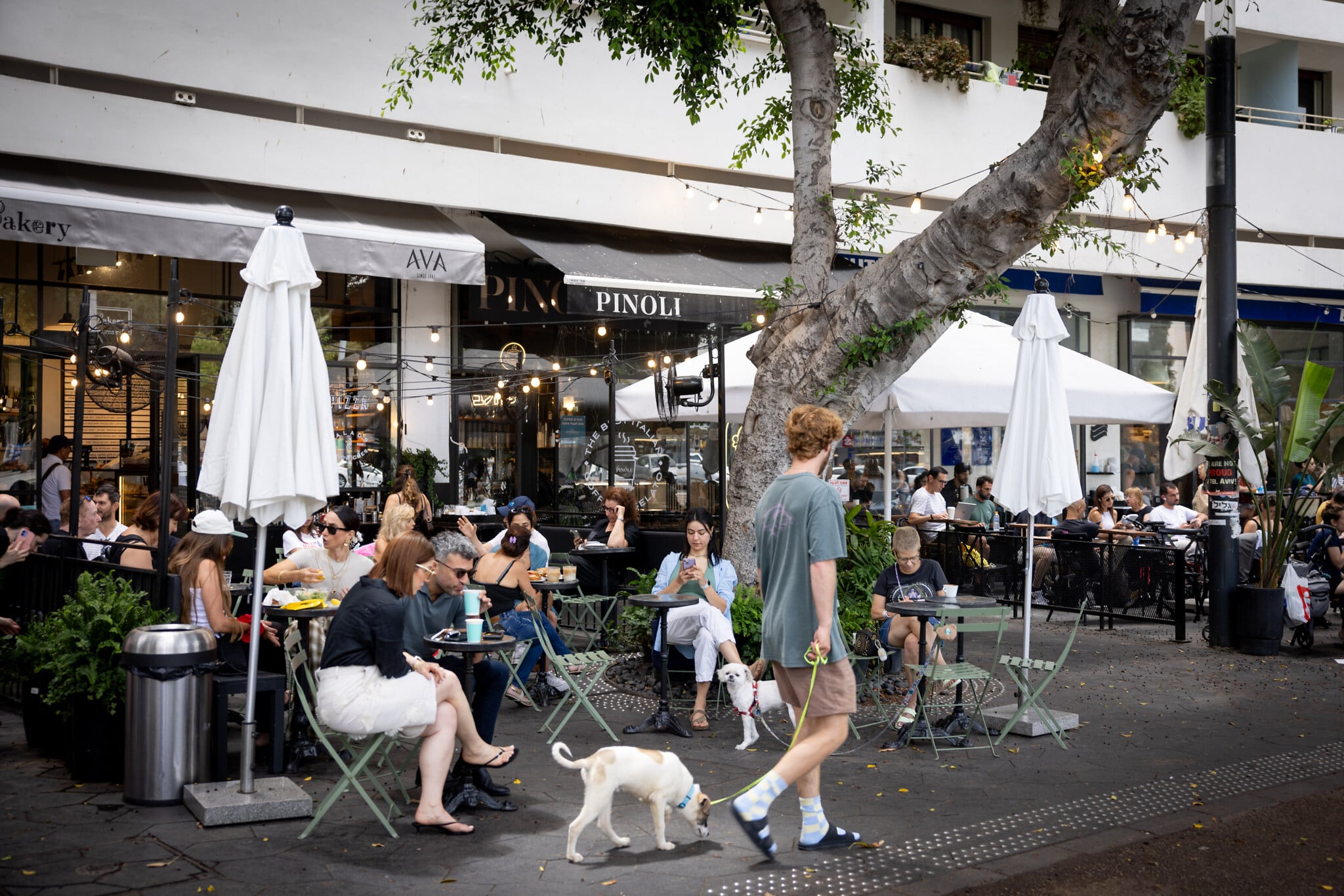
Coming to Israel was a journey in more ways than one. The culture was sometimes shocking. I learned that America had made me gullible, which I figured out around the third time someone told me that their coffee shop was the “best” coffee shop. The confidence, or bitachon, as it is called here, was also a sharp contrast to the often shy, insecure “geniuses” I had met at Princeton, who constantly undermined their own voices.
Here, people argued. They called you out. They told you when they thought you were wrong. You had to learn to stand up for yourself, because polite conversation and nodding along was simply not an option. At first, I found this exhausting. Eventually, I began to appreciate it.
Making aliyah is not easy. I left behind friends who had known me for years, and that was difficult. There is something unsettling about being in a place where nobody has known you long enough to remind you who you are. Sometimes, without those people, we can forget ourselves a little. But there is also freedom in it. When nobody has a fixed idea of who you are supposed to be, you get to try on new hats, new personalities, and grow in ways you might not have otherwise.
Still, perhaps the biggest lesson I learned from moving to Israel, was to not care quite so much about being liked. Like many young women, I had once prided myself on being likable and popular. I cared about belonging. In college, I had created a certain cool, artsy persona, and I had become accustomed to being surrounded by people who shared many of my assumptions.
Then I moved to Israel, and far fewer people liked me. Hundreds of people unfollowed me on Instagram. Some friendships disappeared. There were people who simply decided they no longer wanted me in their lives. And, strangely, this eventually made me become comfortable with myself.
For better or worse, I have a near-physical aversion to lying. Over the years, people have laughed at my directness and my willingness to say what nobody else wants to say, even when I know there will be social consequences. I realized that if I continued living in my old New York social circles, I would have to lie by omission, or even outright, about some of my beliefs. I would have to hide or soften what I thought in order to remain acceptable to people whose approval I valued.
I, decidedly, couldn’t stomach that. So I made aliyah.
I didn’t suddenly become a different person when I moved to Israel. I didn’t stop caring about feminism, human rights, or the suffering of vulnerable people. Those were the values I grew up with, and they are still deeply important to me. What changed was that I realized being committed to those values did not require me to reject Zionism, or to pretend that my connection to Israel was something I should be ashamed of.
In some ways, making aliyah was not a departure from the person I had been. It was an extension of her. I had spent years believing that I should be willing to stand up for people who were unpopular, misunderstood, or marginalized. Eventually, I had to ask myself whether I was willing to do the same when the people involved were Jews and Israelis, and when doing so might make me unpopular with my own friends.
For me, the answer was yes.
I came to Israel because I wanted to understand it. I stayed because, somewhere along the way, I realized that I understood myself a little better here, too.